Directions for making the envelope and heart visual aid: Cut the thread into two, 20 inch lengths. Place the first page of cut out hearts face down in two rows in the same order as they were laid out on the page. The hearts should be about 1 ½ inches apart. Place one string on row one with the end of the string in the middle of the bottom heart. Put a piece of tape over the string on each heart so each heart is attached to the string. Do the same thing with the other row of hearts and string. Add the heart labeled “listens” to the top of row one. You should end up with a piece of string at the top that is four inches long on row one and five and half inches on row two. Using an x-acto knife, cut along the dotted line on the envelope. Tape the top of each string to the back of the envelope, each about two inches from a side. Put the string of hearts through the envelope opening you cut. Glue or tape the back edges of the envelope to a piece of heavy paper, leaving the top of the x-acto cut edge open. You should now have an envelope pocket. Stack the rows of hearts in order, and put the two stacks into the envelope.
Mobile Handout: Print (or copy) and cut out an envelope for each child. Cut two pieces of string, 13 inches long, per child. Cut out eight hearts per child by folding several pieces of pink or red paper into thirds lengthwise, then placing half of a blank heart along the folded edge, and finally cutting out the hearts using the half a heart as a pattern (or you can purchase precut packages of hearts).
Optional: prepare the salt attention activity found here.
Attention Activity
In what ways do your mother and father show they love you? (They make rules to keep you safe. They help you and teach you. They give you hugs and kisses. Some parents may even write notes telling you how much they love you.)
Point out that people show love through their actions. Show the children the word search and have them find the words that are actions of love. (All the words are horizontal.) When a child finds a word, have that child come up and mark it with a highlighter or circle it with a pencil.
Put the envelope on the board with the opening facing downward. Explain that in today’s lesson they will learn about the love the Savior has for them. Point out that each of the action words in the crossword puzzle has been demonstrated by the Savior in our behalf. Jesus’s loving actions are like messages that remind us that he loves us.
Scripture Account
Put the flannel board image of Jesus on the board, and remind the children that in last week’s lesson they learned that Jesus taught the Nephites the beatitudes. As he prepared to leave at the end of the day, he perceived that the people did not fully understand what he had taught. Have a child read 3 Nephi 17:1–3 as the other children follow along. Have the children look for what the Savior told the Nephites they should do in order to gain more understanding.
What does it mean to ponder? (It means to thoughtfully consider something and deeply think about it.)
Point out the Savior’s instruction found in 3 Nephi 17:3 that the Nephites should “prepare [their] minds for the morrow,” for when Jesus would return to teach them again.
How do you prepare your mind for an important lesson such as a school assignment? You read and learn about the subject, you ponder on (or think about) what you have been taught in order to understand it more thoroughly, and you may even ask for help from a parent to help you understand it further.
What happens if you don’t prepare for an assignment by doing these things? (You may not properly understand the material.)
It is the same with the gospel; in order to understand the gospel we need to think about what we have been taught, study it thoroughly, and ask our Heavenly Father for help in understanding it. Through the Holy Ghost our minds can be enlightened and we can receive understanding. When we understand a concept better then we are ready to learn more and add to our understanding and knowledge.
In the scripture that was just read, what did the Savior do to show his love for the people? (He wanted the people to understand the things he had taught so they could progress spiritually.)
The Savior has taught us many things. These teachings can be found in the scriptures. Someone who loves us teaches us the things that will help us in life. (Take the heart out of the envelope that says “teaches.” It will be the first one in the pile on the left.)
Have a child read 3 Nephi 17:4-5, and then ask the children how the Nephites responded when the Savior expressed his intention to depart. (They wept and were sad. They wanted him to stay longer.)
Have a child read 3 Nephi 17:6-8. Ask the children how the Savior responded when he saw the Nephite’s sorrow. (He had compassion upon them and asked if they had any sick or afflicted among them. He explained that he would heal them because he had perceived their desire to have the miracles shown to them that he had performed in Jerusalem. He also perceived that they had the faith to be healed. )
How did the Savior demonstrate his love for the people? (He was filled with compassion for them. Compassion means he cared about their feelings. He was filled with sympathy and understanding.)
A person who loves us is considerate of our feelings. (Have a child take the heart out of the envelope that says “considerate.” It will be the first heart in the pile on the right.) (Alternate drawing from the left and right when the remaining hearts are mentioned.)
Have a child read 3 Nephi 17:9. Afterwards, put the picture of the sick and afflicted Nephites on the board.
What types of ailments did Jesus heal? (The lame (those unable to walk), the blind (those unable to see), the dumb (those unable to speak–which was most likely due to deafness))
What types of ailments might be included in afflictions of “any manner”? (All other types of physical illnesses and disorders, but also mental and emotional difficulties and disorders.)
Ask students to ponder ways in which they may be “afflicted” and what they would ask the Savior to heal if he were to bless them personally. Remind them that even though the Savior is not here to minister to them in person, his power to bless and heal is available through the priesthood. If it is his will that they be healed, and if they have faith, then they can be healed. If it is not his will, then we need to trust in the Lord and his purposes, but we also need to remember that the Lord will help us deal with the affliction if we ask for his help.
Point out that someone who loves us will be there for us when we have problems and difficulties. That person would offer comfort, support, and help. (Have children take the hearts out of the envelope that say “comforts”, “supports”, and “helps.” Remember that they alternate from left to right and then back to left again.)
After Jesus Christ healed the sick, he had the children brought to him. He had the people gather around them and kneel. He then said a prayer that was so wonderful and marvelous that the people could not even describe it. (Read 3 Nephi 17:14-17) (Optional: Do the salt object lesson.)
The hearts of the people were filled with joy when they heard the words that Jesus prayed to the Father in their behalf.
Point out that someone who loves us will pray for us. They will appeal to Heavenly Father for His help in watching over us, protecting us, and guiding us. (Have a child take the heart out of the envelope that says “prays.”)
After Jesus arose from his prayer, he noticed that the people were overcome with joy. The great faith of the multitude filled him with such joy that he wept.
A person who loves us is filled with joy when we make good choices; but they can also be filled with sadness when we make bad choices. Remind them that Jesus groaned inside himself because of the wickedness of the people of Israel. Explain that those who love us are concerned about us. They want us to make good choices. (Have a child take the heart out of the envelope that says “concerned.”)
After Jesus wept, he took the children one by one and lovingly blessed them and prayed to the Father for them. He tenderly took time for each individual child because of his great love for children.
Someone who loves us will share their time with us. They will pay attention to us and listen to us. (Have children take the hearts out of the envelope that say “attentive” and “listens.”)
How would you feel if Jesus Christ held you in his arms, blessed you, and prayed to Heavenly Father for you?
After blessing the children, the Savior told the people to look upon their little ones. The heavens opened and angels descended out of heaven and encircled the children. It appeared as if they were in a midst of fire. (Put the picture of the children on the board.) The angels ministered unto the children. The heavenly attention bestowed upon the children of the Nephites is further evidence of the special love Jesus has for children.
Ask the children if they can think of any other things Jesus has done that shows his great love for us. Have them look at the word search to get ideas, but they must explain how Jesus demonstrated that action. For example, Jesus demonstrated sacrifice by suffering and paying the price for our sins. Write on the blank hearts any other actions the children think of that are not included in the word search. Have the children then attach these hearts to the board with magnets or tape, making a pile underneath the other hearts.
Knowing that Jesus loves us helps us to have faith and trust in him. Because he loves us, we know that he wants what is best for us. He wants the things for us that will bring us eternal happiness and peace. If we have faith in Jesus and keep his commandments then we can someday live with him and Heavenly Father. again. One of the greatest joys is being able to be with the people we love and with those who love us.
Handout
Have the children make their own mobile with the blank hearts you have prepared. Hand out an envelope, a set of eight hearts, and a marker or pen to each child. Have them write eight of the ways Jesus has shown love for them on their hearts, and then have them tape the hearts to the string and tape the top of the string to the envelope opening. Remind the children that each heart is like a message from Jesus that reminds them that he loves them.
Weekly Reading Assignment
Remind the children to do their scripture reading assignment for this week: 3 Nephi 17:1-25
Items needed: a pencil for each child, five pieces of cardstock and several pieces of white paper, scriptures for each child, strong magnets or tape, scissors, sticky tack, small ziplock baggies or envelopes, a small container of salt mixed with dirt, and a small container of regular salt. Optional: cooked pasta
Print the visual aids. Fold each of the first six pages in half along the fold line. Tape together the folded pages along the edges (in the orderprinted) so they make one long line of figures with the picture of Jesus at the beginning.
Cut apart the pattern labels. Using sticky tack, attach the head labels to a piece of cardstock in random order. Do the same thing with the body labels. Cut out the jewels and attach them to another piece of cardstock using sticky tack.
Cut apart the Law of Moses/Law of the Gospel strips on the lines. Attach the title strips to the top of a piece of cardstock. Using sticky tack, attach the rest of the strips to another piece of cardstock in random order.
Fold a white piece of paper into three even sections. Place the small paper doll pattern on top of the folded paper; then using it as a pattern, cut out a chain of three paper dolls. Cut out four pages of paper doll chains per child. The pages can be stacked to make the cuts. Tape the figures together so you have 12 dolls in a row. Fold each of the doll chains and place them into a baggie or envelope.
Print or copy one page of the black and white jewels and labels handout for each child.
Print the lesson pictures, or use a computer laptop or tablet to show the images to the children.
Attention Activity
Give a volunteer the scissors and a piece of paper. Ask him or her to cut out a perfectly shaped paper doll (without making any folds in the paper). Once the child is done, ask if it was hard to make a perfectly shaped doll that was equal in shape and size on both sides. Show the child the paper doll pattern. Ask if it would have been easier to make a perfectly shaped paper doll if the child had been given a pattern to follow.
(Read 3 Nephi 12:48) Explain that we are to strive to become like our Father in Heaven who is perfect, and we have been given a pattern to follow and instructions on how to work towards that goal.
What is the pattern we have been given? Our Savior, Jesus Christ. Jesus set an example for us to follow, and because the Father and the Son are one in purpose and characteristics, if we become like the Son we also become like the Father.
We have also been given instructions to follow. When the Savior lived on the earth, he taught the Sermon on the Mount (show picture). When he appeared to the Nephites after his death and resurrection, he taught them a similar sermon (show picture). This sermon gives us directions to follow towards the formation of the kind of person each of of us needs to become.
Show the children the folded up papers with the picture of Jesus on the outside. Spread out the folded papers and attach it to the chalkboard with the magnets under the words “Blessed are the…” Explain that each scripture reference comes from the sermon the Savior taught the Nephites, and each tells us a characteristic we need to develop in order to become like Jesus.
Point out the sign “Blessed are the…” on the chalkboard and explain that the beginning of Jesus’s sermon includes what is known as the “Beatitudes.” Beatitude means to be blessed or happy. Show the children the jewels, and explain that they are labeled with the promised blessings we will receive if we develop the characteristics mentioned in the sermon. Have the children read 3 Nephi 13:19-20. Explain that the temporary worldly things we might treasure on earth do not even compare to the wonderful eternal blessings our Heavenly Father has in store for us if we live righteous lives
Display the three cardstock pages that contain the head labels, the body labels, and the jewels. Explain to the children that they are going to do an activity where they will find the instructions the Savior gave, and then they will label the fold-out figures on the board with those instructions.
Activity Instructions:
Have a volunteer read the first scripture reference (with class members following along in their scriptures). Then have the child find the label that matches it and put the label on the head of the first figure. (Note: The last doll pattern on the board is an activity. When the final label is left, put it on the doll head and then explain the activity.)
Next, have the children find the label to what they think the beatitude means. If they are correct, have a child attach the piece to the body of the figure.
Then ask the children what things they can do to become that kind of person. Write on the arms and legs of the figure the things the children mention.
Next, have the children find the jewel that has the promised blessing on it that goes with the beatitude, and have a child put it in the doll’s hand.
Before starting the activity, give each child one of the fold-up paper doll figures and a pencil, and explain that they are going to copy down each trait onto their figures to help them remember the type of person they need to become. (The children may need to sit on the floor and turn their chair to use it as a table.) Have them first draw a picture of themselves on the top figure, so when the dolls are folded, that is the image they see. Then have the children write the traits on the head and the ways to become that kind of person on the arms and legs of each figure as it is discussed. Explain that at the end of the lesson they will get their own copy of the body labels and jewels.
Poor in Spirit(3 Nephi 12:3)
A person who realizes they need spiritual assistance. To be poor in spirit means that a person realizes they are spiritually in need (they need help strengthening their spirit and making the things of God a priority in their life), and they are humble enough to turn to Heavenly Father for help.
How can we show Heavenly Father that we realize we are in need of his help to develop spiritually? Pray, study his words in the scriptures, go to church.
Theirs is the Kingdom of Heaven.
They that Mourn (3 Nephi 12:4)
Feelings of deep sorrow and regret for the sins they have committed. Blessed are they that mourn for the sins they have committed because godly sorrow worketh repentance. (2 Cor. 7:10)
How do we show that we feel sorry for the sins we have committed? Pray and ask for forgiveness, right the wrong, do not do it again.
They shall be comforted. Repentance brings comforting forgiveness.
Meek (3 Nephi 12:5)
Someone who is gentle, kind, and patient. To be meek is to be gentle and kind. It is also someone who has self-control and is not quick to become provoked or angry.
In what ways can we demonstrate meekness? We can be patient with family members and friends. We can be kind to those who wrong us.
They shall inherit the earth. The earth will someday be sanctified and celestialized (D&C 88:18), so those who inherit the earth will be those who are worthy to inherit the celestial kingdom.
[They who do] Hunger and Thirst after Righteousness (3 Nephi 12:6)
A person who desires to fill their life with goodness. We should have a desire to fill our lives with the things of God like we desire to fill our bodies with food and water.
In what ways can we fill our lives with righteousness? Learn gospel principles by studying the scriptures and by listening to our teachers and leaders. Keep the commandments. Avoid evil and temptation.
They shall be filled with the Holy Ghost. When we do good and righteous things, the Holy Ghost can be our constant companion
Merciful (3 Nephi 12:7)
Someone who is compassionate and forgiving.
In what situations can we show mercy?
They shall obtain mercy. They shall receive mercy in the Day of Judgment (when we are judged according to the deeds we did on earth). (3 Nephi 13:14-15)
Pure in Heart (3 Nephi 12:8)
Someone who is genuinely clean and good in thought and action.
What are some examples of good thoughts and actions?
They shall see God.In order to be with our Heavenly Father we must be pure of heart, for no unclean can enter into the kingdom of heaven.
Peacemakers(3 Nephi 12:9)
Those who encourage harmony and peace. Peacemakers look for ways to help solve problems peacefully. (Show the children the picture of the boy being a peacemaker.)
What are some other situations that you can be a peacemaker?
They shall be called the children of God. Those who are troublemakers, quarrelsome, or contentious, and those who go against law and order are following paths opposite those who choose to be obedient to their covenants to take upon themselves the name of Christ.
Persecuted for My Name’s Sake (3 Nephi 12:10)
Someone who stands up for the right despite opposition. Explain that the message in 3 Nephi 12:10 continues in verse 11 and 12 and says, “Blessed are ye when men shall revile you and persecute (tease, make fun of, or torment), and shall say all manner of evil against you falsely, for my sake (because of the desire to follow Jesus and obey the commandments,);For ye shall have great joy and be exceedingly glad, for great shall be your reward in heaven; for so persecuted they the prophets who were before you.”
In what ways can we stand up for our beliefs in Jesus Christ and his gospel? Be obedient to the commandments even when others are not choosing the right. Let others know what your beliefs are.
Theirs is the Kingdom of Heaven.
Salt of the Earth (3 Nephi 12:13) What does salt do? It enhances flavor. (Optional: Show an example of this with some cooked pasta.)
Someone who influences and enhances people’s lives for good. Just as salt enhances food and makes it taste better, we should influence people for good. Why wouldn’t you want to use the contaminated salt? (The dirt would give the food a bad flavor, and it could be unsafe to ingest.) Explain that through contamination, salt loses its desirable taste and flavor. If we contaminate our lives with the dirt and evil of the world, then we could become a negative influence on others, and we could cause great spiritual harm.
How can we be a good influence and example to others?
Glorify your Father in Heaven. This blessing actually goes with the scripture about being a light, which also means to be a good example. (3 Nephi 12:16) “Therefore let your light so shine before this people, that they may see your good works and glorify your Father who is in heaven.” Glorify means to worship and praise. People seeing your good works will have a desire to worship God and follow his commandments.
Has Sincere Intents and Actions (3 Nephi 13:1-4)
A person who has proper motives and intentions when doing good works such as the following: Service: Read 3 Nephi 13:1-4. (Explain that giving alms means to give money or food to the poor.) In this scripture, the Savior tells us we need to serve the needy, but we must do it with pure intentions and motives. We must not do it for personal, selfish motives such as to look good or to get praise. Prayer: Read 3 Nephi 13: 5-7. The Savior tells us we also need to pray with pure intent and not use vain repetition (fancy words used without thought or feeling to try and look good and get praise). The prophet Mormon warned that if anyone shall pray and not with real intent of heart … it profiteth him nothing, for God receiveth none such. (Moroni 7:9) Fasting: Read 3 Nephi 13:16-18. Point out that each of the scriptures that were read indicate that we are not to be hypocrites. A hypocrite is a person who says one thing and does another. An example of a hypocrite is a person who pretends to be good and spiritual by doing public service, fancy public prayers, or public fasting but really has little desire to help others or serve God.
What are some ways we can avoid being hypocrites? If we say we believe in something such as honesty, kindness, forgiveness, that is the way we should be.
[The Father shall] Reward thee openly. When we do good works in secret and not to get gain the Father will reward us openly.
Obeys the Law of the Gospel
Someone who abides by the fullness of the gospel. During the sermon to the Nephites, the Lord talked about the Law of Moses. The Law of Moses had been established with the Israelites, but it did not contain the fullness of the gospel. It was a strict preparatory gospel of ordinances and performances. The Israelites had been rebellious, and the Law of Moses was meant to keep them in remembrance of God and their duty towards him. (Mosiah 13:27-32) It was also meant to help the people look forward to the coming atoning sacrifice of Christ. When the Savior’s mortal mission was completed, the law was fulfilled—the atonemeant had occurred. (Read 3 Nephi 12:46-47) Old things had passed away and the Law of the Gospel of Jesus Christ was now in place, which is the fullness of the gospel.
Activity: Show the cardstock labeled with the “Law of Moses” and “Law of the Gospel” strips. Show the children the other strips and tell them to find two laws that seem to match and put the higher law under the “Law of the Gospel” sign. Explain why it is a higher law. For example, it is easy to love your neighbor, but it is harder to love your enemy; it’s easy not to kill, but it’s hard not to get angry; it is easy to have the desire to make someone to pay for hurting you, but it is harder to have mercy and forgive. Have the children read the scripture references to check the answers. Also have them write the Law of the Gospel items on the arms and legs of their paper doll.
Have the children read 3 Nephi 12:20 and look for the blessing we gain when we follow the Law of the Gospel. Saved and enter into the Kingdom of Heaven.
Conclusion
If we follow the pattern and instructions Christ has set for us (point to the fold out), we can become like the Savior and live in a “blessed and happy” state now and throughout eternity.
Encourage each child to go home and choose one of the items to work on this week. Tell them to fold open their paper doll figures to that item and post it somewhere in their room to remind them of their goal. Give each child a copy of the body labels and small jewels. Explain that they can cut out the body label and attach it to their doll figure before starting the goal to remind them of what it means. At the end of the week they can color and cut out the jewel that matches their goal and put it on the doll to remind them of the blessing they can obtain from obtaining that characteristic. Encourage the children to continue to work on a different characteristic each week.
Weekly Reading Assignment
Remind the children to do their scripture reading assignment for this week: 3 Nephi 12:1-48 and 3 Nephi 13:1-24.
Friend June 2025 “Articles of Faith” What this means: Spiritual gifts are blessings given from Heavenly Father through the Holy Ghost. Everyone has at least one spiritual gift. Some spiritual gifts are speaking or knowing languages, having faith in Jesus Christ, and helping heal people who are sick.
Memorization Tip: Article of Faith 7 is about gifts of the Spirit. Seven and Spiritboth begin with s!
Articles of Faith in Action: When I was seven, I was sick with a fever for a few days. I prayed about what to do. A warm feeling came to me, and the Holy Ghost told me to ask for a blessing. I asked my dad for a blessing. He called our home teacher to come help. When my dad gave the blessing, I felt the Spirit. At the end of the day, I felt much better. Faith M., age 11, Minnesota, USA
Preparation
• Print the story visuals and cut each page in half, except for the last page. Number the back of the scripture story pages to help keep them in order. (Note: The scripture story visual aids are from chapter twenty-six of Book of Mormon Stories, and the picture of the dog is from Microsoft word clipart.)
• Print and cut out the commandment/situation word strips. Fold the strips and put them into a small container.
• Items needed: chalk and eraser, a shallow dish such as a cake pan, two disposable plastic or styrofoam cups (fill one cup with water and put it in the freezer), a small Tupperware container of water, tongs, one plastic spoon per child, enough ice cubes to half fill a gallon sized Ziploc bag, a small ice chest, 1/3 cup of rock salt, a gallon sized Ziploc bag, and a sandwich sized Ziploc bag filled with the following ice-cream ingredients: 1 cup half-and-half, 2 tablespoons sugar, ½ teaspoon vanilla. (Squeeze the air out of the bag before sealing it.) Put the ice cubes, frozen water, and ice cream ingredients into the ice chest to keep them cold.
Attention Story
There were once two girls who promised their mother they would wash the family dog. Their mother promised that if they would do that chore she would take them swimming. (Show the picture of the dog.) Washing the dog was a harder task than either of the children expected. It was a messy, dirty job, and the dog did not want to be washed. The dog would squirm away as they were trying to wash it, and then it would roll in the dirt and get dirty again. In frustration, one of the children stopped working and would not help anymore. The other child continued to try and finish the task. She eventually figured out a way to keep the dog contained so it could not get away. She was able to finish washing and drying the dog even though it was a difficult job.
• When the task of washing the dog got difficult how did each child respond? One child gave up and did not finish the task, and the other kept her promise and finished the task.
Activity
Pour water into the empty plastic cup, and put the cup in the shallow dish. Explain to the children that the cup of water represents someone who is not firm in keeping their promises. When pressure or difficulty arises, their resolve to keep their commitment breaks. (Demonstrate this by applying pressure to the container with your hand. The container will crush and water will spill out.)
Show the children the cup of ice. Tell them it represents someone who is firm in keeping their commitments regardless of difficulty or pressure. Squeeze the cup. It should be firm and unyielding.
• Remind the children that promises should not be made lightly. What happens if we don’t keep our word and are not dependable? We may lose the trust of others. The girl who did not help wash the dog was not trusted to complete certain future tasks without supervision, but the girl who kept her promise was allowed more freedom and trust.
If we do not keep our promises we also do not get the promised benefits agreed upon in two-way promises. The girl that didn’t help wash the dog was not able to go swimming that day.
A two-way promise between two people is when both people promise something. When one person breaks their side of the promise the other person is not responsible to fulfill their side of the agreement.
• What is a two-way promise called that is made between us and Heavenly Father? A covenant.
We make covenants with Heavenly Father when we are baptized. If we keep our covenants we can gain the promised rewards, including the greatest reward of all, the gift of eternal life. Those who are given eternal life have great freedom and power. Only those who can be trusted to do the right thing are given that freedom and power.
In today’s lesson we learn about a group of people who were firm in keeping their covenants even in the face of great difficulty and adversity.
Scripture Story
Teach the following scripture story using pictures from chapter twenty-six of Book of Mormon Stories as visual aids.
Because of the efforts of the sons of Mosiah many Lamanites had been converted to the gospel. The king of the Lamanites and all those who were converted had changed their natures. They were a new people and did not want to be called Lamanites anymore. They wanted to be called by a new name. The king consulted with Aaron and many of their priests, and they chose a new name to call themselves.
They decided to be called Anti-Nephi-Lehies. (Write the name on the board.) Tell the children that the word “anti” does not have the modern day meaning of being opposed to something. In some languages the word “anti” has a meaning similar to the word “imitation.” The people who had been converted desired to become like Lehi and Nephi. They chose a name to reflect that righteous desire.
The Lamanites who had not been converted were very angry at all those who were converted to the teachings of the Nephites. They began to rebel against the king. They took up arms to destroy the king and the Anti-Nephi-Lehies. The king died in the same year that the Lamanites began to make preparations for war against the people of God. Before he died he conferred the kingdom upon one of his sons.
• Why did the unconverted Lamanites want to destroy the Anti-Nephi-Lehies? It was a Lamanite tradition to believe that the Nephite way was wrong. The unconverted Lamanites may have felt anger towards the Ant-Nephi-Lehies for following the Nephite way. Another reason may have been that the changes in those who had become converted made the other Lamanites feel anger at the reminders of the evil things they were doing. They may have wanted to destroy that goodness and not feel the guilt.
When Ammon and his brethren saw the preparations of the Lamanites to destroy the Anti- Nephi-Lehies, they came to the land of Ishmael to talk to the new Lamanite king and to Lamoni, his brother, concerning what the Anti-Nephi-Lehies should do to defend themselves against the Lamanites.
The king, and none of the people who had been converted to the Lord, would take up arms to fight against their brethren the Lamanites. They would not even make preparations for war. They had repented of the murders they had committed in unrighteous wars. They were afraid that if they took up arms to fight and kill again, they would again be stained with sin, and they might not be forgiven this time. They decided to bury their weapons deep in the earth as a covenant to God that they would not kill again.
• Have the children look at the pictures of the Anti-Nephi-Lehies collecting and burying their weapons, and ask the children what kinds of weapons the picture suggests were buried. Have them look closely at the picture to identify the different types of weapons.
• What could happen to the Anti-Nephi-Lehies if they didn’t have weapons to defend themselves against attack? They could die.
• Why did the Anti-Nephi-Lehies value their covenants more than their lives? They were overwhelmingly grateful to the Lord for forgiving them of their sins. They understood the eternal value of what they had gained and did not want to lose it.
• When someone makes a covenant or promise, an action is usually performed as a token or sign of the covenant such as shaking hands, signing a document, etc. What was the token or sign of the Anti-Nephi-Lehi’s covenant to never kill again? Burial of their weapons
• When you made your first covenants with Heavenly Father at age eight what action did you perform as a sign of your commitment? Baptism
When the Lamanites came into the land to destroy the king and his people, the Anti-Nephi-Lehies went out to meet them. The Anti-Nephi-Lehies prostrated themselves on the earth, which meant they bowed themselves very low, or they laid on the ground with their faces down. They then began to call on the name of the Lord praising him. They were in this attitude when the Lamanites began to fall upon them and slay them with the sword. Without meeting any resistance the Lamanites killed 1,005 of the Anti-Nephi-Lehies.
• Why were the Anti-Nephi-Lehies praising God and not afraid to die? (See Alma 27:28) They were grateful for and had faith in Jesus Christ. They knew that because of Jesus Christ they could be resurrected.
When the Lamanites saw that their brethren would not flee from the sword, but they would lie down and perish as they were praising God, they stopped slaying them. Many of the Lamanites felt sorrow and remorse for killing their brethren the Anti-Nephi-Lehies. They threw down their weapons of war, and they would not take them up again. They repented and joined with the people of God. The amount of people that joined the people of God was more than the number who had been slain.
Those Lamanites who did not join the Anti-Nephi-Lehies became even angrier because they had slain their brethren. They put the blame on the Nephites and swore vengeance upon them. The Lamanites took their armies and went to the Nephite lands.
The Lamanites had many battles with the Nephites. When the Lamanites saw that could not overpower the Nephites, they returned again to their own land. After suffering much loss and affliction, many of them joined the Anti-Nephi-Lehies because they began to believe in the Lord. They believed that he gave great power to the Nephites.
But a hard hearted group of people that lived among the Lamanites began to stir up the other Lamanites again in anger against the Anti-Nephi-Lehies. These hard hearted people were apostate Nephites. The Anti-Nephi-Lehies again refused to take up arms, and they once again suffered themselves to be slain.
• Apostates are people who have turned away from the truth. Why are apostates often hard hearted? (Read Alma 24:30)
When Ammon and his brethren saw the work of destruction among those whom they loved, they asked the king to gather the people and flee to the Nephites. The king was afraid the Nephites would destroy them because of the many murders and sins they had committed against them. Ammon told the king he would ask the Lord what they should do. The king said that if the Lord gave direction that they should go, then they would go. Ammon went and inquired of the Lord. The Lord told him to get the people out of the land because Satan had a great hold on the hearts of the Amalekites (the apostate Nephites).
So the Anti-Nephi-Lehies gathered their possessions and went to the borders of the Nephite land. Ammon and his brothers went to Zarahemla to talk to the Nephites. They talked to the chief judge and told him all the things that had happened. The chief judge sent a proclamation throughout all the land desiring the voice of the people concerning admitting the Anti-Nephi-Lehies. The Nephite people said they would give the land of Jershon to the Anti-Nephi-Lehies. They also said they would set their armies between the land of Jershon and the Lamanites to protect them so the Anti-Nephi-Lehies would not have to take up arms against their brethren the Lamanites. The Anti-Nephi-Lehies would merely have to provide food and substance for the army. When Ammon returned and told them the news, they were filled with joy.
• Why were the Nephites willing to help the Anti-Nephi-Lehies? Because of the preaching of Alma, the Nephite people had become righteous. They were trying to do what the Lord would have them do.
The Anti-Nephi-Lehies took possession of the land of Jershon and became known as the people of Ammon. They were distinguished for their zeal towards God, and they were perfectly honest and upright in their treatment towards others.
Activity
Remind the children that the Anti-Nephi-Lehies stayed firm in keeping their covenants. Show the children the cup of ice again, and explain that just as we would have to put water in a freezer to keep it firm, we also need to do certain things in order to stay firm in keeping our covenants. The Anti-Nephi-Lehies kept firm in keeping their covenants by deciding ahead of time what they would do if they were attacked, and they also figured out a solution to their difficult situation. In order to stay firm in keeping our covenants we need to decide ahead of time how we will react to temptation, and we need to figure out solutions to our challenging problems and situations.
Show the children the small sealed Ziploc bag filled with the liquid ingredients. Explain to the children that the bag represents keeping covenants, and its contents represent the covenants. Put the small bag into the big Ziploc bag.
Remind the children that when they made covenants at baptism, one of the covenants they promised to keep was to obey the commandments. Have a child choose a commandment/situation from the container and read it out loud. Ask the children how they could respond to that situation so they can keep firm in keeping their covenants.
For every answer the children give, have them use the tongs and get a piece of ice from the ice chest and put it into the large Ziploc bag. Explain that the ice represents staying firm in keeping our covenants by finding solutions and preparing ahead. Ideas for possible solutions to each of the situations could include:
Keep the Sabbath Day Holy – Take a gift over and do something fun with that friend on another day.
Be Honest – Explain to the neighbor and your parents what happened, and offer to do work to pay for the damage.
Do Not Cheat – Offer to teach them how to do the problems you understood, and then ask for their help figuring out how to do the problems you didn’t understand.
Obey Your Parents – Put some music on and make a game out of the cleaning, or divide the room into sections so it isn’t so overwhelming.
Dress Modestly- Put a shirt with sleeves under the immodest shirt, or wear a shrug over the shirt.
Tithing – Ask your mom if there is a job you can do for her to earn some money.
Do Not Use Profanity – Ask your friends to not use profanity around you, or find new friends who don’t use profanity,
Pray – Get up a little bit earlier to make time to pray.
Read the Scriptures – Use a study guide to help you understand the scriptures.
Be Kind to Others – Include the child and place him in a position that isn’t too difficult, and practice with the child later to help him become better.
Be Chaste – Ask your parents to help put controls on the computer so those kinds of sites can’t be accessed, or make it a goal to use the computer only when others are around.
Keep the Word of Wisdom – Explain to your friend that you don’t drink alcohol or take drugs because it can be dangerous and harmful to your body, and then suggest something fun they can do instead.
After each commandment situation has been discussed, or when the bag is half full of ice, pour the rock salt onto the ice and seal the bag. Shake or squeeze the bag for a minute, and explain that the action represents problems and temptations that are thrown at them. Give each of the children a turn shaking the bag.
After about five minutes of shaking the bag, check the ice cream. It should be the consistency of frozen yogurt. Give each child one large plastic spoonful of ice cream.
Ask the children what happened to the liquid because they added ice to the bag. (It became a delicious frozen treat.)
Ask what the wonderful results would be of staying firm in keeping our covenants. We could gain eternal life, which is the greatest of all God’s gifts.
Weekly Reading Assignment
Remind the children to do their scripture reading assignment for this week: Alma 23:16-17, Alma 24:1-30, Alma 25:1-6, Alma 25:13-14, and Alma 27:1-30
Jehovah is one of the names of Jesus Christ and refers to the premortal Savior. The Joseph Smith Translation clarifies that the prophets Abraham, Isaac, and Jacob knew the Lord by this name (see Exodus 6:3, footnote c). Usually, when the phrase “the Lord” appears in the Old Testament, it refers to Jehovah. In Exodus 3:13–15, the title “I AM” is also a reference to Jehovah (see also Doctrine and Covenants 38:1; 39:1).
Premortal Life
Lesson 1: Heavenly Father’s Plan for Us,” Primary 6: Old Testament (1996), 1–5 To help the children understand that they are spirit children of Heavenly Father and that he has a plan that will help them become like him and return to live with him again.
Lesson 2: Jesus Christ Was Chosen to Be Our Savior,” Primary 6: Old Testament (1996), 6–8 Purpose: To help the children understand the importance of using their agency to choose and act for themselves.
Lesson 4: The Fall of Adam and Eve,” Primary 6: Old Testament(1996), 13–1 To help the children understand the fall of Adam and Eve and to have a desire to return to the presence of Heavenly Father.
Because of the Book of Mormon and other latter-day revelations, we have a unique perspective on the Fall. For example, consider what the prophet Lehi taught his family about Adam and Eve in 2 Nephi 2:15–27. How do Lehi’s teachings clarify what happened in the Garden of Eden and help us understand why it was important?
Article of Faith 2
Memorizing Tip: Adam and Eve were the first two people to live on the earth, and Article of Faith 2 is about Adam.
To transgress means to break a law or commandment. In the Garden of Eden, God told Adam and Eve not to eat the fruit of the tree of knowledge of good and evil, but they ate it anyway. We are each responsible for our own decisions. We can’t be punished for someone else’s sins. (Friend Jan 2015)
Ask the children to think of opposites—such as happy and sad, hot and cold, hard and soft, smooth and rough, heavy and light, high and low, or fast and slow—to illustrate the importance of opposition (see 2 Nephi 2:11, 15). Let the children describe their experiences with opposites. To help them get started, you might use the following examples: After someone has been sick, they can better appreciate feeling well. Or without darkness, you cannot recognize light, which is why you cannot see the stars during the day. To illustrate this second example, you might bring a flashlight and show how its light is barely noticeable in a well-lit room, but the light is much brighter when you darken the room.
“Enoch” (December 1994 Friend) A retelling of the story of Enoch.
“Enoch Builds Zion” (October 1998 Friend) A retelling of the story of Enoch. Includes figures to use in telling the story.
“Follow the Prophet” (May 2001 Friend) A retelling of the story of Enoch. Includes figures to use in telling the story.
“Being Like a Missionary” (January 2010 Liahona and Friend) Learn about and color a picture of Enoch and then draw clothing on a boy to show what missionaries look like today.
Friend February 2026 “Weekly Family Scripture Fun” The Lord helped Enoch teach the gospel. Teach the gospel like Enoch by sharing your testimony! Say a prayer to receive help from Heavenly Father. Write or draw something you believe. Then share your testimony with someone you love.
The people of Enoch were “of one heart and one mind” (Moses 7:18). That means they all served each other and worked together. Practice working together by doing a three-legged race! With a partner, use a scarf to tie one of your legs to one of their legs. How fast can you move together?
“The City of Enoch” (April 2002 Friend) Create a moving picture to use in telling the story of the city of Enoch being taken up to heaven.
Larger PDF version of the October 2002 Friend activity and story visual aid “Noah’s Ark”
Friend February 2026 “Weekly Scripture Fun: Origami Noah’s Ark” Use the origami instructions to make a paper boat. Then cut out Noah and his animals (below) to go inside! As you make your ark, talk about ways you can follow Heavenly Father and grow your faith.
2017 Outline for Sharing Time Identify the doctrine (playing a matching game): Draw a simple ark on the chalkboard. Prepare several sets of two identical animal pictures. Give one picture to each child. Ask the children to stand and make the sound that the animal in their picture makes and to listen for someone else who is making a similar sound. When the children with matching pictures find each other, have them stand together until all the animals have been paired. Ask the children to come as pairs and put their animals on the ark drawing. Ask the children, “Which prophet did the Lord ask to gather the animals into the ark?” Point out that it was probably a difficult task to gather so many animals into the ark, but Noah chose to obey the Lord’s command.
Liahona February 2022 “Noah’s Ark” For 120 years, Noah repeatedly “called upon the children of men that they should repent; but they hearkened not. … Despite “the long suffering of God … in the days of Noah, … [only] eight souls were saved” (1 Peter 3:20).
Story: God told the prophet Noah to build a large boat called an ark. When there was a big flood, Noah, his family, and the animals stayed in the ark while it floated on the water, and they were safe. Today, we can stay safe by following the prophet.
Song: Verse three of “Follow the Prophet” (Children’s Songbook, 110–11)
Activity: Fill a bowl with water. Take turns putting leaves, rocks, and other waterproof items in the water. Do they float or sink? Whenever something floats, say something you can do to follow the prophet.
The Lord gave Noah specific instructions to prepare him and his family for the coming flood. “And Noah did according unto all that the Lord commanded him” (Genesis 7:5). Even though there was no evidence of rain, Noah listened and gathered the animals into the ark.
Briefly tell the story of Noah and the ark (see Genesis 6-8). Discuss how Noah was commanded to help animals enter the ark (see Genesis 6:20; 7:14).
Name different kinds of animals that Noah might have brought on the ark.
Then play a game of 20 questions with your family. Have one person think of an animal that was on the ark. Everyone else takes turns asking yes or no questions to try and guess the animal.
Continue asking questions until someone guesses the animal correctly or until 20 questions have been asked.
Repeat the game until everyone has had a turn thinking of an animal.
Discussion: What are some ways Noah acted in faith? What are some things the Lord has asked us to do? How will we be blessed as families by following the teachings of Jesus Christ?
Liahona February 2022 “Flood Warning” How can you help…[your children or grandchildren] avoid the obscenity, violence, and pornography in today’s media?
As you talk about Noah together, help your children see how blessed we are to have a prophet of God today. Help your children search Moses 8:16, 19–20, 23–24to find things Noah taught that the Lord’s prophets still teach today. How are we blessed when we obey these teachings?
Have each person draw themselves obeying something specific that the prophet has taught us to do. Place their pictures in the ark below while reminding them that it will bring safety and peace to their lives.
Display the picture An Angel Saves Abraham (ChurchofJesusChrist.org), and invite the children to share what they know about the story it depicts, found in Abraham 1:12, 15–17. Ask the children to read these verses and share things they learn about prayer.
President Joseph Fielding Smith, commenting on the human sacrifices that took place during the time of Abraham, wrote: “Abraham was of the [tenth] generation from Noah. Several hundred years had passed since the flood, and people had multiplied and spread over the face of the earth. The civilizations of Egypt, Chaldea, Assyria and the petty nations of Canaan, had been established. In the midst of this scattering the true worship of the Father was nearly lost. Sacrifice instituted in the days of Adam and continued in the practice and teaching of Noah, in the similitude of the great sacrifice of the Son of Man, had become perverted. Instead of offering clean animals, such as the lamb and bullock, the apostate nations had dwindled in unbelief to the extent that human sacrifice was offered to their idol gods” (The Way to Perfection, 85).
Liahona February 2022 “The Abrahamic Covenant” God promised Abraham that “as many as receive this Gospel shall be … thy seed” (Abraham 2:10). Our covenants at baptism and in the temple allow us access to the blessings of the Abrahamic covenant and make us part of the covenant people of God, as long as we are faithful (see Ezekiel 11:20).
Genesis CHAPTER 13 Abram returns from Egypt—He and Lot part—The Lord will make Abram’s seed as the dust of the earth in number—Abram settles in Hebron.
Your children might enjoy acting out the story from Genesis 13:5–12, pretending to be Abraham, Lot, and the herdsmen. How can we follow Abraham’s example of being a peacemaker with our family or friends? Try role-playing their answers.
“Lesson 9: Jehovah Makes Covenants with Abraham,” Primary 6: Old Testament Bring some sand in a container. Let the children try to count the grains they can hold between their thumb and forefinger. Imagine the vastness of Abraham’s posterity. Ask the children how they personally can help fulfill the promises made to Abraham that his seed would become as numerous as the grains of “sand which is upon the sea shore” (Genesis 22:17)
Invite the children to read Genesis 17:1–8 and Abraham 2:8–11 and make two lists: what Abraham was asked to do and what the Lord promised him in return. What do we learn about the Lord from these verses?
“Lesson 9: Jehovah Makes Covenants with Abraham,” Primary 6: Old Testament Pages 35–38 Have the children take turns choosing slips of paper with the following scripture references on them that tell of the promises made to Abraham. Explain that seed means descendants. Have them read each verse aloud and, if they desire, mark the verses in their own scriptures. Abraham 2:9—His name would be great among all nations. Abraham 2:10—All who accept the gospel through baptism would be known as Abraham’s descendants. Abraham 2:11—The Lord would bless those who blessed Abraham and curse those who cursed Abraham. Abraham 2:11—His descendants would have the priesthood. Abraham 2:11—His seed would have the responsibility to be missionaries and take the gospel to all nations. Abraham 2:19—Abraham and his descendants would be given the land of Canaan. Genesis 22:17—The Lord would multiply Abraham’s seed greatly (Abraham would have many descendants).
“Lesson 9: Jehovah Makes Covenants with Abraham,” Primary 6: Old Testament (1996), 35–38 To help the children understand that as God’s covenant people we each have the responsibility to live the gospel and share it with others. Lesson 10: Abraham and Lot,” Primary 6: Old Testament (1996), 39–4 To strengthen each child’s desire to show love to others. Lesson 11: Abraham and Isaac,” Primary 6: Old Testament (1996), 43–4 Purpose: To help the children understand that we should trust Heavenly Father and Jesus Christ completely.
Friend March 2018 “Abraham and Sarah made Covenants” Link includes story and goal card ideas to learn more about how to be like Abraham and Sarah.
Friend February 2026 “Weekly Family Scripture Fun” God hears your prayers. Make a prayer banner. On small pieces of paper, write or draw things you want to pray for or talk to Heavenly Father about. Then poke holes and hang them on a string. Use this banner to give you ideas of what to pray for. Ask
Friend March 2026 “Come, Follow Me: Weekly Scripture Fun” Abraham and Sarah had to be patient and wait a long time before God blessed them with a baby. You can be patient too. Wrap a toy or treat in several layers of paper. Then unwrap one layer every time you read a verse from the scriptures above about Abraham and Sarah’s story. When you’re done, talk about how sometimes blessings don’t come right away. But as we are patient and trust God, His blessings will always come.
Using pictures of Abraham and Isaac and of the Crucifixion (see Gospel Art Book, nos. 9, 57) can help your children compare the story in Genesis 22 with the Savior’s sacrifice. How does the story of Abraham and Isaac remind us of the sacrifice Heavenly Father and Jesus Christ made for us.
Isaac was Abraham and Sarah’s only son (see Genesis 22:2).
Jesus was the Only Begotten Son of the Father (see John 3:16).
Isaac was to be offered on a mountain in the land of Moriah, which tradition holds was the temple mount in Jerusalem (see Genesis 22:2; 2 Chronicles 3:1).
Jesus was crucified on a hill outside of Jerusalem (see Mark 15:22).
Isaac was to be a burnt offering (see Genesis 22:2).
All sacrifices are to be done in similitude of Jesus Christ (see Moses 5:5–7).
Isaac carried the wood for the sacrifice (see Genesis 22:6).
Lesson 11: Abraham and Isaac,” Primary 6: Old Testament, Pages 43–46 Purpose: To help the children understand that we should trust Heavenly Father and Jesus Christ completely.
Story: Heavenly Father gives us commandments to help us and keep us safe. Angels told a man named Lot to leave his home in a wicked city. Because Lot listened and obeyed, he stayed safe.
Song: “Keep the Commandments” (Children’s Songbook, 146–47)
Activity: Now play a game! Take turns being the leader. The leader tells others to do actions, like “jump up and down” or “run in a circle.” Everyone else follows them. How can following the commandments help you?
When these three messengers arrived in Sodom, they met Lot, Abraham’s nephew. For reasons that are not clear, Lot had moved his family from living near Sodom (see Genesis 13:12) to living in Sodom (see Genesis 14:12). In the last lesson, you learned about the great wickedness that existed in Sodom and the Lord’s decision to destroy the city (see Genesis 18).
There are two indications in the scriptures that the phrase “looked back” was an idiomatic way of saying “she turned back” or “returned to Sodom.” The implication is that Lot’s wife started back to Sodom, perhaps to save some possessions, and was caught in the destruction.
Most scholars agree that the most probable site of Sodom is now covered by the southern part of the Dead Sea, a body of water with a high salt content. If Lot’s wife returned to Sodom, she would have been caught in the destruction. Her becoming a pillar of salt could be a figurative way of expressing this outcome.
Story: Rebekah helped Abraham’s servant by bringing water for his 10 camels (see Genesis 24:10–20). Abraham’s servant was thankful for her kindness.
Song: “I’m Trying to Be Like Jesus” (Children’s Songbook, 78–79)
Activity: You can serve like Rebekah! Draw 10 camels (see page 12 to learn how). Hang them up where your family can see them. Each time you do something kind for someone else, color in a camel.
Lesson 12: Isaac and Rebekah,” Primary 6: Old Testament Pages 47–51 Purpose:To teach the children that the same eternal blessings promised to Abraham, Isaac, and Jacob can be theirs if they make and honor temple marriage covenants.
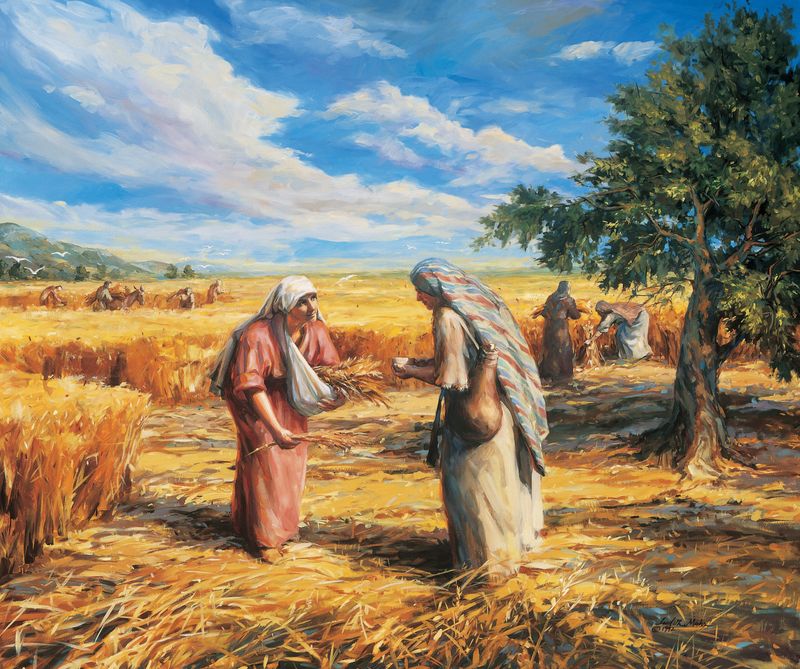
To highlight Rebekah’s impressive example of kindness, you could show your children the picture below or this week’s activity page as you summarize the story in Genesis 24:10–21. This could lead to a conversation a.
Show the picture of Rebekah in this week’s activity page. Point out details in the picture as you summarize the story in Genesis 24:10–21, in which Rebekah showed kindness to the servant of Abraham. Point out that her words and act of kindness were the sign that Rebekah was the one that God wanted to marry Abraham’s son Isaac.
Your children might enjoy acting out the story. Invite the children to pretend to be the servant arriving with his camels or Rebekah getting water for them. Give them phrases to recite from the scriptures, such as “Let me … drink a little water” (verse 17) and “I will draw water for thy camels also” (verse 19). Why is it important for us to be kind to others?
Friend March 2026 “Come, Follow Me: Weekly Scripture Fun” Rebekah was kind. She gave a stranger and his camels water. Go on a kindness hunt! Walk around your home or your neighborhood and look for ways you can show kindness. Then do them!
Bracelets and Scriptures – The manual suggests, “Your family could look in these verses for attributes that made Rebekah a worthy eternal companion for Isaac. Encourage family members to pick one of these attributes that they feel they should develop.”
Scriptures: Read Genesis 24:15–28, 55–60 and let each person choose one way they want to be more like Rebekah.
Bracelet: Write that attribute on a strip of paper and draw specific things you might do if you have that attribute. Tape/staple the strip to make a bracelet. Wear it to remind you of the story of Rebekah. Could also write the attribute on the below jewels and cut them into two strips to make a bracelet.
She was kind and diligent. Abraham’s servant traveled far to find someone for Abraham’s son Isaac to marry in the covenant. He stopped at a well and prayed that the woman who would draw water for both him and his 10 camels would be the one God had appointed to marry Isaac. Rebekah did this. (See Genesis 24:1–28.)
She had great faith. When she was asked the next day if she would go back with Abraham’s servant, Rebekah said she would. She had faith in the Lord, who had guided him. (See Genesis 24:50–58.) Also, over 20 years of childlessness, she kept up hope in her covenants (see Genesis 25:20, 26).
She [sought out] received revelation for her family. When Rebekah was pregnant with twins, [and the children struggled together within her; and she said, If it be so, why am I thus? And she went to inquire of the Lord.] the Lord told her, “The elder shall serve the younger” (Genesis 25:23). She later saw how the elder twin, Esau, rejected the Lord’s counsel and disrespected his birthright and how the younger twin, Jacob, was faithful. She helped Jacob receive the birthright blessing and warned him that his brother wanted to kill him. (See Genesis 27.)
“Joseph, Son of Israel (Part 1)” (May 1990 Friend) An illustratedretellingof thestory of Joseph’s brothers being angry and selling him into slavery.
“Joseph, Son of Israel (Part 2)” (June 1990 Friend) An illustrated retelling of the second half of the story of Joseph, including Joseph’s experience with Potiphar, interpreting the dreams of Pharaoh, and giving his family food.
Come, Follow Me—For Primary: Old Testament 2022 “Genesis 37–41” Jealousy led Joseph’s brothers to make terrible choices. Their wrong choices hurt Joseph and broke their father’s heart. This story can help the children choose to be happy when others are blessed by the Lord.
Invite the children to review Genesis 37:3–11 and draw pictures of Joseph’s coat and his two dreams. How did Joseph’s brothers feel about Joseph? How could they have responded differently? Discuss why it is important to be happy when good things happen to other people.
Sometimes a person might feel envious or jealous if a sibling or close friend receives an important award; is selected for an athletic team, band, orchestra, or choir; or performs the best in his or her class on an exam.
What is the danger of feeling envious or jealous of others who experience good fortune?
We can learn the following principle from the account of Joseph and his brothers: Choosing to hate or envy others can lead us to commit additional sins.
Here’s an object lesson that can help your children follow Joseph’s example of fleeing from Potiphar’s wife: Use two magnets to represent Jesus Christ and Satan. Use a small metal object, like a paper clip, to represent us. Then let your children see how the influence of a magnet on the metal object is stronger when they move the object closer to it. How does Joseph’s experience in Genesis 39:7–12 illustrate this truth?
As the children you teach face temptations throughout their lives, they can gain strength from Joseph’s example of fleeing temptation.
Show a picture of Joseph and Potiphar’s wife (see Gospel Art Book, no. 11), and share the story in Genesis 39:7–12. How did Joseph resist temptation?
Help your children think of temptations they might face. Let them role-play how they could “flee” from these temptations.
When your children face hard times, they need to know that the Lord will be with them, as He was with Joseph. Perhaps you could help your children make a list of hard things that happened to Joseph (see Genesis 37:23–28; 39:20; or “Joseph’s Inspired Dreams” and “Joseph in Egypt,” in Old Testament Stories, 47–51, 52–56). After each hardship they find, invite your children to repeat, “The Lord was with Joseph” Genesis 39:1–3, 20–23 . Invite the children to share what they think the phrase “the Lord was with Joseph” means (Genesis 39:2). Invite them to share experiences when they felt that the Lord was with them or their families during a hard time. Share similar experiences from your life.
“Lesson 14: ” Primary 6: Old Testament “Joseph was Sold into Egypt” Pages 62-66 Ask the children if they have ever had something small, like a piece of sand, in their eye. How did it feel? Show the children the picture of the oyster and the pearl, or, if available, show a pearl and some sand. Explain that something as beautiful as a pearl can develop from the irritation caused by a small grain of sand inside an oyster shell. Explain that there are things in our lives that can cause irritations, like being hurt, disappointed, mistreated, or misjudged. We can complain, be sad, be angry, or be jealous, or we can have a positive attitude and make the best of the situation.
“Joseph and His Brothers” (May 1995 Liahona and September 1994 Friend) Read the story of Joseph in the Old Testament and then circle the true statements from the story and X off those that are false.
Friend May 2018 “Joseph Forgave” Story, video, and goal card.
When Joseph met his brothers again after many years, how did they demonstrate that they had changed since he last saw them? What can we learn about repentance from their experiences?
Joseph recognized that although his experience in Egypt had been difficult, “God meant it unto good” (Genesis 50:20). Has your family experienced any trials that God turned into blessings?
Joseph was sold by his brothers into the hands of the Gentiles, just as Jesus was (see Genesis 37:25–27; Matthew 20:19).
Judah, the head of the tribe of Judah, proposed the sale of Joseph. Certain leaders of the Jews in Jesus’ day turned Jesus over to the Romans. Judas (the Greek spelling of Judah) was the one who actually sold Jesus. (See Genesis 37:26; Matthew 27:3.)
Joseph was sold for twenty pieces of silver, the price of a slave his age. Christ was sold for thirty pieces of silver, the price of a slave His age. (See Genesis 37:28; Matthew 27:3; Exodus 21:32; Leviticus 27:5.)
In their very attempt to destroy Joseph, his brothers actually set up the conditions that would bring about their eventual temporal salvation—that is, Joseph, by virtue of being sold, would become their deliverer. Jesus, by His being given into the hands of the Gentiles, was crucified and completed the atoning sacrifice, becoming the Deliverer for all mankind.
Joseph began his mission of preparing salvation for Israel at age thirty, just as Jesus began His ministry of preparing salvation for the world at age thirty (see Genesis 41:46; Luke 3:23).
When Joseph was finally raised to his exalted position in Egypt, all bowed the knee to him. All will eventually bow the knee to Jesus. (See Genesis 41:43; D&C 88:104.)
Joseph provided bread for Israel and saved them from death, all without cost. Jesus, the Bread of Life, did the same for all men. (See Genesis 42:35; John 6:48–57; 2 Nephi 9:50.)
You and your children could look at the picture of Jacob blessing his sons at the end of this outline and discuss what is happening (see Genesis 48:8–9). If needed, explain that Jacob, Joseph’s father, wanted to give priesthood blessings to his family. Perhaps you could share with each other any experiences you’ve had receiving help from God through a priesthood blessing. What are some reasons we might ask for a priesthood blessing?
Joseph Prophesied about Joseph Smith
Come, Follow Me—For Primary: Old Testament 2022 “Genesis 42–50” Thousands of years in advance, Joseph of Egypt saw that the Lord would call Joseph Smith to do a great work in the latter days. Teach the children how the Lord has blessed us through the Prophet Joseph Smith.
Give the children descriptive clues about Joseph Smith, and invite them to guess who you are describing. Include clues from Joseph Smith Translation, Genesis 50:27–33 (in the Bible appendix), such as “he taught us about covenants” (see verse 28), “he gave us the word of the Lord” (see verse 30), and “he was named after his father” (see verse 33). After the children guess correctly, invite them to find these clues in the verses. What else do we learn about Joseph Smith from the prophecy of Joseph in Egypt?
Liahona February 2020 “Meet the Four Josephs” Lehi tells his son Joseph about some of the prophecies that Joseph of Egypt made about Joseph Smith, who was named after his father, Joseph. The article includes the following: What Did Joseph of Egypt Say about Joseph Smith? How Was Joseph Smith Like Joseph of Egypt? How Did Lehi Know about Joseph of Egypt?
Moses is born to Levite parents, is raised by Pharaoh’s daughter, slays an Egyptian in defense of an Israelite, flees to Midian, and marries Zipporah—Israel in bondage cries to the Lord.
Friend March 2026 “Come, Follow Me: Weekly Scripture Fun” Moses’s mother put baby Moses in a basket and hid him near a river so that he would be safe! Make a small basket using materials in your home. You could use craft sticks, paper, or even fruits or vegetables. Then try floating your basket in some water. Read the scriptures above and talk about how the Lord helped Moses. God’s miracles kept Moses safe!
The Lord appears to Moses at the burning bush—Moses is called to deliver Israel from bondage—The Lord identifies Himself as the God of Abraham, Isaac, and Jacob, and as the Great I AM—He promises to smite Egypt and bring His people out with great wealth.
Jehovah is one of the names of Jesus Christ and refers to the premortal Savior. The Joseph Smith Translation clarifies that the prophets Abraham, Isaac, and Jacob knew the Lord by this name (see Exodus 6:3, footnote c). Usually, when the phrase “the Lord” appears in the Old Testament, it refers to Jehovah. In Exodus 3:13–15, the title “I AM” is also a reference to Jehovah (see also Doctrine and Covenants 38:1; 39:1).
Come, Follow Me—For Primary: Old Testament 2022 “Exodus 7–13” The Israelites were in captivity and could not free themselves, but the Lord showed His power and delivered them. How can you use this story to help the children trust the Lord and His power?
Junior: Read selected verses from Exodus 7–11 to teach the children about the ten plagues that the Lord sent upon the Egyptians. Invite the children to draw pictures that portray some of the plagues. Ask the children to hold up their pictures as you review the plagues again. Read phrases from Exodus 7:5 and 9:14 to explain why the Lord sent the plagues to Egypt.
Senior: Give each child a paper divided into ten sections, and invite the children to draw pictures of the plagues described in these verses: Exodus 7:17–18; 8:1–4; 8:16–17; 8:20–22; 9:1–6; 9:8–9; 9:22–23; 10:4–5; 10:21–22; 11:4–7. What do the plagues teach us about God’s power? Why is it important to know about His power?
Lesson 19: Moses Delivers the Israelites from Bondage,” Primary 6: Old Testament Pass out numbered slips of paper with the scripture references for each of the ten plagues on the corresponding numbered paper. Have each child look up his or her reference and tell the class about it. You could supply the class with art materials and let them draw pictures of the plague that they read about. They could then show the picture to the class as they tell about the plague. What were the ten plagues the Lord commanded Moses to call down upon Egypt because Pharaoh refused to let Israel go? (See enrichment activity 1.)
Story: Moses was a prophet. He told Pharaoh to let God’s people go free (see Exodus 8:1). Pharaoh said he would let them go. But then he broke his promise. God sent frogs, lice, flies, and other plagues to warn Pharaoh to follow the prophet.
Song: “Follow the Prophet,” verse 5 (Children’s Songbook, 110–11)
Activity: Play a game! Have everyone get in a line. Then crouch down low. One person puts their hands on another person’s back and jumps over each person one by one, like a frog. Take turns until everyone has gone. Each time you hop, say one way you can follow the prophet.
All of God’s children come into a world of sin and may find themselves in bondage to Satan and the powers of sin. (The terminology of slavery is used in such scriptures as 2 Nephi 2:29; Alma 34:35; D&C 84:49–51; Moses 4:4; 7:26.) Thus, the pharaoh could be thought of as a type or symbol of Satan. In light of this truth, it should be noted that what finally released the children of Israel from the bondage of the pharaoh (the symbol of Satan) was the death of the firstborn of Egypt. In like manner the atoning sacrifice of the Firstborn Son of God freed the children of God from death, a bondage to Satan.
Leaven, or yeast, was seen anciently as a symbol of corruption because it so easily spoiled and turned moldy. Jesus used this imagery when He warned the disciples of the “leaven of the Pharisees” (Matthew 16:6), meaning their corrupt doctrine (see Matthew 16:6–12). In the law of Moses no leaven could be offered with the trespass offering (see Leviticus 6:17), suggesting that the offering must be without any corruption. For the Israelites, eating the unleavened bread symbolized that they were partaking of the bread which had no corruption or impurity, namely, the Bread of Life, who is Jesus Christ (see John 6:35). The careful purging of the household of all leaven (see Exodus 12:19) was a beautiful symbol of putting away all uncleanliness from the family.
Think of ways to share the story of the Israelites crossing the Red Sea in an interesting and memorable way. For example, you or another ward member could dress up like Moses to tell the story from Exodus 14:5, 9–10, 13–16, 19–22. The children could pretend that the chairs or blankets are the Red Sea, and they could follow the person portraying Moses as he makes a path between them. Or the children could pretend to be the water and move to separate sides of the room as Moses divides them. Emphasize that the Lord gave Moses the power to part the sea so the Israelites could be delivered from captivity.
The Red Crystal This site has a fun reenactment skit. (or you could use the skit below)
When the Lord parted the Red Sea, Moses and the Israelites saw how powerful He is. (see also “The Passover” in Old Testament Stories, 70–74). Then you could share with each other how you have seen God’s power in your lives.
As you read Exodus 14:1–10, imagine how the Israelites might have felt as they saw Pharaoh’s army closing in. Perhaps you feel that you need a miracle to survive a difficult challenge you are facing.
Your family members might enjoy trying to “divide” the water in a bowl or a bathtub, as Moses divided the Red Sea. Help them understand that the Red Sea could not be divided without the power of God. How have we seen God’s power in our lives and the lives of our ancestors?
With the Lord’s help, Moses led the children of Israel out of Egypt. They were frightened because they were trapped by the Red Sea and Pharaoh’s army was chasing after them. “And Moses said unto the people, Fear ye not, stand still, and see the salvation of the Lord” (Exodus 14:13).
Display a picture of the parting of the Red Sea. Read together Exodus 14:21–29. Note the actions in those verses.
Role-play the parting of the Red Sea, using the actions above. Play until everyone has had a chance to play the parts they want.
Discussion: How did the children of Israel exercise faith by doing what the Lord commanded? How can we exercise faith when we experience challenges in our lives?
Help the children act out the events in Exodus 15:23–25; 16:14–15; 17:1–6, pretending to be Moses or the Israelites. If possible, bring an object to help tell each story, such as a branch (to heal the water at Marah), a jar or pot (to fill with manna), and a stick and rock (for the water at Horeb). As you and your children read Exodus 15:23–25; 16:14–15; 17:1–6, let them help you find objects to help tell each story. What do these stories remind us about what Jesus Christ does for us? As part of your discussion, you might read Matthew 7:24–27; John 4:10–14; 6:29–35, 48–51; Helaman 5:12; Doctrine and Covenants 20:77, 79.
The Red Crystal Matching activity: One page has scriptures from Exodus, the other page has scriptures that tie it to Jesus. When a match is made, read both scriptures and ask the children how the object taught them about Jesus.
Come, Follow Me—For Primary: Old Testament 2022 “Exodus 14–17” Divide the class into pairs or small groups, and assign each group to read one of the following passages: Exodus 15:23–25; 16:14–15; 17:1–6. Ask the children in each group to draw pictures representing what they read in these verses, and then ask other class members to guess what they have drawn. Help the children identify what these stories teach about Jesus Christ. What trials do people have today? How do Heavenly Father and Jesus Christ help us with our trials?
As you review these stories, ask the children why bread and water were so important to the children of Israel. What would have happened if they hadn’t had these things?
The accounts of the Lord providing food and water for the Israelites in the wilderness teach us that He can provide for our needs. If we turn to Jesus Christ, He can help us during difficult times in our lives, just as He helped the children of Israel.
Lesson 21: The Ten Commandments,” Primary 6: Old Testament (1996), 90–94 To teach the children that keeping the Ten Commandments helps us be happy. Lesson 22: Israel and the Brass Serpent,” Primary 6: Old Testament (1996), 95–100 To encourage the children to be humble and have faith in Jesus Christ.
Friend April 2026 “Weekly Scripture Fun” Activity: Write the Ten Commandments on pieces of paper. Take turns choosing one and coming up with ways to remember it. You could make up a song, do actions with your hands, or draw pictures! Then see how many you can remember without looking at your list.
Friend June 2018 “Moses Obeyed God” Story, video, and goal card.
What blessings did the Israelites lose because of their disobedience?
When Moses came down from Mount Sinai and saw the golden calf and the people’s behavior, he broke the stone tablets that had been written by the Lord. Moses’s act of breaking the tablets reflected Israel’s broken covenant. President Jeffrey R. Holland explained that “there was considerably more on those tablets than the Ten Commandments.”
The Joseph Smith Translation clarifies that the broken tablets contained the Lord’s instructions for the ordinances and covenants of the Melchizedek Priesthood. These ordinances and covenants are necessary for us to become like God and dwell in His presence. However, because the Israelites hardened their hearts, they were not worthy to receive these blessings from the Lord.
Despite Israel’s disobedience, the Lord was still merciful to those who repented. When Moses climbed Mount Sinai later, the Lord instructed him to institute the “law of a carnal commandment,” or the preparatory gospel administered through the Aaronic Priesthood. This law came to be known as the law of Moses.
Coveting, in this context, means having a selfish desire for something that belongs to another person. Coveting can cause feelings of jealousy, envy, pride, and greed. Coveting can lead us to be ungrateful and never satisfied with what we have.
Story: The Lord asked Moses and his people to build a tabernacle. A tabernacle is like a temple. The Lord told them to build it like a tent so they could take it with them as they traveled to the promised land. You can read about it in Exodus 39:33–43.
Activity: Build a tent like the tabernacle. You can use blankets, towels, chairs, and anything else in your home. Then sit in your tent and talk about why temples are important. Or you could make a small tabernacle with blocks or other items.
Altar of sacrifice The altar in the outer courtyard was used for animal sacrifices. Animal sacrifices were symbolic of the atoning sacrifice of Jesus Christ.
Laver of water Here the priests washed their hands and feet before entering the tabernacle or officiating at the altar of sacrifice. This was a reminder for the Israelites of the need to be clean as they participated in sacred ordinances and prepared to enter the Lord’s presence.
Table of shewbread The 12 loaves of unleavened bread on the table of shewbread (pronounced showbread) served as a reminder to the Israelites that Jehovah was their continual provider. He is the bread of life.
Candlestick Light is a symbol of Jesus Christ, who is “the light of the world.” The light from the lamps can also symbolize other sources of light the Lord has blessed us with, including the Holy Ghost and the scriptures.
Altar of incense The altar of incense was placed in front of the veil leading to the Holy of Holies. The high priest burned incense each morning and night at this altar. The smoke from the incense represented the prayers of the faithful ascending to God.
Veil The veil symbolized the “separation between God and man.” Just as the veil of the temple gave the high priest access to the Holy of Holies, it is only through Jesus Christ and His Atonement that we can enter God’s presence.
Ark of the covenant The mercy seat represented the throne of God. After the Lord gave Moses instructions for creating the ark of the covenant, He promised, “There I will meet with thee, and I will commune with thee from above the mercy seat.”
Come, Follow Me—For Primary: Old Testament 2022 “Numbers 11–14; 20–24” When Moses sent 12 men to find out about the promised land, 10 of them came back afraid because of the mighty people who lived there. Two of them, Caleb and Joshua, were not afraid, because they had faith in the Lord.
Use pictures or drawings of grapes, honey, giants, and grasshoppers to briefly tell the children about the 12 men Moses sent to explore the promised land (see Numbers 13:17–33). Explain that they found a lot of fruit and other foods (invite the children to pretend to eat the food), but they also were afraid because the people there were large and strong (invite the children to pretend to be afraid). Show a picture of Jesus, and point out that two Israelites, Caleb and Joshua, were not afraid because they had faith in Jesus Christ.
Read Numbers 14:9 to the children, and talk about a time when you were afraid but your faith in Jesus Christ helped you have courage. Help the children think of any similar experiences they’ve had.
Just as the children of Israel were healed by looking at the serpent of brass, the children in your class receive salvation by looking to the Savior.
How is the brass serpent like Jesus Christ? (see John 3:14–15). Your children might enjoy making a serpent out of paper and write on it some simple things they can do to “look upon the Son of God with faith” (Helaman 8:15).
The brass serpent represented Christ taking upon Himself the “sins” or, in this case, the venomous consequences of rebellion, allowing for healing.The healing was not in the object itself, but in the deliberate action of looking, which was a required show of faith in God’s plan
Using this week’s activity page, tell the children what happened when “fiery serpents” came into the Israelites’ camp (see Numbers 21:6–9). Help them see how the brass serpent is like Jesus Christ (see John 3:14–15). Then let the children take turns using the picture to tell the story to each other.
Moses had spent his life preparing the children of Israel to enter that promised land, and the book of Deuteronomy records his final instructions, reminders, exhortations, and pleadings with the Israelites.(Come, Follow Me—For Individuals and Families: Old Testament 2022)
Joshua led the Israelite army to the land of Canaan. They arrived at a city called Jericho. The city was very strong and had high walls. The Lord told Joshua how to conquer Jericho. He said the Israelites should march around Jericho every day for six days. Joshua obeyed the Lord.
Joshua told the priests to carry the ark of the covenant in front of the Israelites. Each day, the army marched around Jericho, and seven priests blew their horns. All the other Israelites were silent.
Story: Deborah was a righteous leader. She sat under a palm tree and listened to her people (see Judges 4:4–5). She helped them repent and follow God.
Activity:Psalm 92:12 says, “The righteous shall flourish like the palm tree.” Make the palm tree on page 36. Talk about ways you can follow God.
Friend June 2022 “Deborah under the Palm Tree” Color the pieces and cut them out along the blue lines. (Do not cut along the top of Deborah’s head—leave her attached to the base.) Fold the tab and then bend the tree base to glue the tab to the other side. Glue or tape the leaves to the top.
Ask the children to imagine that they needed to gather an army together to go to battle. How many people would they want in their army? Using Judges 7:4–7, invite the children to act out how the Lord helped Gideon choose the army that would deliver Israel from the Midianites. Why did the Lord want Gideon’s army to be so small? (see Judges 7:2).
Use this week’s activity page to teach the children about how the Lord made Israel’s army smaller so the Israelites would know that His power had saved them from their enemies. Share examples of small things that do a great work, such as bees gathering nectar to make honey. Bear your testimony that God can help us do a great work, even when we feel small.
Invite the children to draw pictures of a sword, shield, trumpet, lamp, and pitcher. Ask the children which of these objects they would take with them into a battle. Then they could read Judges 7:16 to learn what the Lord told Gideon’s army to use. Why would it have taken courage and faith to do this? Read together Judges 7:19–21 to learn how the army used the trumpets and pitchers to defeat the Midianites. What do we learn about the Lord from this story?
“Lesson 25: Samson,” Primary 6: Old Testament Samson’s mission would require physical strength. The Lord made a covenant with Samson that as long as he obeyed the Lord, he would be physically strong. Samson’s long hair (see Judges 13:5) was a sign of this covenant. When Samson kept his covenants he was blessed with the ability to help his people, but when he broke his covenants he lost both his spiritual and physical strength.
Samson lost both his physical strength and his spiritual strength because he violated his covenants with God,
Ruth supported Naomi by staying with her. Try this activity to learn about supporting family:
Choose a family member and stand back-to-back. Place any object (a small ball or a book) between each other’s backs.
Working as a team, see how many steps you can take together without letting the object fall.
Take turns as a family until everyone has had a chance to work as a team to help each other.
Discussion: How did Ruth and Naomi help each other? Ruth believed in Heavenly Father and had faith, so she stayed with Naomi. How was she blessed? How can we support each other and trust the Lord when we have difficulties?
Story: Read about Ruth in the scripture story on page 8. She worked hard and gathered grain to take care of her husband’s mother. God blessed her for serving others.
Activity: Cut out pieces of paper in the shape of grain kernels. Use a stick or long piece of paper as a stem. Glue or tape your kernels to the stem to make a stalk of grain. Whenever you serve someone, pull off a kernel. Keep going until the stem is bare!
Friend July 2026 “Basket Craft Service” Make this basket with pieces of wheat to remember Ruth and her kindness! On each piece, write one way you can serve someone this week. When you do that service, put that piece of wheat into your basket.
Why was Hannah was sad? What can we do when we are sad? Read to the children 1 Samuel 1:10, and invite the children to listen for what Hannah did. Ask the children how they feel when they pray. Read from verse 18 to explain that after her prayer, Hannah “was no more sad.” Help the children see that they can always pray to Heavenly Father, especially when they are sad.
Use this week’s activity page to teach the children that they can pray to Heavenly Father and He will help them. While the children are coloring, sing or play a recording of a song that teaches about prayer, such as “A Child’s Prayer” (Children’s Songbook, 12–13).
Come, Follow Me—For Primary: Old Testament 2022 Let them take turns acting out the story of David and Goliath. Prompt the child pretending to be Goliath to say, “Give me a man, that we may fight together” (1 Samuel 17:10). Prompt the child pretending to be David to say, “I come to thee in the name of the Lord” (1 Samuel 17:45). Testify that when we have faith in the Lord, He will help us have courage like David had.
“David and Goliath” (July 2002 Friend) Use this cutout scene to tell the story of David slaying Goliath.
“God’s Power Within You” (January 2002 Friend) President Gordon B. Hinckley tells the story of David and Goliath and teaches that we can overcome the Goliaths in our lives.(includes images of the story)
Friend July 2022 “Stand for What You Believe” Elder Rasband tells of his youth and often being the only Church member at school. He says that When we live the gospel, we will be different. The Apostle Peter said we would be “peculiar” (1 Peter 2:9). And that’s OK. We don’t need to worry about being different when we stand for what we believe. David stood for what he believed. He wasn’t alone. God’s power was with him. He beat Goliath. God will help us even when we face Goliath-sized challenges.
Friend August 2018 “David Trusted God” Story and goal card. (Young David trusted God and did hard things, and I can too!)
David and Bathsheba
“King David” in Old Testament Stories, 117–20, can help you tell your children the story in 2 Samuel 11. You might ask your children to identify the wrong choices David made and suggest good choices he could have made instead. What are some things we can do when we are being tempted that can help us make the right choice?
Video tells story of David. President Oaks compares David’s story to looking at pornography.
King Solomon
“Lesson 96: 1 Kings 1–10,” Old Testament Seminary Student Material We read in 1 Kings 3:16–23 that two women petitioned King Solomon to judge a difficult situation. The two women lived in one house and had borne children at about the same time. One night, one of the women woke up to find that her baby had died. Rather than mourn the loss of her baby, she switched her dead baby with the other woman’s baby. The next morning, when the second woman awoke to nurse her child, she found the other woman’s dead baby in her arms instead of her son. When the women came before Solomon, the first woman fervently denied the other woman’s accusation that she had switched the babies.
Read 1 Kings 3:24–27 to find out how Solomon identified the child’s rightful mother.
We read in 1 Kings 3:28 that all of Israel heard of this experience and recognized that God had blessed Solomon with wisdom. According to 1 Kings 4, knowledge of Solomon’s wisdom spread to other nations.
The Temple of Solomon
Explain to the children that David, Solomon’s father, had wanted to build a temple but was denied the privilege. The Lord instead chose Solomon to direct the seven years of construction. When the elaborate temple (much of it was overlaid with gold) was finished, the priests carried the ark of the covenant, which contained the two tablets of stone the Lord gave Moses, “to the most holy place” of the building (1 Kings 8:6). Then the glory of the Lord filled the temple (see 1 Kings 8:10–11), and Solomon offered the dedicatory prayer (see 1 Kings 8:22–53.)
Rehoboam
Rehoboam, Solomon’s son, becomes king.
After the death of Solomon, his son Rehoboam became king and increased the people’s burdens. The people revolted and were divided into the Northern Kingdom of Israel and the Southern Kingdom of Judah. Jeroboam, king of the Northern Kingdom, introduced idolatry and other wicked practices among his people. Later, Elijah was a prophet during the reign of Ahab in the Northern Kingdom.The Lord sent a drought according to Elijah’s word.
Story: Elijah was a prophet. He learned that the Holy Ghost speaks in a still, small voice. You can read this story on page 8 or in 1 Kings 19:11–12.
Song: “The Holy Ghost” (Children’s Songbook, 105)
Activity: Have everyone sit in a line. The first person whispers some words to the next person. Each person whispers the words to the next person. The last person tells everyone what they heard. What can you do to hear the Holy Ghost better?
Activity: The Holy Ghost speaks in a still, small voice. Have one person read the verses above in a quiet voice. While they read, everyone else makes storm noises as loud as they can! Can you hear what the scriptures are saying? Then have everyone be quiet and listen to the scriptures again. What do you learn about the Holy Ghost and how He speaks to us?
Story: Naaman had a sickness called leprosy. The prophet Elisha told him to wash seven times in the Jordan River to be healed. At first, Naaman didn’t want to. But when Naaman did what Elisha said, he was healed! (See 2 Kings 5.)
Activity: Make or draw a pretend river using rocks, sticks, chalk, or blankets. Then jump on your river seven times. Talk about how doing simple things God asks us to do can help us.
Read the story of Elisha and the young servant in 2 Kings 6:8–23.
Get a thin stick that could be easily broken.
Challenge someone to break it.
Put 10 or more sticks together. Challenge the same person to break the group of sticks without separating any.
Why was the challenge more difficult the second time?
Read 2 Kings 6:16-17: “Fear not: for they that be with us are more than they that be with them. And Elisha prayed, and said, Lord, I pray thee, open his eyes that he may see. And the Lord opened the eyes of the young man; and he saw: and behold, the mountain was full of horses and chariots of fire round about Elisha.”
Whom did Elisha and the young servant see protecting them?
Read the following: “Like that servant of Elisha, there are more with you than those you can see opposed to you. Some who are with you will be invisible to your mortal eyes” (Henry B. Eyring, “O Ye That Embark,” Liahona, Nov. 2008, 58).
Discussion: Read Doctrine and Covenants 84:88. At times when we might feel alone, how can we trust that we are not? How is the Lord protecting and helping us today? (For ideas, see Ronald A. Rasband, “Be Not Troubled,” Liahona, Nov. 2018, 18–21.)
The examples of Esther and Mordecai can help your children understand that bravery means doing what is right even when you are afraid. Consider writing the phrases Mordecai was brave when he … and Esther was brave when she … . As you learn the story of Esther together, your children could suggest ways to finish the sentences. You could read Esther 3:1–11; 4:10–17 or “Queen Esther” (in Old Testament Stories, 166–70).
After reviewing the story of Esther, attach a card with the name of one of the characters from the story on the back of each child. Invite the children to try to find out whose name is on their backs by asking other children questions like “Was this person righteous?” or “Was this person a woman?” Then discuss how Mordecai and Esther were instruments for the Lord to save the Jews.
Esther was courageous in approaching the king and saving her people.
Sit in a circle and ask a family member to name a scripture hero who was courageous, stating one way in which the person showed courage (example: Esther, courage to speak).
The next person in the circle says the name of the first hero and then chooses another person in the scriptures they think was courageous and explains why.
Continue around the circle, naming each scripture character who has been selected and adding a new one. Keep playing until everyone in the family has had at least one turn.
Discussion: How can we be courageous in our time and in our specific circumstances? How can we bless the lives of others when we act courageously and do the right thing?
Friend July 2022 “Stand for What You Believe” Elder Rasband tells of his youth and often being the only Church member at school. He says that When we live the gospel, we will be different. The Apostle Peter said we would be “peculiar” (1 Peter 2:9). And that’s OK. We don’t need to worry about being different when we stand for what we believe. David stood for what he believed. He wasn’t alone. God’s power was with him. He beat Goliath. God will help us even when we face Goliath-sized challenges.
Lesson 29: David and Jonathan,” Primary 6: Old Testament (1996), 125–30 To help the children understand how to be a true friend. Lesson 30: King David and Bathsheba,” Primary 6: Old Testament (1996), 131–34 To help the children keep their thoughts and actions pure.
Friend October 2018 “The T-E-S-T” One day, when Sharon’s father was reading to her the Bible story about Daniel in the lion’s den, he traced the word “test” on her forehead. He told her she would have tests like Daniel, but she should follow Heavenly Father’s commandments and not give into fear. (Also includes a lion activity of ways Heavenly Father helps us with challenges. )
Friend November 2018 “Coloring Page: I Love Scripture Stories” Children acting out story of Daniel in lion’s den.
Isaiah served as prophet from 740–701 BC, almost 40 years. At the time of his calling, Isaiah might not have been the white-haired old man we often imagine. You can read about his calling in 2 Nephi 16.
Isaiah was married and had at least two sons. You can read about his wife, “the prophetess,” and the naming of his newborn son by the Lord in 2 Nephi 18:3.
Isaiah is the most frequently quoted prophet in scripture.
His prophecies focus heavily on three major areas: the life and Atonement of Jesus Christ, the latter-day gathering of Israel, and the Second Coming
Come, Follow Me—For Individuals and Families: Book of Mormon 2020 Engraving on metal plates is not easy, and space on Nephi’s small plates was limited. So why would Nephi go to the tedious effort of copying a large amount of Isaiah’s writings into his record? In an article in the Ensign September 1998, it explains that Nephi’s own commentary on Isaiah begins in 1 Nephi 19, where he tells us that in order to “more fully persuade them [Nephi’s people] to believe in the Lord their Redeemer” he would turn particularly to the prophet Isaiah (see 1 Ne. 19:23).
Friend August 1994 “Isaiah and the Time Machine” Anthony was having a hard time following along during his family’s Book of Mormon study time. They were reading the words of Isaiah in 2 Nephi, and he didn’t understand them. Anthony loved playing in his pretend time machine and his father decided to help the children understand Isaiah by using the time machine. (Excellent story!)
Liahona March 2012 “How Can I Understand the Words of Isaiah?” Article includes the following: know Isaiah’s main topics, the reasons for studying Isaiah, the events of Isaiah’s days that he used symbolically, helpful hints to understanding his words, etc.
Friend November 1994 “Isaiah” Isaiah prophesied of many things that would happen in his day and in the future. This article includes an explanation of Isaiah’s most quoted prophecies.
Friend November 1994 “Isaiah” Isaiah prophesied of many things that would happen in his day and in the future. This article includes an explanation of Isaiah’s most quoted prophecies
Print the pictures, and the word pages. Cut each picture page in half lengthwise so one picture is on each half. Put each of the word pages in a page protector. (Optional: cover each word page with a colored paper, and tape the top edges so the colored paper can be flipped up to show the clue.)
Items needed: a large picture of Joseph Smith, a dry erase pen or strips of paper, a digital copy of the song “Praise to the Man” (or a CD player and a CD of “Praise to the Man.” The CD hymns with words can be found at most meetinghouse libraries. If a CD is not available, the song can be downloaded from www.churchofjesuschrist.org/study onto a laptop. A microphone can be put next to the laptop speaker so the children can hear the song. Another idea would be to have the adults in the room sing the song.)
Presentation
Explain to the children they are going to learn a new song, and they are going to do two activities to help them remember it. The first activity is to try and guess who the song is about. (Post the pictures on the board and explain that the song is about one of these people. Also post the first seven word pages on the board, in order, but turned over or covered with another sheet of paper.) Explain that the covered pages are lines in the song, and they are clues to who the song is about. One person on the board will be eliminated as each clue is read. (Some of the children may guess the name before the clues are finished, but tell them not to say it out loud.)
The second activity they are going to do is find the correct word in each line. Explain that there will be two orange words on each song page. One of the words is the correct word that is in the song, and the other is a synonym and means the same thing as the correct word. They are going to listen to the song on CD and see if they can figure out which is the correct word.
To begin teaching the verse, turn over the first song page on the board, and explain to the children that the first line in the song is the name of the song – “Praise to the Man.” Point out that this line doesn’t have any orange words in it, but it is a clue. Have a volunteer take off one of the pictures on the board that doesn’t match with this clue. (Emma Smith, because she is not a man.)
Turn over the second song page on the board – “who talked/communed with Jehovah.”
• Who is Jehovah? (Jesus) Which of the people on the board did not talk to or communicate personally with Jesus. (Benjamin Franklin) (Note: We don’t know if President Monson has talked directly with the Savior, but we do know that as His spokesman on the earth, President Monson has received direction from the Savior through revelation. The picture of President Monson is included because he is needed for a clue further on in the song.) (Lorenzo Snow saw and talked with the Savior Jesus Christ in the Salt Lake Temple – see Friend/August 1993)
Once the children have taken off one of the pictures, have them listen to the CD and see which of the orange words is correct. (Whenever they listen to the CD, start it from the beginning. Have the children sing along until they get to the clue they are working on, and then they should just listen.) Have a volunteer cover up the incorrect word with strips of paper or cross it out with a dry erase pen.
Turn over the third song page on the board – “Jesus anointed/appointed that prophet and seer.” Explain that the clue for this line is the words “prophet and seer.”
Which person on the board is not considered to be a prophet and seer? (Joseph had a very special role as Jesus’ guardian, but as far as we know he was not considered to be a prophet and seer.)
After the children guess the clue, have them listen to the CD to find out which of the orange words are correct. After they figure out which is correct, explain that one definition of anointing is- a sacred ceremony or process of appointing someone to a position of great responsibility, usually using consecrated oil. (For example, in the scriptures, kings and priests were anointed to their office in ancient times by prophets.)
Explain to the children that the next line in the verse needs to be skipped for now because it would give away who the song is about. Turn over the line that comes after the skipped line – “Kings shall praise/extol him and nations admire/revere.”
• Which of these prophets is not well enough known for kings to praise and nations to admire?” (The choice would be either the Brother of Jared or Lorenzo Snow. Have them take off Lorenzo Snow.)
After the children remove a picture, have them listen to the CD for the correct words in the line. (Try to start the CD at this point instead of at the beginning.)
Turn over the next song page on the board – “Hail/salute to the prophet ascended /risen to heaven”.
• What does ascended or risen to heaven mean? It means that the person is no longer living and is in heaven. Which prophet is still living in mortal life? (President Monson) (Note: Moses might be a confusing one for this category because he is not dead but was taken up to heaven in a translated state.)
Turn over the next song page on the board – “Traitors and tyrants/oppressors now fight him in vain/unsuccess.”
• Which prophet did not have traitors and tyrants fighting against him, that we know of? (The Brother of Jared)
After the children remove a picture, have them listen to the CD for the correct words in the line. After they have crossed out the incorrect word, go back to the song line that was skipped, and turn it over -“Blessed to open the last dispensation/gospel period“.
• Dispensation is a period were the gospel is renewed upon the earth. Which prophet opened the last dispensation? (Joseph Smith) Remove the picture of Moses and replace the small picture of Joseph Smith with the large picture. Point out that the children have discovered who the song is about.
Have the children listen to the CD for the correct words in the line. Start the CD from the beginning and remind them to sing all lines, except for the current clue.
Put the last two lines on the board one at time starting with – “Mingling with Gods, he can plan for his brethren.”
• Do you think Joseph Smith is still serving in heaven trying to help us, his brothers and sisters?
Turn over “Death cannot conquer/overcome the hero again.”
• How is Joseph Smith a hero? (See D&C 135:3) He gave his all, including his life, in service to God and his fellow man.
Can death overcome him again after he is resurrected? No, he will never die again.
Play the CD all the way through, and have the children sing the song until they come to the last line, then they should listen for the correct word.
Note: If you have already taught this verse, this activity can be used as a review. This was a hard song to prepare and teach. If you find any problems with the presentation, please let me know.
Items needed: medium size rocks (or cans of food with the labels removed), a backpack or heavy duty bag, chalk, some little pieces of wrapped candy and a candy bar for each child. Tape the burden situations to the rocks (or cans of food).
Attention Activity
Explain that you are going to start off the lesson by giving each of them a small piece of candy. Point out that the piece of candy is small, but if they promise not to eat or open it, you promise to give them something bigger and better at the end of class. Emphasize the fact that you are both making promises.
Point out that eating candy is not a sin, but there are many things in life that give pleasure that are against the commandments of God because they are spiritually harmful. If we obey God’s commandments and avoid partaking in these spiritually harmful things, we can eventually receive the greatest gift of all, which is eternal life. Tell the children that in today’s lesson they will learn how the Lord tries to help us avoid these harmful things so that we can gain this eternal reward.
Scripture Story
Using the visual aids, tell the following story. As the story is told, background scenery such as a waterfall, a pool of water, and a grove of trees can be drawn on the chalkboard.
Remind the children that in last week’s lesson they learned about the prophet Abinadi being condemned to death by the wicked King Noah. They also learned about the repentant priest Alma who pleaded for Abinadi’s life. King Noah was angry with Alma and tried to have Alma killed, but Alma fled and hid. Alma hid in the wilderness at a place called Mormon.
Why was Mormon a good place to hide? (Have the children look up and read Mosiah 18:4-5 to find the answer.) It had a fountain of pure water, it was near the border of the land, it was supposed to be infested at times with wild animals, and it had a thicket of small trees that Alma hid in during the day to avoid the searches of the king–so Alma had water, food, and seclusion and cover while hiding.
At times, Alma secretly went among the people and taught the words of Abinadi to all who would listen. Many believed Alma’s words. Those who believed his words went to the place called Mormon to hear him preach.
One day Alma was teaching a large group of believers near the waters of Mormon. He taught them faith in Jesus Christ and repentance. He asked if they desired to take the next step toward becoming God’s people.
What is the next step after faith and repentance? Tell the children to think of the fourth Article of Faith. (Baptism)
In order for the believers to be called God’s people they needed to covenant (promise) to serve God and keep his commandments. Sometimes when people make promises they shake hands or sign something as a symbol of their agreement. Baptism served as a witness or sign that they were willing to serve God and keep his commandments because baptism symbolizes the death of the old sinful person and the rebirth of the new spiritual person.
When the people heard they could be God’s people they clapped their hands for joy and exclaimed that it was the desire of their heart.
In order to be called God’s people they needed to covenant to serve God and keep His commandments. What is a covenant? A covenant is a two-way promise made between us and the Lord; both sides make promises.
Why does the Lord want us to make covenants? The Lord loves us and wants us to gain the blessings of eternal life, and in order to do this we must become like our Savior Jesus Christ and do the things he would do. The Lord knows that when we make bonding promises and commitments to do those things, we are more likely to do them.
Activity
Put the “Baptismal Covenants” word strip on a wall or display board. Put the word strip “We Promise” and the word strip “The Lord Promises” on each side underneath it.
We Promise
Have the children look up and read Mosiah 18:8-10 to find the covenants we make at baptism. As they find each one have them put the corresponding word strips under the “We Promise” word strip.
To come into the fold of God and be called his people.
We promise to join his church and take upon us the name of Christ. As members of his church we represent Christ and are to be examples of his teachings. (See the lesson on King Benjamin to further review this principle.)
To stand as a witness of God at all times and all places.
A witness is someone who tells others what they know and have seen; so a witness of God tells others what they know about God and His church. They state their beliefs in His commandments and try to be an example of them.
To serve God and keep his commandments.
We become more like our Savior as we obey the commandments.
To serve and help others.
We become more like our Savior as we serve and help others, which includes:
o Mourning with those that mourn.
o Comforting those that stand in need of comfort.
o Bearing one another’s burdens.
How do we mourn with those that are mourning? Answers might include: grieving and feeling sadness for the person’s loss and sorrow.
How do we bear one another’s burdens that they may be light? (Discuss this by doing the following activity.)
Activity
Show the children the rocks, and explain that you are using the rocks to represent the burdens that some people carry. Read the situation title as you put each rock into a bag. Tell the children that life’s burdens can become heavy and difficult to carry. Let each child come up and lift the bag. Ask if they would want to carry that weight for very long. Remind the children that we covenant at baptism to help each other with our burdens. Have the children take turns reaching into the bag and taking out a rock. Have them read the situation and tell how they can help someone with that burden to make it lighter and easier to bear.
The Lord Promises
• What does the Lord promise if we keep the covenants we make? (Have the children look up and read Mosiah 18:9-10 to find the things the Lord promises. As they find each one, have them put the corresponding word strips under the “The Lord Promises” word strip.
We can be redeemed of God.
This means we can be forgiven of our sins when we repent.
We can come forth in the first resurrection.
We will be ready and spiritually prepared to come forth out of the spirit world during the first resurrection.
We can have eternal life.
Eternal life is the kind of life Heavenly Father has, which includes having a fullness of joy, love, peace, knowledge, and power.
He will pour out his Spirit more abundantly upon us.
As we keep our covenants, the Lord will bless us with his spirit more abundantly. The companionship of the Holy Ghost is a wonderful blessing because the Holy Ghost guides, teaches, protects, and comforts us.
The Lord promises to pour out wonderful blessings upon us if we keep our covenants (promises) to do the things he asks us to do.
Have the children trade their small piece of candy for a full size candy bar. Ask the children what would have happened if they hadn’t kept their promise and had instead opened and eaten the small piece of candy. They wouldn’t have received the bigger, better prize. Point out that it is the same with covenants. If we partake of unfulfilling sinful pleasures while on the earth instead of keeping our covenants (promises), we may not receive the wonderful blessing of eternal life which brings true happiness and joy. (Note: If a child has opened or eaten his or her candy, tell them they can still have another chance. Give them another piece of candy, and tell them to bring it back the following week. If they bring it back uneaten and unopened, they can still earn their reward. The Lord also gives us the opportunities in life to fix our mistakes and repent.)
Scripture Story Continued
After the people told Alma they wished to become God’s people and be baptized, Alma began to baptize them in the waters of Mormon. The first one he baptized was a man named Helam. As Alma baptized Helam, Alma submerged himself also.
Why did Alma immerse himself also when he baptized Helam? In Mosiah 18:13 it says that Alma had the priesthood authority to baptize. This is evidence that he had already been baptized. Therefore when Alma immersed himself with Helam it was merely as a token to the Lord of his humility and full repentance. Alma did not immerse himself again while baptizing the others. (Joseph Fielding Smith: Answers to Gospel Questions)
Alma baptized about two hundred and four souls that day at the waters of Mormon, and anyone who was baptized from that time forward was also added to the church of Christ.
King Noah eventually discovered there was a movement among the people. He sent his servants to watch the group. When the king’s servants reported what was happening, Noah said that Alma was stirring up the people to rebellion against him. Noah ordered his army to destroy them. Alma was warned of the Lord that the king’s army was coming, so he and his people took their tents and their families and departed into the wilderness. They were in number about 450 souls.
Conclusion
As we keep our baptismal covenants, we learn to become more like our Savior Jesus Christ, and we become worthy to receive the greatest gift and reward we could ever receive, which is eternal life.
Weekly Reading Assignment
Give each child a new scripture reading chart, and remind the children to do their scripture reading assignment for this week: Mosiah 18:1-17, 30-35
Preparation
• Print the visual aids. Number the visual aids on the back in the order printed.
• Items needed: tape, an envelope or small paper bag, a clear jar full of nine opened rolls of pennies (or 450 of some other item), small pieces of paper, pencils, a Book of Mormon for each child.
• Print and cut out the situation cards. Put them in an envelope or small bag.
Attention Activity
Show the children the jar of pennies. Have them each write on a piece of paper how many pennies they think are in the jar. After they have guessed, instruct them to put their papers under their chairs. Explain that in today’s lesson they will learn how one person, who stood up for the right, influenced the lives of as many people as there are pennies in the jar.
Scripture Story Activity
Attach the visual aid pictures to a wall or chalkboard in random order. Tell the following story, stopping whenever you see the initials WHN. Have the children guess “What Happens Next” by picking out a picture on the wall. After you continue, have them decide if the picture they picked goes with that part of the story. If it doesn’t, have them choose the correct picture.
Many years before King Benjamin’s address to his people, a group of people led by a man named Zeniff left Zarahemla and went back to the land of Nephi. Zeniff and his people wanted to return to the land of Nephi because they considered it to be the land of their inheritance.
• What was the problem with their plan to return to the land of Nephi? The Lord had commanded the people to leave the land of Nephi because of the danger from the Lamanites.
• Were Zeniff and his people being obedient to the Lord’s commands when they went back to the land of Nephi? What usually happens when people don’t listen to the Lord? (They have to suffer the resulting consequences and sorrows.) We need to trust in the Lord, that he knows what is best for us.
WHN – When Zeniff and his people arrived at their destination, Zeniff took four men and went to talk to the king of the Lamanites about allowing them to possess the land of Nephi.
• The Lamanite King allowed them to possess the land, but he had a reason for allowing it. What might that reason have been? (See Mosiah 9:10) The Lamanite king was cunning and devious, and he allowed them to possess the land so that the Lamanites could bring Zeniff’s people into bondage. The Lamanites were a lazy people, and they hated the Nephites. They wanted to glut themselves on the Nephite’s labor.
WHN – The king of the Lamanites allowed Zeniff and his people to live in peace for several years to give the Nephites time to establish their crops and flocks.
WHN – The king of the Lamanites then incited his people to attack Zeniff’s people.
WHN – Zeniff and his people fought against the Lamanites, and eventually they were able to drive them off because Zeniff and his people turned to the Lord for help.
They set guards around the land to keep watch so the Lamanites could not come upon them and destroy them. Zeniff eventually became old. Before he died, Zeniff conferred his kingdom upon his son Noah.
WHN – Unlike his father, Noah was not a good king, and he did not keep the commandments of God.
• What were some of the things King Noah did that were against the commandments? (See Mosiah 11:2, 5 and 14 to find the answers.)
o He had many wives and concubines, which was not lawful.
o He placed his heart upon riches. He taxed the people to support himself in luxury. He had a palace and many elegant and spacious buildings built. He used gold and other precious items to ornate them.
o He spent his time in partying, wild living, and excessive wine drinking.
o He got rid of all the consecrated priests. He appointed his own priests–men who would sustain him and his wicked life style.
o He caused and encouraged his people to commit sin.
• Why would King Noah want his people to commit sin? Through getting others to sin, Noah may have hoped to justify his sins and make sin seem acceptable and normal. (Encourage the children to remember the story of wicked King Noah when someone tries to get them to do something wrong.)
After many years the Lamanites began to attack the people again. King Noah’s armies drove them back, but King Noah’s people had become wicked and prideful. They boasted of their strength because of their victory. They also delighted in the killing and the bloodshed of their enemies.
WHN – A prophet named Abinadi was commanded by the Lord to go among the people to preach and prophesy.
• Ask the children what they think Abinadi told the people. (See Mosiah 11:21) He warned them that unless they repented they would be delivered into the hands of their enemies and be brought into bondage.
• How did the people respond to Abinadi’s words? (See Mosiah 11:26) The people were angry with him and they wanted to kill him, but the Lord delivered him out of their hands.
• Why do you think some people get angry with those who call them to repentance? Answers may include the following: It reveals their evil actions and guilt. They desire to continue doing the evil things. Their pride is offended because they don’t want to acknowledge they have weaknesses.
Because of their anger, those who are sinning may try to make it appear as if the person who is calling them to repentance is in the wrong or at fault. King Noah became angry and tried to make Abinadi seem like a self-righteous person trying to cause contention.
• When we are told to repent and improve some area of our life, how does the Lord want us to respond? He wants us to be humble and teachable.
.Why does the Lord want us to repent? Because he loves us and does not want us to suffer the temporal and eternal consequences that result from sin.
King Noah sent his men to get Abinadi so he could kill him, but they could not find him. After two years Abinadi came back among the people.
• Why did the Lord wait two years before sending Abinadi back? To give the people time to repent.
But the people had not repented. Because they did not repent, Abinadi told them they would be smitten with bondage, afflictions, famine, and pestilence. He also said they would be utterly destroyed if they did not then change their ways.
WHN – The people were angry with Abinadi. They bound him and took him before King Noah.
WHN – The priests questioned Abinadi, trying to cross him so they would have something to accuse him of. Abinadi answered them boldly and withstood all their questions. He confounded them to their astonishment. He accused them of altering and misrepresenting the ways of the Lord for their own purposes, and he accused them of not keeping the laws that they were supposed to be teaching.
• How did King Noah respond to Abinadi’s words? (See Mosiah 13:1) King Noah wanted to kill Abinadi, and he tried to make it seem as if Abinadi was crazy. Why would King Noah try to make it seem as if something was wrong with Abinadi?
WHN – They attempted to take Abinadi, but he withstood them. He told them not to touch him because he had not finished delivering his message. The people didn’t dare lay their hands upon Abinadi because the spirit was with him, and his face shone with exceeding luster. He also spoke as with power and authority from God. Abinadi preached to them many things about the commandments and about the Savior Jesus Christ.
• When Abinadi was done with his message how did King Noah respond this time? Did King Noah repent after witnessing that the power of God was with Abinadi? (See Mosiah 17:1) King Noah commanded that Abinadi should be put to death.
• Why did King Noah want to slay Abinadi? (See Mosiah 13:7) Because it cut him to the heart that Abinadi was speaking the truth about his iniquities.
• Did anyone repent and believe Abinadi’s words? (See beginning of Mosiah 17:2) There was a priest named Alma that believed the words of Abinadi.
WHN – Alma pleaded with the king for Abinadi’s life.
WHN – The king cast Alma out and sent his servants to kill him. Alma hid and could not be found. While he was hiding he wrote down all the words Abinadi had spoken.
King Noah and the priests told Abinadi they would kill him unless he denied the things he had said.
• How did Abinadi respond? (See Mosiah 17:9-10) Abinadi told King Noah he would not recall the words he had spoken, and if King Noah killed him, then his innocent blood would stand as a witness against the king at the last day.
To take innocent life is murder and merits eternal punishment. This made Noah fearful and he was about to release Abinadi, but the priests stirred Noah back into anger.
WHN – They whipped Abinadi, and then they burned him to death. As Abinadi was burning he cried out that even as they had done to him so would they endure the same.
• Why did the Lord allow Abinadi to be killed? Sometimes the Lord’s servants are called to seal their testimony with their blood. Their death stands as a witness of the truth of their words and also stands as a witness against the wicked.
• Why was Abinadi not afraid to die? Abinadi knew that he would receive eternal life and salvation because of his faithfulness.
WHN – After Abinadi’s death, his prophecies that God would deliver the people into the hands of their enemies began to come true when the Lamanites attacked the city.
WHN – The king commanded the people to flee, but the Lamanites pursued them and overtook them and began to slay them. The king commanded that the men should leave their wives and children.
• Why would King Noah command his men to leave their wives and children? He was concerned about his own safety, and the women and children were slowing them down.
Some of the men stayed with their families and were able to convince the Lamanites to spare them and their loved ones. They were taken captive.
WHN – The men that had left with the king wanted to return for their wives and children, but the king commanded them not to. They became angry and caused him to be burned to death.
Point out that Abinadi had prophesied that King Noah would suffer the same manner of death that he had inflicted upon Abinadi.
Discussion
Abinadi stood as a witness for God. A witness for God is someone who states his or her beliefs in God and in his commandments. Ordinarily they do not have to sacrifice their lives to do this.
• How can we stand as witnesses for God?
Activity
Tell the children they are going to do an activity to help them see how they can stand for the right and be a witness for God. Divide the children into sets of two. Have each set of children choose a situation card from the envelope. Have the children act out the scenario found on the card. Have them demonstrate how they can be a witness for God in each situation by sharing their beliefs and standing for the right. Give the children a couple of minutes beforehand to talk about and prepare their scenes with their partners.
Conclusion
When we are valiant in standing as a witness for God we can be an influence for good in others’ lives.
• Who did Abinadi influence? Abinadi influenced Alma, the former priest of King Noah, and Alma shared Abinadi’s message with many others.
Get out the jar of pennies, and have the children get their papers from under their chairs. Tell the children that 450 souls listened to and believed Alma’s message, and there are 450 pennies in the jar. Later, Alma influenced even more people because he became the high priest in Zarahemla.
Ask the children if any of them came close to guessing how many pennies were in the jar. Praise everyone for their guesses.
Encourage the children to be witnesses of God and to be good influences upon those who are around them. Explain that even though some people may appear not be interested in listening, we may have more of an influence than we realize.
Weekly Reading Assignment
Remind the children to do their scripture reading assignment for this week – Mosiah 11-13, Mosiah 17 and Mosiah 19:4–20.
Note: It is important to complete the lesson and do the activity to help the children see how to apply what has been learned. If there is not enough time, it may be necessary to discard the WHN activity and just show the pictures and tell the story.
• Items needed: removable double-sided tape, two cell phones (or two pretend phones), several sheets of paper, pencils, and an eight inch piece of ribbon and a small Ziploc baggie for each child. • Print and cut out the Scripture Story pdf Visual Aids or word. Also print and cut out the game items pdf or word; print one copy of the game questions and large phone and one copy per every two children of the small cell phone and game answers. Put a piece of removable double-sided tape on the screen area of each cell phone. Put a small phone and one set of answers in each Ziploc baggie.
Attention Activity
Ask for a volunteer. Hand the volunteer one of the cell phones. Tell them to answer the phone when it rings. Call them using your cell phone. Greet them by name and then say, “I have a problem with my sister. She uses my stuff and doesn’t return it. It makes me very upset. What should I do about it?” Hang up before they can answer, or say, “Oh, I got to go, bye.”
• Did it do any good to ask the person for help and advice? Why not? Because time was not taken to listen for an answer. Do we sometimes do that: ask Heavenly Father for help with a problem but then don’t listen for the answer?
In today’s lesson we are going to learn about someone who prayed fervently and then took the time to listen for answers.
Ask the children if they remember which prophet they learned about in last week’s lesson. Give hints if needed. After they have recalled Jacob’s name, tell them that the prophet Jacob had a son named Enos. Jacob grew old and saw he would soon die, so he passed the spiritual and historical records of the people to his son Enos.
Have the children turn to the “Book of Enos.” Tell the children that the “Book of Enos” is only one chapter long, but it teaches important lessons about prayer.
Using the scripture story visual aids, tell the following story. Direct the children to listen for three things that Enos prayed for.
Scripture Story One day as Enos was hunting in the forest, he recalled the words his father had spoken about the joy of eternal life. Enos wanted to be forgiven of his sins so he could be worthy to receive the blessings of eternal life, so he knelt down, prayed, and asked for forgiveness. He prayed all day, and he was still praying when it became night.
• How long did Enos pray? Ask the children what things they do in a normal day. Explain that Enos would have been praying during the time they normally spend going to school, attending classes, and eating lunch. He still would have been praying during the time they come home from school, eat dinner, and get ready for bed.
After praying all day and into the night, a voice came to Enos saying, “Enos, thy sins are forgiven thee, and thou shalt be blessed.” Enos knew God could not lie, so his guilt was washed away. He asked the Lord how it was done. The Lord told him it was because of his faith in Christ.
• Why is faith in Jesus Christ necessary for forgiveness of sins? Jesus suffered and paid the price for our sins to make it possible for us to be forgiven. If we have faith in Christ and his atonement, we will believe we can be forgiven, and then we will do the things that are necessary to be forgiven, such as repent.
After Enos’s sins were forgiven, he was concerned for the welfare of the other Nephites, and he prayed for them. (Post picture of the Nephites.) The Lord told Enos they would be blessed if they kept the commandments, but if they disobeyed, their sins would bring sorrow upon them.
• Why did Enos pray for the Nephites? He was concerned about them and their eternal spiritual welfare. The Nephites constantly had to be reminded to keep the commandments. Enos preached the word of God to them throughout his whole life.
After Enos prayed for the Nephites, he began to pray diligently for the Lamanites. (Post picture of the Lamanites.) The Lamanites had become a wild, ferocious, bloodthirsty people full of idolatry and filthiness. They lived in tents and fed on wild beasts, and many ate nothing but raw meat. They wandered around the wilderness with their heads shaven, wearing nothing but a short girdle made out of skins. They would not listen when the Nephites tried to teach them the gospel.
The Lamanites were constantly seeking to destroy the Nephites, and they swore to destroy the Nephite records and traditions. Enos prayed that if the Nephites were someday destroyed, the Lord would preserve a record of the Nephites and at some future date bring forth the record so the Lamanites might perhaps be brought to salvation.
• Why do you think Enos prayed for the Lamanites when they were the Nephites’ enemies? He had a great love for all of Heavenly Father’s children. He was sad about the choices the Lamanites were making and the consequences they would suffer. He wanted to help them change their ways, if not now then someday.
• What could we pray for in behalf of someone who has not been kind to us?
The Lord told Enos he would grant his desire; a record would be preserved. The Lord also said that other ancestors of Enos had prayed for the same thing.
• What is the Nephite record called that was preserved and brought forth in the latter days to help bring the Lamanites to God? The Book of Mormon
Discussion • When Enos prayed, how do we know he took the time to listen for answers? He prayed all day and into the night asking the Lord to forgive him of his sins.
We don’t have to pray all day like Enos, but we should take the time in each prayer to ponder and think about our problems and to listen for help and counsel.
President Gordon B. Hinckley said, “The trouble with most prayers is that we give them as if we were picking up the phone and ordering something. We place our order and then hang up.”
• What happens when we ask for guidance and help concerning a problem but then don’t take time to listen for the answer? We might miss out on the help and guidance Heavenly Father would like to share with us.
Ask the children to name some difficulties kids their age have to face. Possible answers might include problems with family, friends, schoolwork, health, etc. Explain that the Lord wants to help them with these challenges, but they need to ask for His help and then listen for His response.
• In what ways might answers come? Ideas and solutions might come into their mind as they think about the problem. Or if they have asked a specific yes or no question about their problem, they might have a peaceful or an uneasy feeling according to what the answer is.
• Enos said he cried in mighty prayer and supplication to the Lord. How can we make our prayers more sincere and deeply felt so we are not just repetitiously repeating the same words? One possible answer might be to think about our specific problems and blessings before saying our prayers.
Activity Give each child a piece of paper and a pencil. Instruct them to fold the piece of paper like a fan and then fold the fan in half. On the inside of the folds on the left side of the paper, have the children write specific things that Heavenly Father has blessed them with. On the inside folds on the right side of the paper, direct them to write specific things they might need help with. After they are done, instruct them fold it into a fan again. Have them tie a ribbon around the middle part of the fan. (If they desire to keep their lists private, they can fold the fan down into thirds until it is a small block of paper. They can use the ribbon that is in the middle of the fan to tie up the block.) Tell the children to put the fan on their pillow and open it when they say their prayers. Explain that it will help remind them of the things they need to thank Heavenly Father for, and it will also remind them of the problems and concerns they need help with.
Explain to the children that their blessings and needs will change as their life changes, but if they will always take a few moments to think of specific things that are going on in their life before they pray, their prayers will be more sincere and heartfelt.
Review Game
Pass out the baggies you have prepared (one per every two children). Explain that the class is going to play a review game. Show the children the large cell phone. Tell the children that you are going to place a question on the large cell phone screen. They can find the answer to the question in their baggie and then place the answer on their small cell phone screen. After everyone shows you their response, you will let them know how many phones have the correct answer on them. If they don’t all have the correct answer, they can look at each other’s phone and decide which ones are correct and then try again. When everyone has the correct answer, replace the question on the large cell phone with another question. Continue in this manner until all the questions have been answered.
Weekly Reading Assignment
Remind the children to do their scripture reading assignment for this week: The Book of Enos
Preparation
• Print the scripture story visual aids. (The visual aids are from Book of Mormon Stories chapters nine and ten.)
• Items needed: one package of toothpicks, masking tape or stickers, fine tip markers, several pieces of string or ribbon cut into three inch lengths, and packages of stick gum (stick gum can be found at Dollar Tree). (The amounts needed for each item will be based on how many children are in the class.)
• Carefully remove the gum from the wrappers in one of the packages of gum. Replace the empty wrappers back into the package, making it appear as if the gum is still in the wrappers.
• Fold two inch pieces of masking tape or stickers in half over the end of the toothpicks. Each should look like a small flag when done. Cut off the other pointy end of the toothpick with scissors. Make five toothpick flags per child. Save the remaining flag free toothpicks for the object lesson.
Attention Activity
Tell the children you brought some gum to share with them, and show them the empty gum package. Offer it to the children. After they take a piece, ask them how they felt when the discovered the wrappers were empty. Explain to the children that during their life people will try to convince them to accept beliefs that are empty and have no value. In today’s lesson they will learn how to discern divine truth so as to help them avoid the disappointment and sorrow that comes from accepting empty, false beliefs. (Tell the children that at the end of class you will give each of them a piece of real gum to take home.)
Scripture Story Introduction
Tell the following scripture story and show the numbered visual aid pictures where indicated.
Remind the children that in last week’s lesson they learned about Nephi and his family crossing the sea and arriving at the promised land. In the promised land, Lehi eventually grew old and died.
(1) After Lehi died, Laman and Lemuel once again became angry with Nephi for urging them to keep the commandments. (1) They complained, saying their younger brother wanted to rule over them. They became so angry they sought to kill him.
(2) The Lord warned Nephi that he should flee into the wilderness and take all those who would go with him. All those who believed in the warnings and revelations of God followed Nephi. They traveled into the wilderness for several days. They settled in a land and prospered there. They constructed buildings and a temple. They called themselves the people of Nephi.
(3) The people who followed Laman and Lemuel were called Lamanites. A curse was put upon the Lamanites; they were cut off from the Lord’s help and guidance because they chose to do wicked things. The Lord also caused their skins to darken so the Nephites would be reminded not to mix or intermarry with them and bring the curse upon themselves. The Lamanites became an idle people, full of mischief and trickery. They hated the Nephites and wanted to destroy them. The Lord told Nephi that the Lamanites would be a scourge to his people to help turn the Nephite’s hearts back to the Lord when they faltered.
Nephi led his people in righteousness and helped protect them against the Lamanites, but eventually he grew old. (4) He gave the historical and spiritual records to his younger brother Jacob. Jacob had been consecrated a priest and teacher by the hand of Nephi. (5) He was ordained of God to lead and teach the people.
(Direct the children to turn to the “Book of Jacob” in their Book of Mormons.) Some of Jacob’s words are recorded in the “Book of Jacob.” In the seventh chapter of the “Book of Jacob” Jacob tells about a man named Sherem who came among the Nephites preaching and trying to convince the people to accept his teachings.
Scripture Story
(6) The man named Sherem tried to convince the people to accept false things that were not true. One of the main things he tried to convince the people was that there would be no Christ. He taught that it was not necessary for an atonement to be made for the sins of mankind. He said that the people only had to follow the basic laws and rituals of the Law of Moses in order to gain salvation.
• Is it possible to gain salvation without Christ’s atonement? We cannot undo the sins we have committed, and no unclean thing can enter into the kingdom of God. Christ suffered and paid the price for our sins. Only through Christ’s Atonement can we become clean again.
• Why would Sherem try to convince the people there would be no Christ? Sherem was under Satan’s influence. Satan did not want people to believe in Christ and be saved.
(7) Sherem was a learned man, and he was very good at speaking to people and flattering them. Many people believed his words.
• Why did people find his words to be so appealing? Possibly because they wanted to follow the easier path of just performing the basic rituals and performances of the Law of Moses instead of following the more difficult path of sincere repentance and of living righteous lives in order to qualify for forgiveness of their sins when Jesus Christ performed the Atonement.
Sherem knew that Jacob had faith in Christ, so he sought to speak to Jacob. He hoped to shake Jacob’s faith.
• Why would Sherem want to shake Jacob’s faith? Perhaps he hoped to shake Jacob’s faith so that all the people who listened to Jacob would also falter, and then Sherem could try to influence them to believe his teachings and follow him. But Jacob’s faith could not be shaken. Jacob had received many revelations, he had seen angels, and he had heard the voice of the Lord. His faith was firm.
(8) Sherem eventually got the opportunity to speak to Jacob. He accused Jacob of leading the people into changing the right ways of worshiping God by preaching of a being named Christ. Sherem said that no man could know of such things or of what was to come in the future.
(9) The Lord blessed Jacob with the spirit, and he was able to confound and thwart everything Sherem said. Jacob asked Sherem if he believed in the scriptures. Sherem said he did believe in the scriptures. Jacob said he must not understand them because all the prophets in the scriptures had testified of Christ. Jacob also testified that he personally knew that Christ would come because it had been revealed to him by the power of the Holy Ghost.
(10) Sherem said he wanted to see a sign by that power. Jacob said he would not ask God for a sign to show Sherem something that he already knew was true. (Sherem must have had a belief in Christ, but his personal notions and desires became so powerful that he tried to ignore that knowledge.)
(11) Jacob said if it was the will of the Lord to smite Sherem, then that would be his sign that God has power and that Christ will come.
(12) The power of the Lord came upon Sherem, and he fell to the earth. He was so stricken and incapacitated that others had to feed him and take care of him for many days.
• Did Sherem ask for a sign so he could believe in Christ? No. He did not expect a sign to be produced, and if none was produced he could accuse Jacob of being false. Sherem had not planned on being struck down by God.
• If we want to gain a testimony of Christ, would seeking for signs be a good way to do it? Have the children look up and read D&C 63:9 & 11-12. Explain that signs and miracles come because of faith. Signs do not give a person faith. Faith in Christ comes through the witness of the Holy Ghost. Remind the children of Laman and Lemuel. They did not have faith even though they had seen an angel, heard the voice of the Lord, and had seen many mighty miracles. They did not have faith because they would not open their hearts to the Holy Ghost. If we seek for signs it will be to our condemnation.
(13) Sherem suffered for many days after being struck down by the power of God. He asked that the people be gathered. He knew he was dying, and he wanted to speak to them before he died. When the people were gathered, he denied the things he had taught them and confessed that Christ was true. He said he had been deceived by the devil and now feared for his soul. He knew he was about to die and face God. He was afraid of the eternal judgements he would face for his sins.
• How did Sherem feel when he realized he would have to suffer the consequences of preaching false doctrines? (Fear and sorrow) How would someone feel if they had accepted false doctrine and then realized they would have to suffer the consequences of that choice?
(14) After confessing, Sherem died. The power of God came upon the people. They felt the Spirit’s witness of the truth of the matter. They fell to the earth in awe. The people once again turned their hearts to God.
Discussion
There are many people in today’s world that are influenced by Satan. They try to lead people away from Christ. Some try to convince us that Jesus is not the Son of God, that He didn’t suffer and die for our sins. They say we do not have to believe in Christ and follow the commandments to receive salvation.
• How can we find out for ourselves that Jesus Christ is the Son of God, that he atoned for our sins, and that only through Him can we be saved? Jacob had faith in Christ because the Holy Ghost had revealed the truth of it to him. We can receive that same witness of Christ if we will pray and seek for the Holy Ghost to reveal the truth to us. We also learn from Jacob that we can gain a testimony of Christ through reading the scriptures. The scriptures testify of Christ.
Object Lesson
Ask for a volunteer. Instruct the volunteer to break one of the toothpicks. Point out how easy it was. Tell the children that the broken toothpick represents someone who does not have a strong testimony. That person’s resolves to follow Christ is easily broken when temptation comes along.
Someone who has built up their testimony of Jesus Christ through study, prayer, and obedience to the commandments can gain spiritual strength like Jacob’s. Jacob’s testimony was strong and firm.
Add toothpicks to a pile as you mention (or as the children mention) things that will strengthen a testimony such as: studying the scriptures every day, praying every morning and night, listening to General Conference, listening carefully to teachers and speakers at church, listening and participating in Family Home Evening and family scripture study, reading stories from the Friend magazine, studying for and giving talks in Primary, and obeying the words of Christ.
After you have at least 10-12 toothpicks in the pile, have a volunteer try to break the pile. They must keep them bundled close together. If they do this, it should not be possible to break them. Explain that our testimony can start out weak and small, but it can be reinforced and built up until it is strong and firm.
Activity
Hand out five labeled toothpicks to each child. Direct the children to write on each side of the labels things they can do to strengthen their testimony. Tie each person’s toothpicks together in a bundle with string or ribbon. Instruct the children to put their bundle somewhere where they will see it daily to help remind them of the things they need to do to strengthen and build up their testimonies.
Weekly Reading Assignment
Remind the children to do their scripture reading assignment for this week – 2 Nephi 5:1-25 and Jacob 7:1–23.