King Asa and King Jehoshaphat turn to the Lord when Judah is attacked
2 Chronicles Chapter 14 Asa reigns in Judah, rebuilds the cities, and defeats and plunders the Ethiopians, who attack Judah.
2 Chronicles Chapter 15 Azariah prophesies that Judah will prosper if the people keep the commandments—Asa does away with false worship in Judah—Many from Ephraim, Manasseh, and Simeon migrate to Judah—The people covenant to serve the Lord and are blessed.
2 Chronicles Chapter 16 Asa employs Syria to defeat Israel—Hanani the seer reproves Asa for lack of faith—Asa suffers from disease and dies.
2 Chronicles Chapter 20 The Ammonites and others attack Judah—Jehoshaphat and all the people fast and pray—Jahaziel prophesies the deliverance of Judah—Judah’s attackers war among and destroy themselves.
To introduce the idea of trusting the Lord, you might show your children something you trust to keep you dry when it rains, like an umbrella or jacket. Let them talk about why we can trust these things. Then help them compare that to our trust in the Lord. Why do we trust Him to keep us safe spiritually?
You could help your children discover how King Asa and King Jehoshaphat responded to challenges by trusting in the Lord (see 2 Chronicles 14:11; 20:3–5, 12). Share with each other ways you can show the Lord that you trust Him.
Friend July 2018 “Allie’s New Class” Allie has to change kindergarten classes and she is worried, but she says a prayer, and she knows she can be brave because Heavenly Father will help her.
This week’s activity page can help your children understand the story of Jehoshaphat’s prayer and the Lord’s answer. You and your children could share times when God heard and answered your prayers. Consider including times when the answers came in ways or at times that you didn’t expect.
A song about prayer, such as “I Pray in Faith” (Children’s Songbook, 14), could help build your children’s faith.
King Uzziah
2 Chronicles Chapter 26 Uzziah reigns and prospers as long as he keeps the commandments—He transgresses, attempts to burn incense upon the altar, and is cursed with leprosy.
To learn about the dangers of pride, your children could build a tower with blocks or small cups. As they place each block or cup on the tower, help them identify one of Uzziah’s accomplishments from 2 Chronicles 26:3–15. After they finish the tower, discuss with your children how Uzziah could keep it tall and strong. What could make it fall? Then, as you read verse 16, you could talk about what it means to have our hearts “lifted up to [our] destruction.” Share with your children what happened to Uzziah in verses 16–23. Let them knock down their tower. Talk about what we can do to stay humble.
The Red Crystal See this site for these printable images to put on cups. Have children stack them as you tell or read the story, then knock it down after his heart became proud.
Definition of Pride: A inflated, high opinion of one’s own importance, merit, or superiority.
What is humility? A modest opinion of one’s own importance, rank, etc. Guide to the Scriptures: The condition of being meek and teachable. Humility includes recognizing our dependence upon God and desiring to submit to His will.
2 Chronicles Chapter 30 Hezekiah invites all Israel to a solemn Passover in Jerusalem—Some accept the call; others laugh him to scorn—The faithful Israelites worship the Lord in Jerusalem.
The picture above shows when Hezekiah invited Judah’s neighbors from the Kingdom of Israel to celebrate Passover with them. You could look at this image with your children and read 2 Chronicles 30:18–19, which explains that some of the guests had not washed themselves according to the law of Moses. What did Hezekiah do? How would this have made the guests feel? Help your children think of how they can be like Hezekiah in the way they treat others. You could also help you children discover ways President Dallin H. Oaks said we can be peacemakers in “Alive in Christ” (Liahona, May 2026, 86–87).
1 Samuel CHAPTER 17 Israel and the Philistines engage in war—Goliath of Gath, a giant, defies Israel and challenges any Israelite to personal combat—David goes against him in the name of the Lord—David slays Goliath with a sling and a stone—Israel defeats the Philistines.
Review the story of David and Goliath with the children (see “David and Goliath” in Old Testament Stories). Then you could let them retell the story using the pictures or line drawings in this outline. Ask them what they think the Lord wants them to learn from this story. (Or assign the children to draw pictures of different parts of the story in 1 Samuel 17:20–54. Display the pictures in order on the board, and invite the children to share the story by talking about each of the pictures they drew.)
Use this week’s activity page to show how tall Goliath might have been compared to a young boy like David. Explain that the army of Israel was afraid of Goliath. Ask the children to pretend to be scared. Then show a picture of Jesus Christ, and tell the children that because David had faith in the Lord, he could be brave. Ask them to stand up tall, like they are brave.
Invite the children to march like they are David going to fight Goliath while singing a song about being courageous, such as “I Will Be Valiant” (Children’s Songbook, 162).
You and your children could also make a list of some difficult challenges they (or others) might face during their life. Then help them find things David said that can help with these challenges (see 1 Samuel 17:26, 32, 34–37, 45–47). Share how Jesus Christ has helped you during challenges.
Activity: Make a square on the ground with chalk or tape. Write the name “Goliath” inside. Stand back and toss pebbles into the square. Every time your pebble lands in the square, name a way Heavenly Father helps you overcome big challenges.
Come Follow Me Kid Includes an activity where you knock over Goliath with marshmallows. Could use it to have the children name a way Heavenly Father helps them overcome big challenges.
Friend May 2019 “Bright Idea” Poster or handout that says “I can conquer giant problems” next to a giant like David slew.
Lesson 28: David and Goliath,” Primary 6: Old Testament (1996), 120–24 To encourage each child to seek Heavenly Father’s help in overcoming obstacles.
Show the children a string or rope that you have cut to the length of 9 feet 9 inches (3 meters). You may want to attach it to the wall or ceiling or have children hold the two ends and pull it out to its full length so they can see how tall Goliath was. To help them visualize how much Goliath’s armor weighed, invite the children to volunteer their weights and see what combined weight would be close to the 150 pounds (67.5 kilos) that his armor is estimated to have weighed. Let the children describe how they would feel if they had to fight such an opponent.
Ask the children to choose “Goliaths,” or challenges, in their lives they would like to overcome and write them on the giant. Then have them think of ways to overcome their challenges, write them on pieces of paper, and cut these papers to look like stones. Explain that all challenges can’t be overcome, but if we ask Heavenly Father for his help, he will give us strength to cope with them. Encourage each child to choose a challenge that he or she can work on and to include faith and prayer as part of the solution.
Give the children a piece of paper, and ask them to write a trial or challenge children face today, such as immodest clothing, inappropriate media, and so on. (Younger children can draw pictures.) As the children share the trial, have them wrap the paper around a small rock and place it in the backpack. Pass the backpack to some of the children. Discuss ways Heavenly Father helps them with their trials. With each suggestion, remove several rocks. Pass the backpack again. Sing a song or hymn about the Savior. Explain that Jesus will always help us and comfort us.
1 Samuel CHAPTER 18 Jonathan loves David—Saul sets David over his armies—David is honored by the people, and Saul becomes jealous—David marries Michal, a daughter of Saul.
Give each child two paper hearts. Your children could then write or draw on their paper hearts how they can show love to a friend.
Friend August 2018 Find the words below that tell how we can share the Savior’s love with others.
Tell the children about a good friend who helps you live the gospel or build your faith in Jesus Christ, and invite the children to share who helps them. Invite the children to act out doing something nice for a friend.
Friend April 2017 “Be a Light” Color in the sun as you figure out someone to do certain things for as a true friend such as loving, forgiving, encouraging, etc.
Activity: Jonathan was happy for David after he beat Goliath. You can learn to show love to others like Jonathan did! Cut out the cards on page 43 and play the matching game with your family. Be kind to the winner—say things like, “Good game” or “Great job!”
Lesson 29: David and Jonathan,” Primary 6: Old Testament (1996), 125–30 To help the children understand how to be a true friend.
DAVID SPARES SAUL’S LIFE
1 Samuel Chapter 24 David finds Saul in a cave and spares his life—Saul confesses that David is more righteous than he—David swears that he will not cut off the seed of Saul.
1Samuel Chapter 25 Samuel dies—Nabal rebuffs David and refuses to give him food—Abigail intercedes, saves Nabal, and gives David a present—David is pacified, Nabal dies, and David marries Abigail.
1 Samuel Chapter 26 David again spares Saul’s life—He again refuses to stretch forth his hand against the Lord’s anointed—Saul and David separate.
Forgiveness is the sure path to peace and healing.
In 1 Samuel 24–26, look for lessons about pride, forgiveness, and self-control. “Spiritual poise blesses us to stay calm and focused on what matters most, especially when we are under pressure.”(“Christlike Poise”) How did David, Abigail, and others demonstrate—or fail to demonstrate—Christlike poise in these chapters? What opportunities do you have to show Christlike poise?
2 Samuel CHAPTER 5 All Israel anoints David king—He takes Jerusalem and is blessed of the Lord—He conquers the Philistines.
2 Samuel CHAPTER 6 David takes the ark to the city of David—Uzzah is smitten for steadying the ark and dies—David dances before the Lord, causing a breach between him and Michal.
2 Samuel CHAPTER 7 David offers to build a house for the Lord—The Lord, through Nathan, says He has not asked David to do so—The Lord will establish David’s house and kingdom forever—David offers a prayer of thanksgiving.
In these chapters, David became the king of Israel. It might be fun for your children to pretend to be a king or queen. What laws would they make? Where would they go for help? Help your children discover that when David needed help, he “inquired,” or prayed, for answers. For example, as you read 2 Samuel 5:19, 23, invite the children to listen for the word “inquired” and to fold their arms when they hear it. Why would David need the Lord’s help in his new role?
Tell each other about times when you prayed for Heavenly Father’s help. What difference did it make to have Him help you? Testify that we can always pray to Heavenly Father when we need help.
Friend November 2017 “Prayers and Pumpkins” Rachel loses her family during a pumpkin walk in Nauvoo. She prays for help and is inspired to talk to a missionary couple. The couple she finds turns out to be Elder Perry and his wife, and they helped her find her family.
Tell the children about a time when you prayed for Heavenly Father’s help. How did He answer your prayer? What difference did it make to have Him help you? Invite the children to share their experiences.
Doctrine and Covenants Seminary Teacher Manual “The Great Apostasy” Jesus Christ established His Church during His mortal ministry. Following His death and Resurrection, the Savior commissioned His Apostles to guide the Church with His priesthood authority and keys. Due to intense persecution and the death of the Apostles, people were left without divine direction from living prophets. Jesus Christ’s teachings and doctrine were altered, resulting in a period called the Great Apostasy. This lesson can help students understand the need for a restoration of Jesus Christ’s true Church in the latter days.
Restoration Proclamation
Come, Follow Me—For Home and Church: Doctrine and Covenants 2025 “The Restoration of the Fulness of the Gospel of Jesus Christ” How do you commemorate the 200th anniversary of an event that changed the world? That’s the question the First Presidency and Quorum of the Twelve Apostles pondered as April 2020 approached, marking 200 years since Joseph Smith’s First Vision. “We wondered if a monument should be erected,” President Russell M. Nelson recalled. “But as we considered the unique historic and international impact of that First Vision, we felt impressed to create a monument not of granite or stone but of words … , not to be carved in ‘tables of stone’ but rather to be etched in the ‘fleshy tables’ of our hearts [2 Corinthians 3:3]” (“Hear Him,” Ensign or Liahona, May 2020, 90).
The monument of words they created is titled “The Restoration of the Fulness of the Gospel of Jesus Christ: A Bicentennial Proclamation to the World.” It’s a monument not just to the First Vision but also to everything Jesus Christ has done—and is still doing—since then. The Restoration of His gospel started when one person turned to God and heard Him. It continues that same way: one heart, one sacred experience at a time—including yours.
As you read parts of the Restoration proclamation with your children (or watch the video of President Nelson reading it), help them find sentences that begin with phrases like “we proclaim,” “we declare,” or “we testify.” What truths are our prophets and apostles declaring? Perhaps you and your children could share your own testimonies of some of these same truths.
It might be interesting to your children to explore some of the questions Joseph Smith had that led to the Restoration of the Savior’s gospel. Help them find some examples in Joseph Smith—History 1:10, 29, 68. How are we blessed today because God answered Joseph Smith’s questions?
You might also give your children a chance to talk about questions they have. What do we learn from Joseph Smith about how to find answers? (see Joseph Smith—History 1:8–17; see also verses 3 and 4 of “This Is My Beloved Son,” Children’s Songbook, 76).
Who were the “heavenly messengers [who] came to instruct Joseph”? Your children might enjoy looking for pictures of them in the Gospel Art Book (see nos. 91, 93, 94, 95). How did each of these messengers help “re-establish the Church of Jesus Christ”? The scriptures suggested in this week’s activity page can help your children answer this question.
How might you help your children understand what it means for the Savior’s Church to be restored? Maybe they could build a simple tower with blocks or cups and “restore,” or rebuild, it. Or, if your children have ever had to replace something because it was lost or damaged, you could compare that experience to the Savior restoring His Church. Help them find specific things mentioned in the Restoration proclamation that the Savior restored.
Friend December 2015 “The Restoration Puzzle” Story about how to teach restoration using a puzzle.
To restore something means to put it back together. Read “The Restoration of the Fulness of the Gospel of Jesus Christ: A Bicentennial Proclamation to the World” in Gospel Library to learn more about how the Church was restored. Then play a restoration game! Find or draw a picture and cut it into puzzle pieces. Trade puzzles with a family member and restore each other’s pictures. Why was it important that Joseph Smith restored Jesus Christ’s gospel?
To illustrate what the phrase “the heavens are open” means, maybe you could share a message with your children, first behind a closed door and then through an open door. Let them take turns sharing a message too. What messages does Jesus Christ have for us? What experiences have helped us know that the heavens are open to us?
Friend January 2020 “Find It” For family night, Maria hid stuffed animals around the room to represent the animals that Ammon helped find and protect (see Alma 17:27–33). Can you find all 12 stuffed animals? Then find the other hidden objects.
Friend April 2019 How many matching pairs of pachyderms can you find.
Kindness to Animals
Friend September 2018 “I Can Be Kind to Animals” Match each animal with what it needs.
Friend September 2018 “For Parents of Little Ones” Caring for animals can help young children learn about God’s creations, learn to be responsible, and practice being kind. (Also, teaching young children how to be gentle with pets and respectful of wildlife.)
Friend September 2018 “Cole Helps the Baby Birds” When a wind storm knocks a blows a bird nest out of the tree, Cole helps put it back in.
Friend August 2022 “Miguel and the Worm” As Miguel helped his mother with the garden he found a worm. He didn’t want to hurt it but he didn’t want it to hurt the plants. His mother explained that worms were helpful to gardens because they beak up the dirt. Miguel liked the worms. He wanted to treat all of Heavenly Father’s creatures with respect.
Friend October 2020 “Funstuff” These kids are volunteering at an animal shelter. Use the clues to figure out each cat’s name!
Respect Animals & Nature
The Hunters – A sister teaches her brother and his friend to respect life of animals in nature? Friend May 1984
Animal Art
Friend March 2021″Church History Animals” Early Church pioneers didn’t have cars or trains to travel in. Lots of them used horses and oxen to get around and help carry heavy things. Learn how to draw your own!
Friend September 2020 “Find It” These kids love watching birds with their aunt! Find 15 birds and 10 eggs. Then find the other objects. Bonus: How many times are birds (or “fowls”) mentioned during the Creation, in Genesis 1? ______. (6)
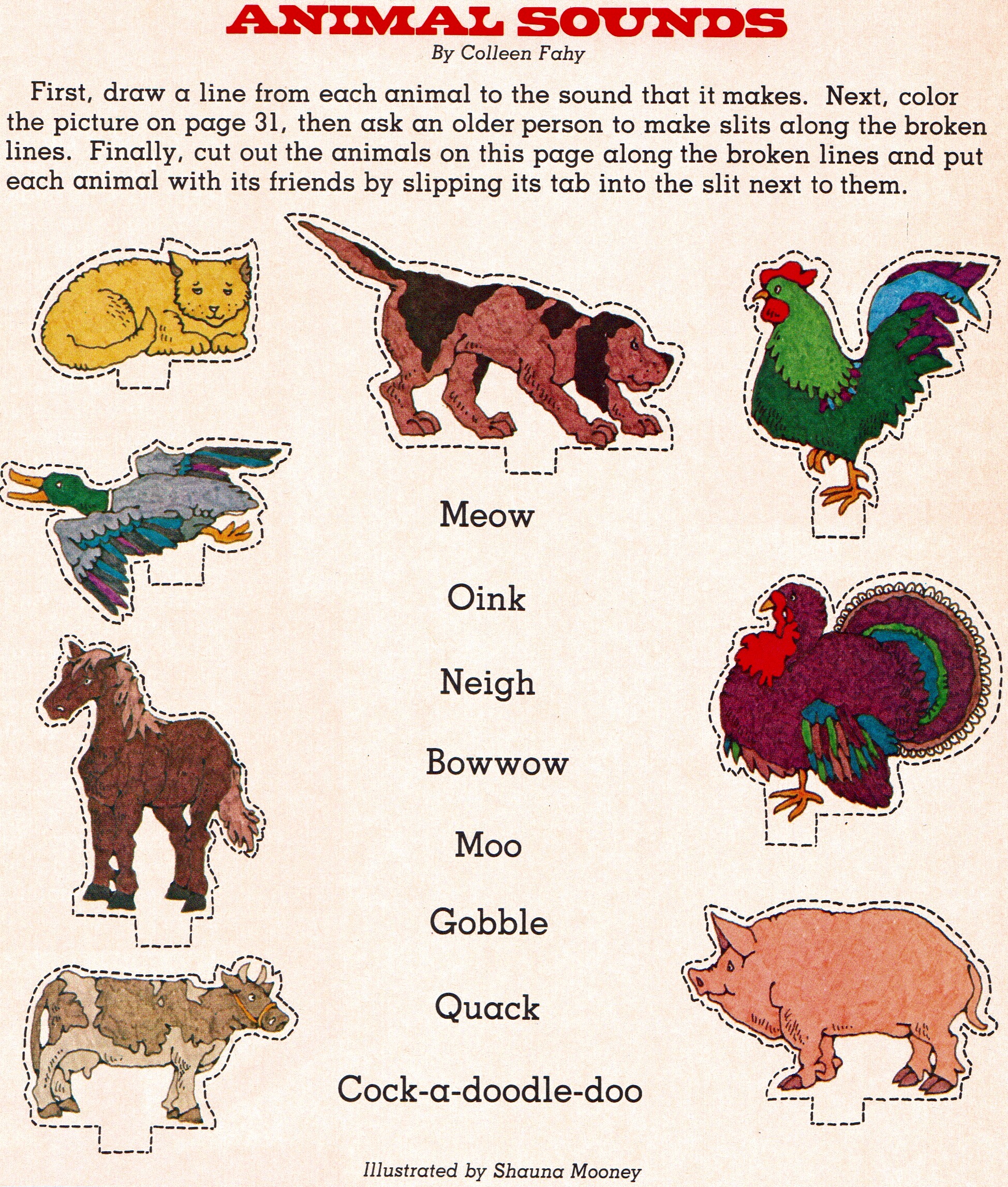
Animal Sounds
Friend May 1997 “Animal Jingles” Find the animals that makes the sound mentioned in each jingle.
Friend April 2025 “Animal Dance” Everyone dances like an animal. When the leader turns back around, everyone freezes! The leader watches to see who moves.
Friend August 2021 “Animal Games” Play an animal game with friends or family. Try hopping like a bunny or waddling like a duck. Take turns coming up with ideas! Or see who can make the best animal noises.
Friend July 2025 “Come, Follow Me Activities: Animal Actions” Under God’s direction, Jesus Christ created every creature on earth (see Doctrine and Covenants 77:2). Play an animal guessing game! One person pretends to be a certain animal. Everyone else tries to guess what animal they are. Once you guess it right, say something you like about that animal.
For younger children: Go on a walk with your little ones and point out animals you see. Or look at pictures of animals. Teach them that Heavenly Father and Jesus Christ created every creature on earth.
Friend April 2026 “Activity Time” Jesus Christ is the Living Water (see John 4:14). This means the joy and peace He gives us will never run out! His love can help us grow, just like water helps plants and animals grow.
1 Nephi CHAPTER 11 Nephi sees the Spirit of the Lord and is shown in vision the tree of life—He sees the mother of the Son of God and learns of the condescension of God—He sees the baptism, ministry, and crucifixion of the Lamb of God—He sees also the call and ministry of the Twelve Apostles of the Lamb. About 600–592 B.C.
1 Nephi CHAPTER 12 Nephi sees in vision the land of promise; the righteousness, iniquity, and downfall of its inhabitants; the coming of the Lamb of God among them; how the Twelve Disciples and the Twelve Apostles will judge Israel; and the loathsome and filthy state of those who dwindle in unbelief. About 600–592 B.C.
1 Nephi CHAPTER 13 Nephi sees in vision the church of the devil set up among the Gentiles, the discovery and colonizing of America, the loss of many plain and precious parts of the Bible, the resultant state of gentile apostasy, the restoration of the gospel, the coming forth of latter-day scripture, and the building up of Zion. About 600–592 B.C.
1 Nephi CHAPTER 14 An angel tells Nephi of the blessings and cursings to fall upon the Gentiles—There are only two churches: the Church of the Lamb of God and the church of the devil—The Saints of God in all nations are persecuted by the great and abominable church—The Apostle John will write concerning the end of the world. About 600–592 B.C.
1 Nephi CHAPTER 15 Lehi’s seed are to receive the gospel from the Gentiles in the latter days—The gathering of Israel is likened unto an olive tree whose natural branches will be grafted in again—Nephi interprets the vision of the tree of life and speaks of the justice of God in dividing the wicked from the righteous. About 600–592 B.C.
Nephi Sees a Vision
“Condescension” means the voluntary descent from a position of rank or dignity. One truth we can learn is that the condescension of God demonstrates His love for us. (Book of Mormon Seminary Student Manual (2024))
Discussion: Why did the Lord reveal so much to Nephi? We may not have visions as Nephi did, but we can open our eyes, minds, and hearts to revelation. Share a time when you have had a revelatory experience.
Heavenly Father sent Jesus Christ to earth because He loves me.
Singing a song like “He Sent His Son” (Children’s Songbook, 34–35) could help your children feel God’s love. After you sing, ask your children what they learn from the song. What else do we learn about God’s love from 1 Nephi 11:22–23?
Come, Follow Me—For Primary: Book of Mormon 2020 “1 Nephi 11-15” Tell the children about some of the things Nephi learned that Jesus Christ would do during His life (see 1 Nephi 11:16–33), and show them pictures of some of these events (see, for instance, Gospel Art Book, nos. 41, 46, 47, 49, 56, 57, 58, 59). Share what the Savior has done for you. Show pictures to help the children think of ways we can share God’s love (see Gospel Art Book, nos. 109, 110, 115).
Friend January 2020 “Come, Follow Me for Little Ones” Read 1 Nephi 11:24 together and help your little ones say, “Jesus came to earth because He loves me.” Help your little one flip through copies of the Friend and draw a heart next to each picture of Jesus. This would be a great time to share your feelings about the Savior.
Come, Follow Me—For Home and Church: Book of Mormon 2024 “1 Nephi 11-15” To help your children value the “plain and precious” truths in the Book of Mormon, you could draw a picture and invite your children to change or remove parts of the picture to make it look different. You could use this to teach that things in the Bible were changed and taken out over time. Read together 1 Nephi 13:40 and talk about how the Book of Mormon (“these last records”) helps us understand the “plain and precious things” that were lost from the Bible (the “first” records). What “plain and precious” truths have you learned from the Book of Mormon?
Nephi saw that many Plain and Precious Things would be Removed from Bible
Draw a picture on the board, and invite the children to change or remove parts of the picture to make it look different. Help them understand that, like this picture, some things in the Bible were changed and taken out over time. Read parts of 1 Nephi 13:40 that teach how the Book of Mormon (which Nephi calls “these last records”) helps us understand the “plain and precious things” that were lost from the Bible.
Book of Mormon Seminary Student Manual (2024) A bicycle is a simple and effective form of transportation. Cycling can also be an enjoyable and rewarding experience. What are some of the essential parts that allow a person to operate a bicycle safely and effectively? Imagine you owned a bicycle and someone intentionally removed certain essential parts from it.
What might those actions indicate about his or her feelings toward you?
What could happen if you attempted to operate the bicycle with missing parts?
Who might you contact to repair and restore your bicycle to function properly?
In a similar way, Satan has sought to harm and confuse God’s children by removing and changing important parts of Jesus Christ’s gospel. As you study 1 Nephi 13, look for what the Savior has done to help us overcome Satan’s obstacles.
The video “The Book of Mormon—a Book from God” (Gospel Library) could help your children see why it’s important to have both the Bible and the Book of Mormon. Children might enjoy re-creating the illustration from the video. (watch to 5:41)
Why is it helpful to have more than one witness? Draw a dot on the board, label it Bible, and invite each child to draw a different straight line passing through the dot to illustrate that teachings in the Bible can be interpreted many ways when the Bible stands alone. Erase the lines, and draw a second dot labeled Book of Mormon. Invite a child to draw a straight line that passes through both dots to show that there is only one way to interpret the gospel when the Bible and Book of Mormon are used together.
Read 1 Nephi 13:26–29 together, and invite the children to look for what happens when people do not have the “plain and precious” truths of the gospel. How did the Lord restore truths that had been lost? (see verses 35–36, 40). Invite the children to share their testimonies of truths they have learned from the Book of Mormon, or share your own.
Primary 5: Doctrine and Covenants and Church History “Lesson 20: Joseph Smith Translates the Bible and Other Scriptures,” (See more at link) Have the children stand in a line. Whisper the two- or three-sentence message into the ear of the first child in line. Have each child in turn whisper the message to the next child. Instruct each child to say the message only once. Continue until the message reaches the last child in line. Ask the last child to repeat the message aloud. Compare the message the last child received with the original message to see how the message changed.
How had the message changed by the time it reached the end of the line? What was left out? What was added?
Why do you think the message changed as it passed from person to person?
Explain to the children that just as their message changed as it was passed from person to person, over many years some of the scriptures in the Bible had been changed as people translated the Bible and made copies of it by hand. Mistakes were made: some incorrect teachings had been added to the Bible, and some important teachings had been left out. (see Articles of Faith 1:8).
Watch the following video until 3.12
Come, Follow Me—For Primary: Book of Mormon 2020 “1 Nephi 11-15 Hide around the room pictures representing gospel truths that are clarified in the Book of Mormon, such as baptism, the sacrament, and resurrection. Invite the children to find these pictures. Explain that the Book of Mormon brought back gospel truths that had been lost (during the apostasy).
Help the children memorize the eighth article of faith. We believe the Bible to be the word of God as far as it is translated correctly; we also believe the Book of Mormon to be the word of God.
Come, Follow Me—For Home and Church: Book of Mormon 2024 “1 Nephi 11-15” Give your children a chance to share what they remember about Lehi’s vision. It might help to use a picture, like the one in last week’s outline. What kept people from reaching the tree? What helped them reach it? You might ask them to find the iron rod in the picture. Read together 1 Nephi 15:23–24 to find out what the iron rod represents and how it can help us.
The word of God gives me power to resist temptation.
Come, Follow Me—For Primary: Book of Mormon 2020 “1 Nephi 11-15 How did the iron rod help the people get through the mists of darkness? How can reading the word of God help us resist temptation and darkness today? Complete the activity page with the children. While they are doing it, ask them to talk about some of the temptations children face. How can they remember to hold on to the iron rod every day? Sing “The Iron Rod” (Hymns, no. 274) as part of this activity. (How do we “hold fast” to the word of God? ((1 Nephi 15:24).)
Game Instructions: Print and cut out the tree, the path, the mists of darkness and the temptations in the Tree of Life Vision Pictures. Glue a “Temptation” to the back of each “Mist of Darkness.” Tape a mint to each piece of fruit on the tree of life. Cover the rod of iron and the path with the remaining mists of darkness.
Direct a volunteer to choose a mist of darkness and read the situation that is on the back. Instruct the children to look in the bible topical guide for the temptation’s subject and find a scripture that would help them avoid and resist that temptation. Have the volunteer read the scripture the children chose. The volunteer can then take a fruit (mint) off the tree. Have another child pick a mist of darkness and do the same process again. Continue until each child has had a turn. After the game is finished, remind the children that if we use the word of God to guide us, it will help us avoid temptations and lead us to eternal life.
• How do we hold onto the word of God? By making it part of our life. We do this by studying and abiding by the teachings found in the scriptures and the words of the latter day prophets, and by seeking for and listening to the promptings of the Holy Ghost. Heeding and obeying the word of God will help us avoid the deceptions and temptations of Satan so that we can avoid going astray.
The word of God gives me power.
Display a picture of Lehi’s dream, like the one in last week’s outline in Come, Follow Me—For Individuals and Families. Invite the children to find the iron rod in the picture, and help them understand how holding to the word of God can protect us (see 1 Nephi 15:23–24). Give the children something similar to an iron rod to hold, such as a pipe or stick, while you read verse 24. Where do we find the word of God? What can we do to make the word of God part of our lives every day?
1 Nephi CHAPTER 3 Lehi’s sons return to Jerusalem to obtain the plates of brass—Laban refuses to give the plates up—Nephi exhorts and encourages his brethren—Laban steals their property and attempts to slay them—Laman and Lemuel smite Nephi and Sam and are reproved by an angel. About 600–592 B.C.
1 Nephi CHAPTER 4 Nephi slays Laban at the Lord’s command and then secures the plates of brass by stratagem—Zoram chooses to join Lehi’s family in the wilderness. About 600–592 B.C.
1 Nephi CHAPTER 5 Sariah complains against Lehi—Both rejoice over the return of their sons—They offer sacrifices—The plates of brass contain writings of Moses and the prophets—The plates identify Lehi as a descendant of Joseph—Lehi prophesies concerning his seed and the preservation of the plates. About 600–592 B.C.
Come, Follow Me—For Home and Church: Book of Mormon 2024 “1 Nephi 1-5” You and your children might enjoy role-playing 1 Nephi 3:2–7. Maybe you could pretend to be Lehi and ask your children to return to Jerusalem to get the brass plates. Invite them to respond in their own words as if they were Laman and Lemuel or Nephi. What are some things God has commanded us to do? (see pictures 103–15 in the Gospel Art Book or Mosiah 18:8–10 for ideas). How can we be like Nephi?
What can we learn from 1 Nephi 2:11–13; 3:5–7 about murmuring? What blessings come when we exercise faith?” Review how Laman and Lemuel murmured and talk about what it means to murmur. How does it make people around you feel when you murmur? How does it affect yourself and others when you don’t murmur? (Come Follow Me Kid “I Will Go and Do”)
Ensign January 2020 “Family Study Fun: Courageous Hot Potato” Nephi’s brothers Laman and Lemuel complained that the Lord required hard things (see 1 Nephi 3:5), Nephi said he would “go and do” whatever the Lord commanded (see 1 Nephi 3:7).
Have everyone sit in a circle. Give someone a small, soft object (beanbag, tennis ball, balled-up sock, etc.). Play “Nephi’s Courage” on the Sacred Music app (no. 120 in the Children’s Songbook) while family members pass the object around the circle. Pause the music at a random moment. Whoever is holding the object when the music stops will explain one faithful act they will “go and do” this week.
Discussion: What are some things the Lord has asked us to do that seem hard? How can we be more faithful in our responses to those commandments?
Friend January 2016 “Nephi was Obedient” Goal Card. I can be obedient like Nephi.
Lord commanded Nephi to go and get the plates From the wicked Laban inside the city gates. Laman and Lemuel were both afraid to try. Nephi was courageous. This was his reply:
“I will go; I will do the thing the Lord commands. I know the Lord provides a way; he wants me to obey. I will go; I will do the thing the Lord commands. I know the Lord provides a way; he wants me to obey.”
The Lord gives us commandments and asks us to obey. Sometimes I am tempted to choose another way. When I’m discouraged, and think I cannot try, I will be courageous, and I will reply:
“I will go; I will do the thing the Lord commands. I know the Lord provides a way; he wants me to obey. I will go; I will do the thing the Lord commands. I know the Lord provides a way; he wants me to obey.”
Words and music: Bill N. Hansen Jr., b. 1952, and Lisa T. Hansen, b. 1958.
Nephi is Led by the Lord in Obtaining the Brass Plates
Nephi Didn’t Give Up
Friend January 2020 “A Nephi Attitude” Bennett was tired and thirsty and not enjoying doing the service project. He wanted to go home but there was still a lot left to do. His mom talked to him about how Nephi had hard things to do like getting the plates from Laban, but he didn’t give up. Bennett liked the idea of being like Nephi. Nephi was strong and brave and good. So he kept working. He was proud of what they had accomplished when they were done. He was glad he had gotten rid of the Laman and Lemuel attitude.
Friend January 2020
Friend April 2024 “Louie, Nephi, and the Piano” Louie was struggling with one part of the song he was going to perform. His father reminded him of how Nephi didn’t give up when he went back to get the plates, and tells him, “I think if you keep trying, Heavenly Father will help you like he helped Nephi.” Louie kept practicing and eventually he got it and was able to perform it. He knew he had done all he could, and Heavenly Father helped him.
God will prepare a way for me to do His will.
Friend January 2020 “Family Night Fun” Sing “Keep the Commandments” (Children’s Songbook, 146)
Read 1 Nephi 3:7 together and help your little ones say, “God will help me keep the commandments.” Now it’s your turn to look for the scriptures! Send someone out of the room and hide a Book of Mormon for them to find. When they start searching, say “hot” when they get close and “cold” when they get far away. Take turns hiding and finding the scriptures.
Sing The song “Nephi’s Courage” (Children’s Songbook, 120–21)
The Holy Ghost will lead me as I seek to do the Lord’s will.
Come, Follow Me—For Home and Church: Book of Mormon 2024 “1 Nephi 1-5” After reviewing together in 1 Nephi 3 how Nephi and his brothers tried to get the brass plates, read with your children 1 Nephi 4:6 to find out what Nephi did that allowed him to finally succeed. Then your children could make a list of things that God wants them to do. How can the Holy Ghost help us in these situations?
Come, Follow Me—For Home and Church: Book of Mormon 2024 “1 Nephi 1-5” The scriptures were very important to Lehi’s family. To illustrate this, you could invite your children to help you tell or act out what Nephi and his brothers did to get the brass plates: they traveled a long distance, gave up their gold and silver, and hid in a cave to save their lives. Then you could read 1 Nephi 5:21 and talk about why the scriptures were so valuable to Lehi’s family. Why are they valuable to us? How can we treat the scriptures like a treasure?
WhisperGame Tell the children they are going to play a game that will show them why Lehi and his family needed a written record of God’s commandments.
Have the children sit in a row. Whisper the following message to the first person in the row, making sure no one else can hear what is being said: “Blessed are they who hear the Lord’s commandments and obey them.”
Have that person whisper what they heard to the person sitting next to them. Have each child pass on the whispered message until the message reaches the child at the end of the row. Have the last person repeat out loud what they think they heard. They probably won’t repeat the message correctly. Tell everyone what the original message was.
Explain that the whisper game shows how easy it would be to mix up the word of God if it isn’t written down.
Brass Plates Code Activity
Hand out a copy of the “Brass Plates Code” to each child. Do not give them the answer key. Tell them they have thirty seconds to figure out what section four of the “Purpose” says. It won’t take them long to figure out there is no possible way to do it out without help.
Explain that just like the task you gave them seemed impossible to accomplish, sometimes Heavenly Father’s commandments may seem difficult to obey. But with God’s help we can accomplish all he asks of us. Direct the children to put the “Brass Plates Code” under their chair for now, and explain that you will provide a way for them to do the coded message later on in the lesson.
• What was the main reason Nephi and his family needed the brass plates? Let the children answer the question. Have them check their answer by giving them the answer key to the “Brass Plates Code”. Inform them they can now fill out section four with the help you promised. Instruct them to fill out the rest of the code later at home to find out the other purposes of the brass plates.
Answers to Purpose:
1. To have a record of the Jews
2. Genealogy of forefathers
3. To preserve their language
4. To preserve religious knowledge
Friend January 2024 “Come, Follow Me Activities” Sharing Treasure: The scriptures are a great treasure (see 1 Nephi 5:21). Draw some gem shapes on paper and cut them out. Ask each person to write a Book of Mormon scripture on the gems. Mix up the gems and take turns choosing one and reading each scripture.
Friend January 2020 ” Coloring Page: Lehi and His Family Studied the Scriptures”
The scriptures are a great treasure (see 1 Nephi 5:21). Draw some gem shapes on paper and cut them out. Ask each person to write a Book of Mormon scripture on the gems. Mix up the gems and take turns choosing one and reading each scripture.
For younger children: Have a show-and-tell with your little ones’ favorite toys or books. Tell them that they can make the scriptures one of their favorite things by listening to them and learning the stories.
1. When Lehi listened to the Lord, And his family left their home and riches, His sons returned back home again So they could get the scriptures.
2. So Lehi’s people knew the Lord, As the plates of brass helped them remember. When they obeyed the prophet’s voice, They prospered all together.
Chorus: The Book of Mormon tells of Christ And helps me feel the Holy Spirit. Heavenly Father’s voice is calling me, And the scriptures help me hear it.
“Nephi Gets the Brass Plates” (February 1996 Friend) Number these pictures of Nephi obtaining the brass plates in the right order.
Friend January 2024 “Connect the Scriptures” Number the sentences below in the order they happened in the story. Then find the matching colors and number the dots. Draw lines from dot to dot in number order to complete the picture.
Revelation 15 Exalted Saints praise God in celestial glory forever.
Revelation 16 God pours out plagues upon the wicked—The nations assemble for Armageddon—Christ comes, islands flee, and mountains cease.
Revelation 17 John is shown that Babylon the great, the mother of harlots and abominations, has become established throughout the earth.
Revelation 18 The Saints are called out of Babylon lest they partake of her sins—She falls and is lamented by her supporters.
Revelation 19 The marriage supper of the Lamb is made ready—The testimony of Jesus is the spirit of prophecy—Christ is King of Kings and Lord of Lords.
Revelation 20 Satan is bound during the Millennium—The Saints will then live and reign with Christ—The dead stand before God and are judged out of the books according to their works.
Revelation 21 Those who overcome will be sons of God—The earth attains its celestial glory.
Revelation 22 The Saints will reign in celestial splendor—Christ will come, and men will be judged—Blessed are they who keep His commandments.
The Saints John described in Revelation 15:2–4 sang praises to God for His goodness. What songs of praise can help the children express their love for Heavenly Father and Jesus Christ?
Friend March 2020 “Music for a Better Day” Elizabeth had a terrible day at school. Her dad suggested that good music might help her feel better, and to think about what she was playing while she practiced her piano. The song she was playing was about giving thanks to God. She began to feel more peaceful as she thought about all her blessings. Good music did help her feel better.
Ask the children to share some of their favorite songs about Heavenly Father and Jesus Christ. Sing a few of the songs together, and help the children understand what the songs teach us about Heavenly Father and the Savior. (Come, Follow Me—For Primary: New Testament 2023 “Revelation 15–22”)
Ask the children if they have ever been to a wedding. What was it like? Why are people happy at a wedding? Display the picture of the Savior’s Second Coming in this week’s outline in Come, Follow Me—For Individuals and Families, and read Revelation 19:7. Explain that the “marriage of the Lamb” represents the Second Coming of Jesus Christ. Why will we rejoice when the Savior comes again? Help the children compare the joy of a wedding to the joy of the Savior’s return. (Come, Follow Me—For Primary: New Testament 2023 “Revelation 15–22”)
“Article of Faith 10” (September 2011 Friend) The pictures help illustrate what the tenth article of faith means.
Invite the children to share what they do to get ready for church on Sunday. Why do we do these things before we come to church? Why should we prepare for Christ’s Second Coming? On this week’s activity page, let the children draw what they can do to prepare for the Second Coming.(Come, Follow Me—For Primary: New Testament 2023 “Revelation 15–22”)
I can prepare for the Second Coming of Jesus Christ by choosing the right. (Sr)
Bring to class a notebook representing the “book of life” (Revelation 20:12), in which you have written some of the Christlike attributes and good works of the children in your class. Read to the children the things you wrote, and invite them to talk about Christlike qualities they have seen in each other. Share your testimony that Jesus Christ helps us become more like Him and provides a way for us to repent and overcome sin. (Come, Follow Me—For Primary: New Testament 2023 “Revelation 15–22”)
Come, Follow Me—For Individuals and Families: New Testament 2023 Suppose an author offered to write a book about your life. What details or experiences would you want included? If you knew that your future actions would also be recorded, how would you approach your life differently? Think about this as you read Revelation 20:12–15. What do you hope will be written about you in the book of life? In your opinion, why is it significant that it is called “the Lamb’s book of life”? (Revelation 21:27).How would you describe the Savior’s role in your book of life?
In the last two chapters of Revelation, John used beautiful language to describe the celestial glory that the faithful will enjoy.
Help the children draw the tree described in Revelation 22:2 on the board. Explain that this tree is the tree of life, and its fruit represents the love of God (see 1 Nephi 11:21–22). Give the children pieces of paper shaped like fruit, and invite them to draw on the paper something that helps them feel Heavenly Father’s love. Explain that those who love and obey Heavenly Father will live with Him in the celestial kingdom. (Come, Follow Me—For Primary: New Testament 2023 “Revelation 15–22”)
Invite the children to search the following verses for words or phrases that John used to describe celestial glory: Revelation 21:1, 3–4, 22–27; 22:1–2. Let them choose something in these verses that they would like to draw. Then they can talk about their drawings with the class. Encourage them to show their drawings to their families at home. (Come, Follow Me—For Primary: New Testament 2023 “Revelation 15–22”)
For the Strength of Youth July 2021 The Lord has revealed some powerful truths about [the celestial kingdom]. Here are some of the things we know:
To live there means to dwell in the presence of Heavenly Father and Jesus Christ with a perfect, resurrected body and to live the kind of life They live. This life is “a state of never-ending happiness” (Mosiah 2:41) and a “fulness of joy” (3 Nephi 28:10).
It has the greatest glory of any kingdom. Its glory has been likened to the brightness of the sun.
The same kinds of relationships we have here will exist there, including family relationships, but they will be “coupled with eternal glory” (Doctrine and Covenants 130:2).
It has three degrees. The highest degree is where people live who have been sealed together in eternal marriage and have been true to their covenants (see Doctrine and Covenants 131:1–4).
Friend April 2022 “Harriet Meets the Missionaries” Harriet’s father died and she missed him so much and wondered if she would ever see him again. Then the missionaries came and they told them about the plan of salvation and about being with our families again after death.
Friend September 2018 “No Matter What!” Christian’s friend at school feels useless because she made some mistakes in the school work. Christian tells her about the love of Jesus and that she is a child of God, so she is not useless. His friend wants to know where he learned that, and she asks her parents for permission to go to church with Christian.
Show the children some white clothes (or a picture of some) and a picture of Jesus. Read Revelation 7:9, 13–14 to the children, and ask them to point to the picture and clothes every time they hear the word white. Explain that white clothes represent cleanliness and remind us that Jesus Christ can make us clean from our mistakes. (Come, Follow Me—For Primary: New Testament 2023 “Revelation 6–14”)
Story: In a vision, John saw a crowd of people praising Jesus Christ (see Revelation 7:9–10, 13–15). They wore white robes to show that they were clean and pure.
Song: “I Know That My Redeemer Lives” (Hymns, no. 136)
Activity: Find some white objects, like a white rock, a white cloth, or some sugar or salt. Talk about what it means to be pure and clean. How does Jesus Christ help us become clean?
Show the children a piece of white cloth or piece of paper, and let them get it dirty by marking it with a pen or putting dirt on it. Explain that when we disobey the commandments, it can feel like having dirt on our clothes. Show a picture of Jesus in Gethsemane (such as Gospel Art Book, no. 56), put the dirty cloth or paper away, and show them a clean one. Testify that Jesus Christ can help us become clean. (Come, Follow Me—For Primary: New Testament 2023 “Revelation 6–14”)
Cover the children (in the picture) with packing tape, or have the entire picture laminated. Teach the scripture, let the students mark the clothing with a dry erase marker. Then have everyone say “..made them white in the blood of the Lamb” and erase it. (Have wet wipes on hand, just incase) Give every student a turn while everyone says the scripture before they erase it. Bear testimony that it is through our Savior that we can repent and become clean again.
Draw pictures of a sun and a dark cloud, and cut them out. Invite the children to read Revelation 9:2 and 1 Nephi 12:17 and write on the dark cloud what the smoke or mists in these verses represent. Place the dark cloud on the board, and invite the children to make a list of temptations children their age face. Then place the sun on the board and ask them to make a list of tools Heavenly Father has given us to overcome the darkness in the world.(Come, Follow Me—For Primary: New Testament 2023 “Revelation 6–14”)
How can we help others who are in the dark spiritually? To help the children think about this question, show part of the video “Choose the Light” (ChurchofJesusChrist.org), especially the last half of the video. How can we be like the person who helped the biker in the tunnel?(Come, Follow Me—For Primary: New Testament 2023 “Revelation 6–14”)
I showed faith in Jesus Christ in the premortal life.(Jr)
To help the children understand what it means to follow someone’s example, choose one child to be a “leader,” and ask the others to follow him or her by doing whatever he or she does. Then let other children be the leader. Read Revelation 12:7–11 to the children and explain that before we were born, we chose to follow Jesus and not Satan.(Come, Follow Me—For Primary: New Testament 2023 “Revelation 6–14”)
Read together Revelation 12:7–11, and write on the board the words dragon, War in Heaven, cast out, testimony, and Lamb. Ask the children to summarize these verses using the words on the board. What do we learn about Jesus Christ (the Lamb) from these verses? What do we learn about the choices we made in the premortal life?(Come, Follow Me—For Primary: New Testament 2023 “Revelation 6–14”)
Some family members might enjoy drawing pictures of the visions described in Revelation. For example, drawing pictures based on Revelation 12 could lead to discussions about the War in Heaven (see verses 7–11). Pictures based on Revelation 14:6 could lead to discussions about the Restoration of the gospel.
After reading Revelation 14:6 together, consider showing pictures of the angel Moroni and of other angels who helped restore the gospel in our day (see the pictures at the end of this outline). Perhaps family members could take turns holding up one of the pictures and sharing reasons they are thankful that angels came “having the everlasting gospel to preach unto [us].”
On the board, create three columns and label them Before this life, During this life, and Both. Prepare strips of paper that state truths about the premortal life and about mortal life, such as We have bodies, We don’t have bodies, We live in God’s presence, We are at war with Satan, We exercise faith in Jesus Christ, and We follow God’s plan. Let the children take turns picking a paper strip and deciding which column it belongs in. Share your confidence that the children can continue to show faith in Christ.(Come, Follow Me—For Primary: New Testament 2023 “Revelation 6–14”)
Ask the children to read Revelation 14:6–7 and to write on the board words or phrases from these verses that are meaningful to them. Ask them to share why they chose those words or phrases. Explain that these verses describe the Restoration of the gospel in our day. Ask them how they can take part in the work of preaching the gospel to the world.(Come, Follow Me—For Primary: New Testament 2023 “Revelation 6–14”)
Revelation CHAPTER 1 Christ chooses some as kings and priests unto God—Christ will come again—John sees the risen Lord.
Revelation CHAPTER 2 He who overcomes will gain eternal life, avoid the second death, inherit the celestial kingdom, and rule many kingdoms.
Revelation CHAPTER 3 He who overcomes will retain his name in the book of life, reach godhood, and be with Jesus as He is with the Father.
Revelation CHAPTER 4 John sees the celestial earth, the throne of God, and all created things worshipping the Lord.
Revelation CHAPTER 5 John sees the book sealed with seven seals, and he sees those people redeemed out of every nation—He hears every creature praising God and the Lamb.
Ask the children to name things that give light. Talk with them about the benefits of light, like helping plants grow, allowing us to see, and giving warmth. To understand how Jesus brings us light, they could take turns shining a light at a picture of Jesus Christ as they say, “God is light” (1 John 1:5). Testify that Heavenly Father and Jesus Christ can bring light into our lives when we try to follow what They say. (Come, Follow Me—For Primary: New Testament 2023 “Revelation 1–5”)
Prepare the glow sticks before class, with the pictures on them. Have the students pick one out of a bag at a time and talk about how as members of Jesus’s Church, can be like the light. Then they can crack the glow stick and make it shine. They can put it in a vase or cup till later, when all the glow sticks are ignited. Turn out the lights and testify that all those small acts of kindness, made a big impact and chased away the darkness.
Sing a song about being a light to others, such as “Jesus Wants Me for a Sunbeam” (Children’s Songbook, 60–61). Share ways you have seen the children living the gospel of Jesus Christ and being a light to those around them. Share how being a light to others has helped you feel closer to Heavenly Father and Jesus Christ. (Come, Follow Me—For Primary: New Testament 2023 “Revelation 1–5”)
Friend December 2023 “Come, Follow Me Activities for Little Ones” Ask someone to go outside and knock on your front door. Help your little ones open the door, greet the person who knocked, and warmly invite them in. Talk about how we can welcome Jesus Christ into our lives when we think about Him.
Invite the children to tell you about times when they waited for someone to visit their home who they were excited to see. What was it like waiting for that person to knock on the door? What if we never let the person inside? Read Revelation 3:20, and let the children take turns holding a picture of Jesus and pretending to knock on a door. The other class members could pretend to open the door. What can we do to let Jesus be near us, even though we can’t see Him?.(Come, Follow Me—For Primary: New Testament 2023 “Revelation 1–5”)
As you read Revelation 3:20, show the picture of the Savior at the door from this week’s outline in Come, Follow Me—For Individuals and Families. To help the children draw meaning from the picture, invite them to work in pairs to answer questions like these: Why do you think Jesus is knocking on the door? Why isn’t there a doorknob on the outside of the door? What does it mean to let Jesus into our lives? (Come, Follow Me—For Primary: New Testament 2023 “Revelation 1–5”)
Show the picture of the Savior knocking at the door (see the end of this outline) as your family reads Revelation 3:20. Why does Jesus knock instead of just coming inside? Family members could take turns knocking on a door. Then someone else in the family could suggest a way we can “open the door” to the Savior and let the family member in. How would it feel to have the Savior in our home? (Come, Follow Me—For Individuals and Families: New Testament 2023 “Revelation 1-5”)
Ask the children to write on the board different ways to “open the door” to Jesus. Some examples might include serving others, reading the scriptures, keeping the covenants we make at baptism, and partaking of the sacrament. (Come, Follow Me—For Primary: New Testament 2023 “Revelation 1–5”)
If you want to use this for senior primary, don’t use the children, but instead, write on top of the door, ways to open the door. Like: serving others, reading the scriptures, and partaking of the sacrament. I would have a copy for each kid to write their own goals they want to work on, to let the Savior more into their lives this week.
If I am committed to the Savior’s gospel, I will receive great blessings in heaven. (Sr)
What does it mean to you to be “lukewarm, and neither cold nor hot”? Consider ways to help the children be the opposite of lukewarm—to be enthusiastic in their commitment to the Savior and His gospel.
Overcome: Succeed in dealing with (a problem or difficulty). Such as defeating the sins and temptations of this world.
Read together Revelation 3:15–16. Ask the children to talk about things that are most useful or enjoyable when they are hot (such as soup) or cold (such as ice cream). How can being lukewarm about the Savior prevent us from the blessings promised in verses 5, 12, and 21?(Come, Follow Me—For Primary: New Testament 2023 “Revelation 1–5”)
On the board, write lukewarm, along with some synonyms, such as halfhearted, indifferent, or casual. Use these words to help the children understand why the Lord does not want us to be lukewarm. What words can we think of to describe the way He wants us to be? Share why you want to be fully committed to the Savior, and invite the children to share their thoughts as well.(Come, Follow Me—For Primary: New Testament 2023 “Revelation 1–5”)
John learned from his vision that only Jesus Christ (represented by a lamb) could be our Savior and fulfill the Father’s plan (represented by the sealed book).
Before class, wrap up a copy of the Gospel Art Book using paper or string. Using a few key phrases from Revelation 5:1–10, describe the vision John saw. Show the children the book, and tell them that the only way to open the book is to find the picture of Jesus that you have hidden in the room. When they find the picture, open the book and share with the children some of the pictures in the book that represent blessings available because of Jesus Christ’s Atonement (such as a temple, baptism, and families). Testify that the Savior is the only one who could make those things possible. (Come, Follow Me—For Primary: New Testament 2023 “Revelation 1–5”)
What can save us from death? A doctor, pharmacist, or scientist?
Jesus is the only one who can save us from death. He died and was resurrected so we can be resurrected.
Who can save us from our sins? The bishop, a policeman, our parents?
They can all have their own little book that they can pretend to cry and cheer when they open.
Atonement of Jesus Christ As used in the scriptures, to atone is to suffer the penalty for sins, thereby removing the effects of sin from the repentant sinner and allowing him or her to be reconciled to God. Jesus Christ was the only one capable of carrying out the Atonement for all mankind.
Only He could redeem us from our sins. God the Father gave Him this power (see Helaman 5:11). The Savior was able to receive this power and carry out the Atonement because He kept Himself free from sin: “He suffered temptations but gave no heed unto them” (Doctrine and Covenants 20:22). Having lived a perfect, sinless life, He was free from the demands of justice. Because He had the power of redemption and because He had no debt to justice, he could pay the debt for those who repent.
As the only person who has ever lived a completely sinless life, the Savior was a perfect sacrifice, a lamb without blemish.
Summarize the vision described in Revelation 5:1–10, and invite the children to act out how John and others felt during different parts of the vision. For instance, they might pretend to cry when no one could open the book, or they might cheer when the Savior opened it.(Come, Follow Me—For Primary: New Testament 2023 “Revelation 1–5”)
Jesus Christ is the only one worthy to be my Savior. (Sr)
Invite the children to tell about a time when they needed someone to do something they couldn’t do for themselves. Ask them to read Revelation 5:1–10 and look for what needed to be done that only one person could do (explain that the Lamb is Jesus Christ and the book represents God’s plan). What did Jesus do for us that no one else could do?(Come, Follow Me—For Primary: New Testament 2023 “Revelation 1–5”)
What can save us from death? A doctor, pharmacist, or scientist?
Jesus died and was resurrected so we can be resurrected.
Who can save us from our sins? The bishop, a policeman, our parents?
Story: The Apostle John had a vision of heaven. He saw God’s throne with many colors. John also saw people worshipping Heavenly Father and praising Him for creating all things. (See Revelation 4:2–3, 10–11.)
Activity: Draw a picture of John’s vision. Use as many colors as you can! Then talk about ways you can show Heavenly Father you are grateful for His blessings.
Revelation 1:20.Why did Jesus compare His Church to candlesticks? (see Matthew 5:14–16). Sing a song about how we can be like a light on a candlestick, such as “Shine On” (Children’s Songbook, 144).
Charades/Symbol Sketch-and-Guess – Cut apart the slips below and put in an upside-down pile. Family members take turns choosing a slip from the pile and either acting out or drawing the object while the family guesses what it is. When the family guesses correctly, read aloud the scriptures to learn the symbol’s meaning. Since our kids are super young, we won’t stress too much about completely understanding these symbols, but these are some simple points we’ll probably make: Satan is mean like a dragon Jesus is kind and gentle like a lamb Christ’s church and leaders can bring the light of Christ to our lives We should try to keep our lives clean and white like the bride’s dress (through Christ’s help) The word of God is powerful like a sword and can free us from dangerous things’
1 John CHAPTER 1 The Saints gain fellowship with God by obedience—We must confess our sins to gain forgiveness.
1 John CHAPTER 2 Christ is our Advocate with the Father—We know God by obedience—Love not the world—Anti-Christs will come in the last days.
1 John CHAPTER 3 The sons of God will become like Christ—Love for others is required to gain eternal life—Obedience ensures us an answer to our prayers.
1 John CHAPTER 4 Try the spirits—God is love and dwells in those who love Him.
1 John CHAPTER 5 Saints are born of God through belief in Christ—Water, blood, and the Spirit testify of Christ—Belief in Christ is required in order to gain eternal life.
2 John CHAPTER 1 John rejoices because the children of the elect lady are true and faithful.
3 John CHAPTER 1 John commends Gaius for his help to those who love the truth.
Jude CHAPTER 1 Contend for the faith—Some angels kept not their first estate—Michael disputed about the body of Moses—Enoch prophesied of the Second Coming—Mockers will come in the last days.
Ask the children to name things that give light. Talk with them about the benefits of light, like helping plants grow, allowing us to see, and giving warmth. To understand how Jesus brings us light, they could take turns shining a light at a picture of Jesus Christ as they say, “God is light” (1 John 1:5). Testify that Heavenly Father and Jesus Christ can bring light into our lives when we try to follow what They say. (Come, Follow Me—For Primary: New Testament 2023 “1-3 John; Jude”)
Invite the children to take turns holding a picture of a light bulb or candle. As each child holds the picture, help him or her think of a way we can bring the light of Jesus Christ into our lives. (Come, Follow Me—For Primary: New Testament 2023 “1-3 John; Jude”)
Come, Follow Me—For Individuals and Families: New Testament 2023 “1–3 John; Jude” To help your family ponder John’s teachings, gather in a dark room so family members can experience the difference between walking “in darkness” and walking “in the light.” How does hatred cause us to walk in darkness and stumble? How does loving each other bring light into our lives?
Glow Stick Activity: Crystal from www.theredcrystal.org had a super fun idea to use glow sticks for this. She says to put a bunch of unactivated glow sticks in a bag or pillow case that isn’t see-through. When a child mentions something that brings more of the “light of Christ” into our lives, pull it out and let them activate the glow stick. Then set it on the table in the dark room, until all the glow sticks are on that same table making a considerable amount of light. Talk about the happiness and hope we can feel in our lives because of Jesus Christ. The printables from here would be great to attach onto the glow sticks while discussing specific things that bring more of the light of Christ into our lives: https://www.theredcrystal.org/post/come-follow-me-december-2-8-god-is-love-1-3-john-jude
I show my love for God when I show love to others. (Jr)
Read 1 John 4:21 to the children. Invite them to talk about or act out various ways they could show love toward a friend, such as giving a hug or making a card. How do these things make our friends feel? How does Heavenly Father feel when we do kind things for others?(Come, Follow Me—For Primary: New Testament 2023 “1-3 John; Jude”)
Friend March 2021 “For Little Friends” Circle the ways you can show kindness!
Friend February 2017 “Sharing Love with Friends” Rentalyn tells how she shares love.
Ask the children to imagine that someone new has begun attending their school or ward and does not yet know anyone there. How might this person feel? Invite a child to read 1 John 4:7–8. What does this verse suggest about how we should treat this person? Share similar scenarios, or ask the children to think of situations in which they might have opportunities to show love.(Come, Follow Me—For Primary: New Testament 2023 “1-3 John; Jude”)
Friend September 2020 “Friends By Mail” A family came up with some kindness tips: “If there’s a new kid at school, offer to show them around and introduce them to your other friends. Share things about yourself so they get to know you, and ask questions about them.”
Ask the children to read 1 John 4:7–8, 20–21, and invite them to each write one sentence to summarize what they think is the most important lesson in these verses. After they share their sentences, share a story from your life or from a Friend or Liahona magazine that you feel illustrates what these verses teach (see, for example, “Say Hello to Halim,” Friend, June 2019, 8–9; or Liahona, June 2019, F18–F19). Invite the children to share their own examples. How can we show love to those around us? (Come, Follow Me—For Primary: New Testament 2023 “1-3 John; Jude”)
Friend June 2019 “Say Hello to Halim! Marcus puts a kind note in the new boy’s bucket to help him feel welcome because it looked like Halim was struggling with moving to a new country and a new school. Marcus’s class has buckets on their desks because their teacher wants them to write kind notes to each other to help fill the imaginary buckets inside of them.
Friend April 2022 “Go Sit by Him” The Holy Ghost tells Sierra to go sit by a boy who had been bullied and was sad and alone. She felt peaceful all day after she listened to the Holy Ghost.
Friend October 2021 “Matt and Mandy” Mandy befriends a girl who is being made fun of because of the religious clothing (hijab) she wears. She shows respect for the girl’s faith and beliefs and invites her to meet her friends.
I show my love for God when I keep His commandments. (Jr)
Read 1 John 4:17, and explain to the children that to “have boldness in the day of judgment” means having confidence and peace when they stand before God to be judged. What does this verse teach that we need to do to have this confidence? What are some things we can do now to be confident before God? (Come, Follow Me—For Primary: New Testament 2023 “1-3 John; Jude”)
“Where Do You Stand?” (June 2013 Friend) Take this quiz to see how you could become more loving to others.
The Red Crystal
I can be faithful even when others make fun of me. (Sr)
Ask children to share times when others made fun of them or someone they know because they did what is right. Invite the children to read Jude 1:18–22 and look for how we can remain faithful when others mock or make fun of us. Write what they find on the board, and discuss ways they can follow this advice. (Come, Follow Me—For Primary: New Testament 2023 “1-3 John; Jude”)
People in a large building on the other side of the river made fun of those who ate the fruit. Some who had eaten the fruit became ashamed and left the tree.
Additional Resources
3 John 1:4. What does it mean to “walk in truth”? You might take this opportunity to tell family members how you have seen them walk in truth and talk about the joy this brings you. Family members might enjoy writing about or drawing truths they have learned on paper footprints and using them to make a path your family can walk on together.
Friend November 2023 “Come, Follow Me Activities for Little Ones”Measure how tall your little ones are. Teach that as the Savior grew, He made good choices every day. Ask them to name a good choice they made today. Help them say, “I am growing, like Jesus did!”