Matthew CHAPTER 24 Jesus foretells the doom of Jerusalem and the destruction of the temple—Great calamities will precede His Second Coming—He gives the parable of the fig tree.
Matthew CHAPTER 25 Jesus gives the parables of the ten virgins, the talents, and the sheep and the goats.
Mark CHAPTER 12 Jesus gives the parable of the wicked husbandmen—He speaks of paying taxes, celestial marriage, the two great commandments, the divine sonship of Christ, and the widow’s mites.
Mark CHAPTER 13 Jesus tells of the calamities and signs preceding the Second Coming—There will be false Christs and false prophets—He gives the parable of the fig tree.
Luke CHAPTER 21 Jesus foretells the destruction of the temple and of Jerusalem—He tells of the signs to precede His Second Coming and gives the parable of the fig tree.
Before Jesus comes again, the gospel will be preached in all the world. (Younger children)
Come, Follow Me—For Primary: New Testament 2023 One sign that Jesus will return soon is that His gospel is being preached throughout the world. The children can help fulfill this prophecy by sharing the gospel.
Show a map, globe, or picture of the earth (see Gospel Art Book, no. 3) and help the children say, “This Gospel … shall be preached in all the world” (Joseph Smith—Matthew 1:31). Why does God want all of His children to hear His gospel?
Invite the children to march in place as you sing together a song about sharing the gospel, such as “I Want to Be a Missionary Now” or “Called to Serve” (Children’s Songbook, 168, 174).
Show the video “I’ll Go Where You Want Me to Go” (ChurchofJesusChrist.org). As the children watch, help them count the ways they can share the gospel that they see in the video. What other ways to share the gospel can they think of?
Before Jesus comes again, the gospel will be preached in all the world. (Older children)
Invite the children to share blessings they have received or will receive because they are members of Christ’s Church. Read together Joseph Smith—Matthew 1:31, and ask the children how they feel the gospel will bless God’s children throughout the world.
Blessings of the gospel Activity: Read the clues below (not the answer) and let the children pick which picture it is describing.
Prophet: Because of this blessing of the gospel we have the privilege to hear Gods words and direction about current issues and challenges we face. This gift is God’s living spokesman.
Book of Mormon: Because of this blessing of the gospel we know the purpose of life. We also know what we need to do to gain eternal salvation and how to live happy lives.
Temples: This blessing of the gospel allows us the opportunity to receive saving ordinances for ourselves and our dead. We can also be sealed to our family so that we can be with them forever.
Priesthood: Because of this blessing of the gospel we can receive healing blessings for the sick, blessings of comfort and guidance, and have authority to act in Gods name and perform saving ordinances, such as baptism.
Baptism Because this blessing of the gospel, when performed by proper priesthood authority, we can receive a remission of our sins and enter into the gate that leads to eternal life.
Holy Ghost Because of this blessing of the gospel we can receive personal revelation and guidance throughout our lives. We can also receive comfort during difficult times.
Show the children a map of the world or of your country, and help them identify some places where a family member or friend has preached the gospel on a mission.
Invite a few children to come prepared to share how their family members or their ancestors were introduced to the gospel.
Ask each child to write the name of someone he or she can talk to about Jesus Christ or invite to church. Also ask the children to list things they can do to be missionaries now.
Come, Follow Me—For Primary: New Testament 2023 “John 1” Ask the children to use this week’s activity page to make an invitation they could use to invite a friend or family member to learn more about Jesus Christ. (Maybe include it in a Friend magazine or a Book of Mormon)
Story: Jesus Christ said that before He comes again, the gospel will be preached to all the world (see Joseph Smith—Matthew 1:31). We can help get ready for the Second Coming by sharing the gospel with others.
Song: “I Hope They Call Me on a Mission” (Children’s Songbook, 169)
Activity: Make your own missionary name tag! Write your name on a piece of paper and cut it out. On the back, write one thing you can do to share the gospel now. Pin or tape your name tag to your shirt.
Signs of the Savior’s Second Coming may be difficult for some class members to understand. It might help them to work in groups and identify signs they find in Joseph Smith—Matthew 1:21–37. It might also help them better understand the importance of these signs if they compare them to road signs. Why are road signs important? How are the signs of the Second Coming like road signs? How are they different? You might even give each group pieces of paper in the shape of road signs and invite them to write on each paper a sign that will precede the Second Coming. Let them share what they found, and invite the class to discuss evidence of these signs in the world today.
Come, Follow Me—For Individuals and Families: New Testament 2023 It can be unsettling to read about the events leading up to the Second Coming of Jesus Christ. But when Jesus prophesied of these events, He told His disciples to “be not troubled” (Joseph Smith—Matthew 1:23). How can you “be not troubled” as you hear about earthquakes, wars, deceptions, and famines? Think about this question as you read these verses. Mark or note any reassuring counsel you find.
Come, Follow Me—For Individuals and Families: New Testament 2023 To help your family explore this chapter, invite them to look for the Savior’s teachings about how we can prepare for His Second Coming (see, for example, verses 22–23, 29–30, 37, 46–48). What can we do to follow this counsel? Your family might enjoy singing “When He Comes Again” (Children’s Songbook, 82–83) and drawing pictures of what they imagine the Savior’s Second Coming will be like.
President Ezra Taft Benson (1899–1994) taught that false Christs and prophets are not limited to people but can also come in the form of false ideas and teachings (see Teachings of Presidents of the Church: Ezra Taft Benson [2014], 132). As you study this lesson, seek the guidance of the Spirit as you look for ways you can trust in the Lord and overcome any false ideas or deception.
After teaching about other deceptions and about signs of His Coming (see Joseph Smith—Matthew 1:23–36), the Savior taught a way to overcome deception. Read Joseph Smith—Matthew 1:37 .
In your study journal, draw a piece of treasure or a treasure chest. To treasure something means you cherish, hold dear, or greatly appreciate it. When we “treasure up” the Lord’s word, we consider it sacred and protect it (see Doctrine and Covenants 43:34). Around or inside the chest, write ways we can treasure up the Lord’s word.
I am responsible for my own conversion to Jesus Christ.
Come, Follow Me—For Primary: New Testament 2023 The parable of the ten virgins teaches that we cannot borrow our conversion to the Savior from others. How can you help the children take responsibility for their own conversion?
“Lesson 25: Parable of the Ten Virgins,” Primary 7: New Testament Explain that the parable of the ten virgins is based on ancient Jewish wedding customs. The bridegroom and his friends escorted the bride from her home to the home of the bridegroom. Along the way friends of the bride waited to join them. When they arrived at the bridegroom’s home, they all went inside for the wedding. These weddings usually took place in the evenings, so those waiting for the bride and bridegroom carried lamps.
Before studying the parable, it is important to understand Jewish wedding customs during the Savior’s day. The bridegroom, accompanied by his close friends, would go at night to the bride’s house for the wedding ceremony. Following the ceremony, the wedding party would proceed to the groom’s house for a feast. Wedding guests joining the procession, including virgins or bridesmaids, were expected to carry their own lamps or torches to indicate they were part of the wedding party and to add brightness and beauty to the occasion.
The bridegroom is symbolic of the Savior, and the coming of the bridegroom represents the Second Coming (see Doctrine and Covenants 33:17 ; 88:92 ; 133:10).
President Dallin H. Oaks of the First Presidency taught: “The ten virgins obviously represent members of Christ’s Church, for all were invited to the wedding feast and all knew what was required to be admitted when the bridegroom came” (Dallin H. Oaks, “Preparation for the Second Coming,” Ensign or Liahona, May 2004, 8).
The lamps can symbolize our testimonies (see David A. Bednar, “Converted unto the Lord,” Ensign or Liahona, Nov. 2012, 109). Note that all ten virgins had lamps.
The oil can symbolize our conversion unto the Lord Jesus Christ (see David A. Bednar, “Converted unto the Lord,” Ensign or Liahona, Nov. 2012, 109). This can include our efforts to follow the guidance of the Holy Ghost and to live obediently to the Savior and His gospel (see Doctrine and Covenants 45:56–58 ; In our lives the oil of preparedness is accumulated drop by drop in righteous living. … Each act of dedication and obedience is a drop added to our store. (Spencer W. Kimball, Faith Precedes the Miracle [1972], 255–56)
Most Jewish wedding ceremonies would take place in the evening. Several scripture passages refer to the Savior coming again like a thief in the night (see Joseph Smith Translation, Luke 12:44 [in the Bible appendix]; 1Thessalonians 5:2 ; 2Peter 3:10 ; Doctrine and Covenants 45:19 ; 106:4). The coming of the bridegroom at midnight suggests the unexpected hour of the Savior’s return. President Spencer W. Kimball (1895–1985) explained:
In Matthew 25:12 , notice the bridegroom’s response to the foolish virgins who tried to enter the wedding feast late and without the necessary oil. Joseph Smith Translation, Matthew 25:11 clarifies that the bridegroom said, “Ye know me not” (in Matthew 25:12 , footnote a).
Remembering what the oil represents, why would the oil be essential to truly know the Savior and be ready to meet Him?
Why could the wise virgins not simply give the oil to the foolish virgins?
Ask a child to come prepared to share how he or she learned about the parable of the ten virgins at home this week.
Draw an oil lamp on the board, and label it testimony. Give each child a piece of paper shaped like a drop of oil, and ask each child to write on it something he or she will do to become more converted to the Savior. Attach their drops to the board around the lamp.
Come, Follow Me—For Individuals and Families: New Testament 2023 You might cut paper in the shape of drops of oil and hide the drops around your home. You could attach the drops to objects like the scriptures or a picture of the temple. When family members find the drops, you could discuss how these things help us prepare for the Second Coming.
Invite the children to help you make a list of things to do to prepare for a special visitor. How are these things similar to or different from ways we can spiritually prepare for the Savior’s Second Coming?
Friend August 2021 “The Important Guest” Ammon mother told him to tidy his room and she told him, “We want to invite someone important to be our guest. So we want our house to be clean and neat.” That night Ammon found out that the special guest was the Holy Ghost. The family also discussed additional ways to help the Holy Ghost feel welcome in their home.
On five strips of paper, write things that cannot be borrowed. On five other strips, write things that can be borrowed. Shuffle the strips, and ask the children to sort them into these two groups. Read together Matthew 25:1–13. Why is it important not to rely on others for our conversion to Jesus Christ?
“Lesson 25: Parable of the Ten Virgins,” Primary 7: New Testament Why do you think the five wise virgins did not share their oil? (Matthew 25:9.) Why couldn’t they have given some of their oil to the others? Explain that the shape of Jewish lamps, outside lips rounded inward, made it almost impossible for someone to pour oil from one lamp to another (see the illustration at the end of the lesson). In the parable, the oil in the wise virgins’ lamps represents their righteous living and obedience. We each fill our own lamp, which represents our own life, with our obedience and righteousness. Heavenly Father’s blessings to us for our righteous actions cannot be given to the disobedient.
Bring several coins to use as you tell the parable of the talents, found in Matthew 25:14–30. You could ask three children to represent the three servants. Explain that in Jesus’s day, talents referred to money, but today talents can mean our gifts and abilities.
Ask the children to name ways their parents, siblings, teachers, or friends have helped them. What talents do these people have that help them serve others?
Write a small note to the children telling each of them about the gifts or abilities you notice in them. As you share with each of the children the gifts you see in them, encourage them to improve their gifts and use them to serve others.
Friend December 2022 “Gifts to Share” Sometimes we don’t value or share our gifts. Maybe we are afraid that they are not as perfect as we would like. But if we don’t share our gifts, we miss a chance to bless God’s children. We miss a chance to feel God’s love.
Ask the children to name as many talents as they can think of; list the talents on the chalkboard as they are mentioned. Encourage the children to include character traits such as being a good listener, loving others, being cheerful, and so on.
Give the children each a piece of paper and a pencil and ask them to make a list of their own talents. Tell them not to let others in the class see the list. Then ask the class members to each name a talent for every other child in the class. As each child’s talents are mentioned, suggest that the child add to his or her list any talents identified by the other children that are not already on the list. Then ask the following questions:
The parable of the talents and the parable of the sheep and goats can inspire us to think about the account of our lives we will give to the Lord at the Final Judgment. You might read the parables together and invite each class member to share one question the Savior might ask about our lives when we are judged. “Come, Follow Me—For Sunday School: New Testament 2023
Invite half of the class to read Matthew 25:14–30 and the other half to read Matthew 25:31–46. Ask the groups to act out the parables for the class. What is the Lord teaching us in these parables?
Jesus told His disciples a story about a man who gave his servants some talents. A talent was a large amount of money.The man gave one servant five talents. He gave another servant two talents. He gave a third servant one talent. Then the man went on a journey.The servant with five talents worked hard. He earned five more talents. He now had ten talents.The servant with two talents also worked hard. He earned two more talents. He now had four talents.The servant with one talent buried it in the ground. He was afraid he would lose it. He did not work to earn any more talents.When the man came back, he asked the servants what they had done with his talents.The first servant brought him ten talents. The man was happy. He made the servant a leader over many things and told him to be joyful.The second servant brought the man four talents. This also made the man happy. He made the second servant a leader over many things and told him to be joyful.The third servant gave the man back the talent he had buried. The man was not happy. He said the servant was lazy. He should have worked hard to earn more talents.The man took the talent from the third servant and gave it to the first servant. Then he sent the lazy servant away. The man in the story is like Jesus. We are like the servants. Jesus will judge how we each use the gifts we have been given.
Friend December 2022 “Gifts to Share” Sometimes we don’t value or share our gifts. Maybe we are afraid that they are not as perfect as we would like. But if we don’t share our gifts, we miss a chance to bless God’s children. We miss a chance to feel God’s love.
Invite the children to read Matthew 25:35–36 in pairs and make a list of things they can do to show their love for Jesus Christ.
Friend January 2018 “Family Night Fun” Hide slips of paper with difficulties someone may be enduring written on them. When someone finds a paper, have them say how they could help that person.
Summarize the parable in Matthew 25:34–46. Help the children understand that when we are serving others, we are serving Jesus.
The “right hand”: In ancient times, being seated at the right hand of the king, or next to the king on his right side, was the most honorable position at a feast.
Hold up a picture of a child with a picture of Jesus hidden behind it. What can we do to serve this child? Remove the child’s picture and explain that when we serve each other, we are serving Jesus.
Invite the children to draw pictures of themselves serving others in the ways the Savior describes in Matthew 25:35–36. Ask the other children to guess what they are drawing.
35 For I was an hungred, and ye gave me meat: I was thirsty, and ye gave me drink: I was a stranger, and ye took me in:
36 Naked, and ye clothed me: I was sick, and ye visited me: I was in prison, and ye came unto me.
Match the pictures as the above scripture is read.
Read the following or similar situations to the children (use situations that are within the children’s experiences). Ask them what they think they should do if:
They see a younger child who is thirsty but can’t reach the water.
They know a child who hasn’t been to church for several weeks.
They know someone who doesn’t have enough to eat.
They see someone who doesn’t have a warm coat, and it is very cold.
They know someone who has been home for a long time with an illness or disability.
What would Jesus want you to do? Why do you think you should help others in situations such as these?
Jesus went to the temple in Jerusalem. He watched as people gave money for the church. Many rich people gave a lot of money.A poor widow gave two pieces of money called mites. It was not very much money, but it was all the money she had.Jesus saw the widow and told the disciples what she had done.He said the rich people had given a greater amount of money than she had, but they had more to give.The widow had no more money. She gave all that she had. She gave more to God than all the rich people.
What do these verses teach about how the Savior views our offerings? Show your family how to pay tithing and fast offerings to the Lord. How do these offerings help build God’s kingdom? What are some other ways we can offer “all that [we have]” to the Lord? (Mark 12:44).
Mormon Chapter 7 Mormon invites the Lamanites of the latter days to believe in Christ, accept His gospel, and be saved—All who believe the Bible will also believe the Book of Mormon. About A.D. 385.
Mormon Chapter 8 The Lamanites seek out and destroy the Nephites—The Book of Mormon will come forth by the power of God—Woes pronounced upon those who breathe out wrath and strife against the work of the Lord—The Nephite record will come forth in a day of wickedness, degeneracy, and apostasy. About A.D. 400–421.
Mormon Chapter 9 Moroni calls upon those who do not believe in Christ to repent—He proclaims a God of miracles, who gives revelations and pours out gifts and signs upon the faithful—Miracles cease because of unbelief—Signs follow those who believe—Men are exhorted to be wise and keep the commandments. About A.D. 401–21.
Mormon 7
The Book of Mormon and the Bible both testify of Jesus Christ.
Show the children the title page of the Book of Mormon, and point to the words of the title as you read it, emphasizing the word another. Help the children think of other books of scripture that teach us about Jesus. Show them that the Bible has the Old Testament and the New Testament. Help the children say “Old Testament, New Testament” when you point to the Bible and “Another Testament” when you point to the Book of Mormon.
Gospel Language Symbols
Choose several events and truths that both the Bible and the Book of Mormon testify of, such as Jesus’s birth, death, and Resurrection. Show pictures from the Gospel Art Book that depict these events and truths. Ask the children to describe what they see in the pictures, and tell them that both the Bible and the Book of Mormon teach about these things. (Come, Follow Me—For Primary: Book of Mormon 2020 “Mormon 7–9)
“Article of Faith 8” (August 2011 Friend) Read the statements and color the stars different colors if they apply to the Bible, the Book of Mormon, or both.
Display a world map or the activity page for this outline, along with a Bible and Book of Mormon. Use these items to teach the children that the Bible is a record of Jesus’s teachings in and around Jerusalem and the Book of Mormon is a record of His teachings in the Americas.
To help your children learn the eighth article of faith, you could write each word on separate pieces of paper. Invite your children to work together to put the words in the correct order and repeat it several times.
Write Mormon 7:9 on the board, but leave blanks in place of the words this and that. Also write on the board this= the Book of Mormon and that= the Bible. Invite the children to read Mormon 7:9 out loud and use the phrases on the board to fill in the blanks. What do we learn about the Bible and the Book of Mormon from this verse?
The below video has an object lesson that explains why we need both books.
Moroni’s example could inspire your children to obey God’s commandments even when they feel alone. After you read Mormon 8:1–7 with them, they could share how they would have felt if they had been Moroni. In verses 1, 3, and 4, what was Moroni commanded to do, and how did he obey? How can we be more like Moroni? (Read Mormon 8:3, emphasizing that Moroni was all alone, but he still kept the commandments, including the commandment to finish the Book of Mormon. Share a time when you were faithful even when you felt alone. Come, Follow Me—For Primary: Book of Mormon 2020 “Mormon 7–9)
Friend April 2015 “Courage and Clubs” Kate chooses not to join her friend’s club because the requirement to join is to say a bad word.
Friend April 2021 “The CTR Reminder” Raish was afraid to say anything to her friends who were being mean to a new girl, but then she saw her CTR ring and remembered something her teacher had said. Remember who you are and what you stand for. So Raish stood for the right and asked her friends to stop being mean, and then she went and apologized to the new girl and asked to be her friend.
Maybe you and your children could talk about situations where they must choose between right and wrong when no one is watching. How does having faith in Jesus Christ help us in these situations? (After discussing Moroni’s example, share some scenarios in which a child must decide whether or not to choose the right, even though no one is looking. Or invite the children to each write down a situation in which they have to make a choice between right or wrong when no one is watching. Put their ideas in a container, and let the children take turns picking a situation and sharing what they would do to be like Moroni. What would Moroni have done? Come, Follow Me—For Primary: Book of Mormon 2020 “Mormon 7–9)
Come Follow Me Kid Take turns choosing one slip and deciding whether or not to choose the right, even though no one is looking. What would Moroni have done?
A song like “Stand for the Right” (Children’s Songbook, 159) could add to this discussion. (Why is it important to choose the right all the time, even when you are alone?)
You might want to explain to your children that a miracle is something God does to show His power and bless our lives.(see Bible Dictionary, “Miracles”) Then you could read phrases from Mormon 9:11–13, 17 that describe some of God’s miracles, and your children could think of other miracles (pictures from the Gospel Art Book, such as nos. 26, 40, 41, and 83, can help). Talk about miracles that God has done in your life. (Testify that God worked miracles in ancient times and He still works miracles today.)
Divide the children into two teams. Invite each team to look for examples of miracles in some or all of these scriptures: Mormon 8:24; 9:11–13, 16–18, 21–25. What could we say to someone who thinks miracles don’t happen anymore? (see Mormon 9:9, 15–21).
Show your children a recipe, and talk about what would happen if you left out an essential ingredient. Read together Mormon 8:24 and 9:20–21 to find the “ingredients” that can lead to miracles from God.
Certain ingredients are needed to make a science experiment or recipe work successfully. Consider doing an experiment or making a favorite recipe as a family before reading Mormon 9:16–24. As you read the verses (especially verses 20–21), look for the necessary “ingredients” that make miracles possible. What miracles can we see in the world around us and in our family?
You could use the following experiment and use water instead of vinegar. Explain that water didn’t work because it wasn’t the right ingredient.
Friend November 2020 “Come Follow Me for Little Ones” Read Mormon 9:19 together and help your little ones say, “God is a God of miracles.” Watch the sing-along video for the song “The Miracle.” If your children are old enough, you could learn to sing the chorus together. (For extra help, find the lyrics in the June 2018 Friend.)
Show the children a recipe. What would happen if you left out an essential ingredient? Invite the children to search Mormon 8:24 and 9:20–21 to find the necessary “ingredient” that we must have before God can work miracles. Share examples of miracles—big or small—that you have seen in the Church or in your life.
Jehovah is one of the names of Jesus Christ and refers to the premortal Savior. The Joseph Smith Translation clarifies that the prophets Abraham, Isaac, and Jacob knew the Lord by this name (see Exodus 6:3, footnote c). Usually, when the phrase “the Lord” appears in the Old Testament, it refers to Jehovah. In Exodus 3:13–15, the title “I AM” is also a reference to Jehovah (see also Doctrine and Covenants 38:1; 39:1).
Premortal Life
Lesson 1: Heavenly Father’s Plan for Us,” Primary 6: Old Testament (1996), 1–5 To help the children understand that they are spirit children of Heavenly Father and that he has a plan that will help them become like him and return to live with him again.
Lesson 2: Jesus Christ Was Chosen to Be Our Savior,” Primary 6: Old Testament (1996), 6–8 Purpose: To help the children understand the importance of using their agency to choose and act for themselves.
Lesson 4: The Fall of Adam and Eve,” Primary 6: Old Testament(1996), 13–1 To help the children understand the fall of Adam and Eve and to have a desire to return to the presence of Heavenly Father.
Because of the Book of Mormon and other latter-day revelations, we have a unique perspective on the Fall. For example, consider what the prophet Lehi taught his family about Adam and Eve in 2 Nephi 2:15–27. How do Lehi’s teachings clarify what happened in the Garden of Eden and help us understand why it was important?
Article of Faith 2
Memorizing Tip: Adam and Eve were the first two people to live on the earth, and Article of Faith 2 is about Adam.
To transgress means to break a law or commandment. In the Garden of Eden, God told Adam and Eve not to eat the fruit of the tree of knowledge of good and evil, but they ate it anyway. We are each responsible for our own decisions. We can’t be punished for someone else’s sins. (Friend Jan 2015)
Ask the children to think of opposites—such as happy and sad, hot and cold, hard and soft, smooth and rough, heavy and light, high and low, or fast and slow—to illustrate the importance of opposition (see 2 Nephi 2:11, 15). Let the children describe their experiences with opposites. To help them get started, you might use the following examples: After someone has been sick, they can better appreciate feeling well. Or without darkness, you cannot recognize light, which is why you cannot see the stars during the day. To illustrate this second example, you might bring a flashlight and show how its light is barely noticeable in a well-lit room, but the light is much brighter when you darken the room.
“Enoch” (December 1994 Friend) A retelling of the story of Enoch.
“Enoch Builds Zion” (October 1998 Friend) A retelling of the story of Enoch. Includes figures to use in telling the story.
“Follow the Prophet” (May 2001 Friend) A retelling of the story of Enoch. Includes figures to use in telling the story.
“Being Like a Missionary” (January 2010 Liahona and Friend) Learn about and color a picture of Enoch and then draw clothing on a boy to show what missionaries look like today.
Friend February 2026 “Weekly Family Scripture Fun” The Lord helped Enoch teach the gospel. Teach the gospel like Enoch by sharing your testimony! Say a prayer to receive help from Heavenly Father. Write or draw something you believe. Then share your testimony with someone you love.
The people of Enoch were “of one heart and one mind” (Moses 7:18). That means they all served each other and worked together. Practice working together by doing a three-legged race! With a partner, use a scarf to tie one of your legs to one of their legs. How fast can you move together?
“The City of Enoch” (April 2002 Friend) Create a moving picture to use in telling the story of the city of Enoch being taken up to heaven.
Larger PDF version of the October 2002 Friend activity and story visual aid “Noah’s Ark”
Friend February 2026 “Weekly Scripture Fun: Origami Noah’s Ark” Use the origami instructions to make a paper boat. Then cut out Noah and his animals (below) to go inside! As you make your ark, talk about ways you can follow Heavenly Father and grow your faith.
2017 Outline for Sharing Time Identify the doctrine (playing a matching game): Draw a simple ark on the chalkboard. Prepare several sets of two identical animal pictures. Give one picture to each child. Ask the children to stand and make the sound that the animal in their picture makes and to listen for someone else who is making a similar sound. When the children with matching pictures find each other, have them stand together until all the animals have been paired. Ask the children to come as pairs and put their animals on the ark drawing. Ask the children, “Which prophet did the Lord ask to gather the animals into the ark?” Point out that it was probably a difficult task to gather so many animals into the ark, but Noah chose to obey the Lord’s command.
Liahona February 2022 “Noah’s Ark” For 120 years, Noah repeatedly “called upon the children of men that they should repent; but they hearkened not. … Despite “the long suffering of God … in the days of Noah, … [only] eight souls were saved” (1 Peter 3:20).
Story: God told the prophet Noah to build a large boat called an ark. When there was a big flood, Noah, his family, and the animals stayed in the ark while it floated on the water, and they were safe. Today, we can stay safe by following the prophet.
Song: Verse three of “Follow the Prophet” (Children’s Songbook, 110–11)
Activity: Fill a bowl with water. Take turns putting leaves, rocks, and other waterproof items in the water. Do they float or sink? Whenever something floats, say something you can do to follow the prophet.
The Lord gave Noah specific instructions to prepare him and his family for the coming flood. “And Noah did according unto all that the Lord commanded him” (Genesis 7:5). Even though there was no evidence of rain, Noah listened and gathered the animals into the ark.
Briefly tell the story of Noah and the ark (see Genesis 6-8). Discuss how Noah was commanded to help animals enter the ark (see Genesis 6:20; 7:14).
Name different kinds of animals that Noah might have brought on the ark.
Then play a game of 20 questions with your family. Have one person think of an animal that was on the ark. Everyone else takes turns asking yes or no questions to try and guess the animal.
Continue asking questions until someone guesses the animal correctly or until 20 questions have been asked.
Repeat the game until everyone has had a turn thinking of an animal.
Discussion: What are some ways Noah acted in faith? What are some things the Lord has asked us to do? How will we be blessed as families by following the teachings of Jesus Christ?
Liahona February 2022 “Flood Warning” How can you help…[your children or grandchildren] avoid the obscenity, violence, and pornography in today’s media?
As you talk about Noah together, help your children see how blessed we are to have a prophet of God today. Help your children search Moses 8:16, 19–20, 23–24to find things Noah taught that the Lord’s prophets still teach today. How are we blessed when we obey these teachings?
Have each person draw themselves obeying something specific that the prophet has taught us to do. Place their pictures in the ark below while reminding them that it will bring safety and peace to their lives.
Display the picture An Angel Saves Abraham (ChurchofJesusChrist.org), and invite the children to share what they know about the story it depicts, found in Abraham 1:12, 15–17. Ask the children to read these verses and share things they learn about prayer.
President Joseph Fielding Smith, commenting on the human sacrifices that took place during the time of Abraham, wrote: “Abraham was of the [tenth] generation from Noah. Several hundred years had passed since the flood, and people had multiplied and spread over the face of the earth. The civilizations of Egypt, Chaldea, Assyria and the petty nations of Canaan, had been established. In the midst of this scattering the true worship of the Father was nearly lost. Sacrifice instituted in the days of Adam and continued in the practice and teaching of Noah, in the similitude of the great sacrifice of the Son of Man, had become perverted. Instead of offering clean animals, such as the lamb and bullock, the apostate nations had dwindled in unbelief to the extent that human sacrifice was offered to their idol gods” (The Way to Perfection, 85).
Liahona February 2022 “The Abrahamic Covenant” God promised Abraham that “as many as receive this Gospel shall be … thy seed” (Abraham 2:10). Our covenants at baptism and in the temple allow us access to the blessings of the Abrahamic covenant and make us part of the covenant people of God, as long as we are faithful (see Ezekiel 11:20).
Genesis CHAPTER 13 Abram returns from Egypt—He and Lot part—The Lord will make Abram’s seed as the dust of the earth in number—Abram settles in Hebron.
Your children might enjoy acting out the story from Genesis 13:5–12, pretending to be Abraham, Lot, and the herdsmen. How can we follow Abraham’s example of being a peacemaker with our family or friends? Try role-playing their answers.
“Lesson 9: Jehovah Makes Covenants with Abraham,” Primary 6: Old Testament Bring some sand in a container. Let the children try to count the grains they can hold between their thumb and forefinger. Imagine the vastness of Abraham’s posterity. Ask the children how they personally can help fulfill the promises made to Abraham that his seed would become as numerous as the grains of “sand which is upon the sea shore” (Genesis 22:17)
Invite the children to read Genesis 17:1–8 and Abraham 2:8–11 and make two lists: what Abraham was asked to do and what the Lord promised him in return. What do we learn about the Lord from these verses?
“Lesson 9: Jehovah Makes Covenants with Abraham,” Primary 6: Old Testament Pages 35–38 Have the children take turns choosing slips of paper with the following scripture references on them that tell of the promises made to Abraham. Explain that seed means descendants. Have them read each verse aloud and, if they desire, mark the verses in their own scriptures. Abraham 2:9—His name would be great among all nations. Abraham 2:10—All who accept the gospel through baptism would be known as Abraham’s descendants. Abraham 2:11—The Lord would bless those who blessed Abraham and curse those who cursed Abraham. Abraham 2:11—His descendants would have the priesthood. Abraham 2:11—His seed would have the responsibility to be missionaries and take the gospel to all nations. Abraham 2:19—Abraham and his descendants would be given the land of Canaan. Genesis 22:17—The Lord would multiply Abraham’s seed greatly (Abraham would have many descendants).
“Lesson 9: Jehovah Makes Covenants with Abraham,” Primary 6: Old Testament (1996), 35–38 To help the children understand that as God’s covenant people we each have the responsibility to live the gospel and share it with others. Lesson 10: Abraham and Lot,” Primary 6: Old Testament (1996), 39–4 To strengthen each child’s desire to show love to others. Lesson 11: Abraham and Isaac,” Primary 6: Old Testament (1996), 43–4 Purpose: To help the children understand that we should trust Heavenly Father and Jesus Christ completely.
Friend March 2018 “Abraham and Sarah made Covenants” Link includes story and goal card ideas to learn more about how to be like Abraham and Sarah.
Friend February 2026 “Weekly Family Scripture Fun” God hears your prayers. Make a prayer banner. On small pieces of paper, write or draw things you want to pray for or talk to Heavenly Father about. Then poke holes and hang them on a string. Use this banner to give you ideas of what to pray for. Ask
Friend March 2026 “Come, Follow Me: Weekly Scripture Fun” Abraham and Sarah had to be patient and wait a long time before God blessed them with a baby. You can be patient too. Wrap a toy or treat in several layers of paper. Then unwrap one layer every time you read a verse from the scriptures above about Abraham and Sarah’s story. When you’re done, talk about how sometimes blessings don’t come right away. But as we are patient and trust God, His blessings will always come.
Using pictures of Abraham and Isaac and of the Crucifixion (see Gospel Art Book, nos. 9, 57) can help your children compare the story in Genesis 22 with the Savior’s sacrifice. How does the story of Abraham and Isaac remind us of the sacrifice Heavenly Father and Jesus Christ made for us.
Isaac was Abraham and Sarah’s only son (see Genesis 22:2).
Jesus was the Only Begotten Son of the Father (see John 3:16).
Isaac was to be offered on a mountain in the land of Moriah, which tradition holds was the temple mount in Jerusalem (see Genesis 22:2; 2 Chronicles 3:1).
Jesus was crucified on a hill outside of Jerusalem (see Mark 15:22).
Isaac was to be a burnt offering (see Genesis 22:2).
All sacrifices are to be done in similitude of Jesus Christ (see Moses 5:5–7).
Isaac carried the wood for the sacrifice (see Genesis 22:6).
Lesson 11: Abraham and Isaac,” Primary 6: Old Testament, Pages 43–46 Purpose: To help the children understand that we should trust Heavenly Father and Jesus Christ completely.
Story: Heavenly Father gives us commandments to help us and keep us safe. Angels told a man named Lot to leave his home in a wicked city. Because Lot listened and obeyed, he stayed safe.
Song: “Keep the Commandments” (Children’s Songbook, 146–47)
Activity: Now play a game! Take turns being the leader. The leader tells others to do actions, like “jump up and down” or “run in a circle.” Everyone else follows them. How can following the commandments help you?
When these three messengers arrived in Sodom, they met Lot, Abraham’s nephew. For reasons that are not clear, Lot had moved his family from living near Sodom (see Genesis 13:12) to living in Sodom (see Genesis 14:12). In the last lesson, you learned about the great wickedness that existed in Sodom and the Lord’s decision to destroy the city (see Genesis 18).
There are two indications in the scriptures that the phrase “looked back” was an idiomatic way of saying “she turned back” or “returned to Sodom.” The implication is that Lot’s wife started back to Sodom, perhaps to save some possessions, and was caught in the destruction.
Most scholars agree that the most probable site of Sodom is now covered by the southern part of the Dead Sea, a body of water with a high salt content. If Lot’s wife returned to Sodom, she would have been caught in the destruction. Her becoming a pillar of salt could be a figurative way of expressing this outcome.
Story: Rebekah helped Abraham’s servant by bringing water for his 10 camels (see Genesis 24:10–20). Abraham’s servant was thankful for her kindness.
Song: “I’m Trying to Be Like Jesus” (Children’s Songbook, 78–79)
Activity: You can serve like Rebekah! Draw 10 camels (see page 12 to learn how). Hang them up where your family can see them. Each time you do something kind for someone else, color in a camel.
Lesson 12: Isaac and Rebekah,” Primary 6: Old Testament Pages 47–51 Purpose:To teach the children that the same eternal blessings promised to Abraham, Isaac, and Jacob can be theirs if they make and honor temple marriage covenants.
To highlight Rebekah’s impressive example of kindness, you could show your children the picture below or this week’s activity page as you summarize the story in Genesis 24:10–21. This could lead to a conversation a.
Show the picture of Rebekah in this week’s activity page. Point out details in the picture as you summarize the story in Genesis 24:10–21, in which Rebekah showed kindness to the servant of Abraham. Point out that her words and act of kindness were the sign that Rebekah was the one that God wanted to marry Abraham’s son Isaac.
Your children might enjoy acting out the story. Invite the children to pretend to be the servant arriving with his camels or Rebekah getting water for them. Give them phrases to recite from the scriptures, such as “Let me … drink a little water” (verse 17) and “I will draw water for thy camels also” (verse 19). Why is it important for us to be kind to others?
Friend March 2026 “Come, Follow Me: Weekly Scripture Fun” Rebekah was kind. She gave a stranger and his camels water. Go on a kindness hunt! Walk around your home or your neighborhood and look for ways you can show kindness. Then do them!
Bracelets and Scriptures – The manual suggests, “Your family could look in these verses for attributes that made Rebekah a worthy eternal companion for Isaac. Encourage family members to pick one of these attributes that they feel they should develop.”
Scriptures: Read Genesis 24:15–28, 55–60 and let each person choose one way they want to be more like Rebekah.
Bracelet: Write that attribute on a strip of paper and draw specific things you might do if you have that attribute. Tape/staple the strip to make a bracelet. Wear it to remind you of the story of Rebekah. Could also write the attribute on the below jewels and cut them into two strips to make a bracelet.
She was kind and diligent. Abraham’s servant traveled far to find someone for Abraham’s son Isaac to marry in the covenant. He stopped at a well and prayed that the woman who would draw water for both him and his 10 camels would be the one God had appointed to marry Isaac. Rebekah did this. (See Genesis 24:1–28.)
She had great faith. When she was asked the next day if she would go back with Abraham’s servant, Rebekah said she would. She had faith in the Lord, who had guided him. (See Genesis 24:50–58.) Also, over 20 years of childlessness, she kept up hope in her covenants (see Genesis 25:20, 26).
She [sought out] received revelation for her family. When Rebekah was pregnant with twins, [and the children struggled together within her; and she said, If it be so, why am I thus? And she went to inquire of the Lord.] the Lord told her, “The elder shall serve the younger” (Genesis 25:23). She later saw how the elder twin, Esau, rejected the Lord’s counsel and disrespected his birthright and how the younger twin, Jacob, was faithful. She helped Jacob receive the birthright blessing and warned him that his brother wanted to kill him. (See Genesis 27.)
“Joseph, Son of Israel (Part 1)” (May 1990 Friend) An illustratedretellingof thestory of Joseph’s brothers being angry and selling him into slavery.
“Joseph, Son of Israel (Part 2)” (June 1990 Friend) An illustrated retelling of the second half of the story of Joseph, including Joseph’s experience with Potiphar, interpreting the dreams of Pharaoh, and giving his family food.
Come, Follow Me—For Primary: Old Testament 2022 “Genesis 37–41” Jealousy led Joseph’s brothers to make terrible choices. Their wrong choices hurt Joseph and broke their father’s heart. This story can help the children choose to be happy when others are blessed by the Lord.
Invite the children to review Genesis 37:3–11 and draw pictures of Joseph’s coat and his two dreams. How did Joseph’s brothers feel about Joseph? How could they have responded differently? Discuss why it is important to be happy when good things happen to other people.
Sometimes a person might feel envious or jealous if a sibling or close friend receives an important award; is selected for an athletic team, band, orchestra, or choir; or performs the best in his or her class on an exam.
What is the danger of feeling envious or jealous of others who experience good fortune?
We can learn the following principle from the account of Joseph and his brothers: Choosing to hate or envy others can lead us to commit additional sins.
Here’s an object lesson that can help your children follow Joseph’s example of fleeing from Potiphar’s wife: Use two magnets to represent Jesus Christ and Satan. Use a small metal object, like a paper clip, to represent us. Then let your children see how the influence of a magnet on the metal object is stronger when they move the object closer to it. How does Joseph’s experience in Genesis 39:7–12 illustrate this truth?
As the children you teach face temptations throughout their lives, they can gain strength from Joseph’s example of fleeing temptation.
Show a picture of Joseph and Potiphar’s wife (see Gospel Art Book, no. 11), and share the story in Genesis 39:7–12. How did Joseph resist temptation?
Help your children think of temptations they might face. Let them role-play how they could “flee” from these temptations.
When your children face hard times, they need to know that the Lord will be with them, as He was with Joseph. Perhaps you could help your children make a list of hard things that happened to Joseph (see Genesis 37:23–28; 39:20; or “Joseph’s Inspired Dreams” and “Joseph in Egypt,” in Old Testament Stories, 47–51, 52–56). After each hardship they find, invite your children to repeat, “The Lord was with Joseph” Genesis 39:1–3, 20–23 . Invite the children to share what they think the phrase “the Lord was with Joseph” means (Genesis 39:2). Invite them to share experiences when they felt that the Lord was with them or their families during a hard time. Share similar experiences from your life.
“Lesson 14: ” Primary 6: Old Testament “Joseph was Sold into Egypt” Pages 62-66 Ask the children if they have ever had something small, like a piece of sand, in their eye. How did it feel? Show the children the picture of the oyster and the pearl, or, if available, show a pearl and some sand. Explain that something as beautiful as a pearl can develop from the irritation caused by a small grain of sand inside an oyster shell. Explain that there are things in our lives that can cause irritations, like being hurt, disappointed, mistreated, or misjudged. We can complain, be sad, be angry, or be jealous, or we can have a positive attitude and make the best of the situation.
“Joseph and His Brothers” (May 1995 Liahona and September 1994 Friend) Read the story of Joseph in the Old Testament and then circle the true statements from the story and X off those that are false.
Friend May 2018 “Joseph Forgave” Story, video, and goal card.
When Joseph met his brothers again after many years, how did they demonstrate that they had changed since he last saw them? What can we learn about repentance from their experiences?
Joseph recognized that although his experience in Egypt had been difficult, “God meant it unto good” (Genesis 50:20). Has your family experienced any trials that God turned into blessings?
Joseph was sold by his brothers into the hands of the Gentiles, just as Jesus was (see Genesis 37:25–27; Matthew 20:19).
Judah, the head of the tribe of Judah, proposed the sale of Joseph. Certain leaders of the Jews in Jesus’ day turned Jesus over to the Romans. Judas (the Greek spelling of Judah) was the one who actually sold Jesus. (See Genesis 37:26; Matthew 27:3.)
Joseph was sold for twenty pieces of silver, the price of a slave his age. Christ was sold for thirty pieces of silver, the price of a slave His age. (See Genesis 37:28; Matthew 27:3; Exodus 21:32; Leviticus 27:5.)
In their very attempt to destroy Joseph, his brothers actually set up the conditions that would bring about their eventual temporal salvation—that is, Joseph, by virtue of being sold, would become their deliverer. Jesus, by His being given into the hands of the Gentiles, was crucified and completed the atoning sacrifice, becoming the Deliverer for all mankind.
Joseph began his mission of preparing salvation for Israel at age thirty, just as Jesus began His ministry of preparing salvation for the world at age thirty (see Genesis 41:46; Luke 3:23).
When Joseph was finally raised to his exalted position in Egypt, all bowed the knee to him. All will eventually bow the knee to Jesus. (See Genesis 41:43; D&C 88:104.)
Joseph provided bread for Israel and saved them from death, all without cost. Jesus, the Bread of Life, did the same for all men. (See Genesis 42:35; John 6:48–57; 2 Nephi 9:50.)
You and your children could look at the picture of Jacob blessing his sons at the end of this outline and discuss what is happening (see Genesis 48:8–9). If needed, explain that Jacob, Joseph’s father, wanted to give priesthood blessings to his family. Perhaps you could share with each other any experiences you’ve had receiving help from God through a priesthood blessing. What are some reasons we might ask for a priesthood blessing?
Joseph Prophesied about Joseph Smith
Come, Follow Me—For Primary: Old Testament 2022 “Genesis 42–50” Thousands of years in advance, Joseph of Egypt saw that the Lord would call Joseph Smith to do a great work in the latter days. Teach the children how the Lord has blessed us through the Prophet Joseph Smith.
Give the children descriptive clues about Joseph Smith, and invite them to guess who you are describing. Include clues from Joseph Smith Translation, Genesis 50:27–33 (in the Bible appendix), such as “he taught us about covenants” (see verse 28), “he gave us the word of the Lord” (see verse 30), and “he was named after his father” (see verse 33). After the children guess correctly, invite them to find these clues in the verses. What else do we learn about Joseph Smith from the prophecy of Joseph in Egypt?
Liahona February 2020 “Meet the Four Josephs” Lehi tells his son Joseph about some of the prophecies that Joseph of Egypt made about Joseph Smith, who was named after his father, Joseph. The article includes the following: What Did Joseph of Egypt Say about Joseph Smith? How Was Joseph Smith Like Joseph of Egypt? How Did Lehi Know about Joseph of Egypt?
Moses is born to Levite parents, is raised by Pharaoh’s daughter, slays an Egyptian in defense of an Israelite, flees to Midian, and marries Zipporah—Israel in bondage cries to the Lord.
Friend March 2026 “Come, Follow Me: Weekly Scripture Fun” Moses’s mother put baby Moses in a basket and hid him near a river so that he would be safe! Make a small basket using materials in your home. You could use craft sticks, paper, or even fruits or vegetables. Then try floating your basket in some water. Read the scriptures above and talk about how the Lord helped Moses. God’s miracles kept Moses safe!
The Lord appears to Moses at the burning bush—Moses is called to deliver Israel from bondage—The Lord identifies Himself as the God of Abraham, Isaac, and Jacob, and as the Great I AM—He promises to smite Egypt and bring His people out with great wealth.
Jehovah is one of the names of Jesus Christ and refers to the premortal Savior. The Joseph Smith Translation clarifies that the prophets Abraham, Isaac, and Jacob knew the Lord by this name (see Exodus 6:3, footnote c). Usually, when the phrase “the Lord” appears in the Old Testament, it refers to Jehovah. In Exodus 3:13–15, the title “I AM” is also a reference to Jehovah (see also Doctrine and Covenants 38:1; 39:1).
Come, Follow Me—For Primary: Old Testament 2022 “Exodus 7–13” The Israelites were in captivity and could not free themselves, but the Lord showed His power and delivered them. How can you use this story to help the children trust the Lord and His power?
Junior: Read selected verses from Exodus 7–11 to teach the children about the ten plagues that the Lord sent upon the Egyptians. Invite the children to draw pictures that portray some of the plagues. Ask the children to hold up their pictures as you review the plagues again. Read phrases from Exodus 7:5 and 9:14 to explain why the Lord sent the plagues to Egypt.
Senior: Give each child a paper divided into ten sections, and invite the children to draw pictures of the plagues described in these verses: Exodus 7:17–18; 8:1–4; 8:16–17; 8:20–22; 9:1–6; 9:8–9; 9:22–23; 10:4–5; 10:21–22; 11:4–7. What do the plagues teach us about God’s power? Why is it important to know about His power?
Lesson 19: Moses Delivers the Israelites from Bondage,” Primary 6: Old Testament Pass out numbered slips of paper with the scripture references for each of the ten plagues on the corresponding numbered paper. Have each child look up his or her reference and tell the class about it. You could supply the class with art materials and let them draw pictures of the plague that they read about. They could then show the picture to the class as they tell about the plague. What were the ten plagues the Lord commanded Moses to call down upon Egypt because Pharaoh refused to let Israel go? (See enrichment activity 1.)
Story: Moses was a prophet. He told Pharaoh to let God’s people go free (see Exodus 8:1). Pharaoh said he would let them go. But then he broke his promise. God sent frogs, lice, flies, and other plagues to warn Pharaoh to follow the prophet.
Song: “Follow the Prophet,” verse 5 (Children’s Songbook, 110–11)
Activity: Play a game! Have everyone get in a line. Then crouch down low. One person puts their hands on another person’s back and jumps over each person one by one, like a frog. Take turns until everyone has gone. Each time you hop, say one way you can follow the prophet.
All of God’s children come into a world of sin and may find themselves in bondage to Satan and the powers of sin. (The terminology of slavery is used in such scriptures as 2 Nephi 2:29; Alma 34:35; D&C 84:49–51; Moses 4:4; 7:26.) Thus, the pharaoh could be thought of as a type or symbol of Satan. In light of this truth, it should be noted that what finally released the children of Israel from the bondage of the pharaoh (the symbol of Satan) was the death of the firstborn of Egypt. In like manner the atoning sacrifice of the Firstborn Son of God freed the children of God from death, a bondage to Satan.
Leaven, or yeast, was seen anciently as a symbol of corruption because it so easily spoiled and turned moldy. Jesus used this imagery when He warned the disciples of the “leaven of the Pharisees” (Matthew 16:6), meaning their corrupt doctrine (see Matthew 16:6–12). In the law of Moses no leaven could be offered with the trespass offering (see Leviticus 6:17), suggesting that the offering must be without any corruption. For the Israelites, eating the unleavened bread symbolized that they were partaking of the bread which had no corruption or impurity, namely, the Bread of Life, who is Jesus Christ (see John 6:35). The careful purging of the household of all leaven (see Exodus 12:19) was a beautiful symbol of putting away all uncleanliness from the family.
Think of ways to share the story of the Israelites crossing the Red Sea in an interesting and memorable way. For example, you or another ward member could dress up like Moses to tell the story from Exodus 14:5, 9–10, 13–16, 19–22. The children could pretend that the chairs or blankets are the Red Sea, and they could follow the person portraying Moses as he makes a path between them. Or the children could pretend to be the water and move to separate sides of the room as Moses divides them. Emphasize that the Lord gave Moses the power to part the sea so the Israelites could be delivered from captivity.
The Red Crystal This site has a fun reenactment skit. (or you could use the skit below)
When the Lord parted the Red Sea, Moses and the Israelites saw how powerful He is. (see also “The Passover” in Old Testament Stories, 70–74). Then you could share with each other how you have seen God’s power in your lives.
As you read Exodus 14:1–10, imagine how the Israelites might have felt as they saw Pharaoh’s army closing in. Perhaps you feel that you need a miracle to survive a difficult challenge you are facing.
Your family members might enjoy trying to “divide” the water in a bowl or a bathtub, as Moses divided the Red Sea. Help them understand that the Red Sea could not be divided without the power of God. How have we seen God’s power in our lives and the lives of our ancestors?
With the Lord’s help, Moses led the children of Israel out of Egypt. They were frightened because they were trapped by the Red Sea and Pharaoh’s army was chasing after them. “And Moses said unto the people, Fear ye not, stand still, and see the salvation of the Lord” (Exodus 14:13).
Display a picture of the parting of the Red Sea. Read together Exodus 14:21–29. Note the actions in those verses.
Role-play the parting of the Red Sea, using the actions above. Play until everyone has had a chance to play the parts they want.
Discussion: How did the children of Israel exercise faith by doing what the Lord commanded? How can we exercise faith when we experience challenges in our lives?
Help the children act out the events in Exodus 15:23–25; 16:14–15; 17:1–6, pretending to be Moses or the Israelites. If possible, bring an object to help tell each story, such as a branch (to heal the water at Marah), a jar or pot (to fill with manna), and a stick and rock (for the water at Horeb). As you and your children read Exodus 15:23–25; 16:14–15; 17:1–6, let them help you find objects to help tell each story. What do these stories remind us about what Jesus Christ does for us? As part of your discussion, you might read Matthew 7:24–27; John 4:10–14; 6:29–35, 48–51; Helaman 5:12; Doctrine and Covenants 20:77, 79.
The Red Crystal Matching activity: One page has scriptures from Exodus, the other page has scriptures that tie it to Jesus. When a match is made, read both scriptures and ask the children how the object taught them about Jesus.
Come, Follow Me—For Primary: Old Testament 2022 “Exodus 14–17” Divide the class into pairs or small groups, and assign each group to read one of the following passages: Exodus 15:23–25; 16:14–15; 17:1–6. Ask the children in each group to draw pictures representing what they read in these verses, and then ask other class members to guess what they have drawn. Help the children identify what these stories teach about Jesus Christ. What trials do people have today? How do Heavenly Father and Jesus Christ help us with our trials?
As you review these stories, ask the children why bread and water were so important to the children of Israel. What would have happened if they hadn’t had these things?
The accounts of the Lord providing food and water for the Israelites in the wilderness teach us that He can provide for our needs. If we turn to Jesus Christ, He can help us during difficult times in our lives, just as He helped the children of Israel.
Lesson 21: The Ten Commandments,” Primary 6: Old Testament (1996), 90–94 To teach the children that keeping the Ten Commandments helps us be happy. Lesson 22: Israel and the Brass Serpent,” Primary 6: Old Testament (1996), 95–100 To encourage the children to be humble and have faith in Jesus Christ.
Friend April 2026 “Weekly Scripture Fun” Activity: Write the Ten Commandments on pieces of paper. Take turns choosing one and coming up with ways to remember it. You could make up a song, do actions with your hands, or draw pictures! Then see how many you can remember without looking at your list.
Friend June 2018 “Moses Obeyed God” Story, video, and goal card.
What blessings did the Israelites lose because of their disobedience?
When Moses came down from Mount Sinai and saw the golden calf and the people’s behavior, he broke the stone tablets that had been written by the Lord. Moses’s act of breaking the tablets reflected Israel’s broken covenant. President Jeffrey R. Holland explained that “there was considerably more on those tablets than the Ten Commandments.”
The Joseph Smith Translation clarifies that the broken tablets contained the Lord’s instructions for the ordinances and covenants of the Melchizedek Priesthood. These ordinances and covenants are necessary for us to become like God and dwell in His presence. However, because the Israelites hardened their hearts, they were not worthy to receive these blessings from the Lord.
Despite Israel’s disobedience, the Lord was still merciful to those who repented. When Moses climbed Mount Sinai later, the Lord instructed him to institute the “law of a carnal commandment,” or the preparatory gospel administered through the Aaronic Priesthood. This law came to be known as the law of Moses.
Coveting, in this context, means having a selfish desire for something that belongs to another person. Coveting can cause feelings of jealousy, envy, pride, and greed. Coveting can lead us to be ungrateful and never satisfied with what we have.
Story: The Lord asked Moses and his people to build a tabernacle. A tabernacle is like a temple. The Lord told them to build it like a tent so they could take it with them as they traveled to the promised land. You can read about it in Exodus 39:33–43.
Activity: Build a tent like the tabernacle. You can use blankets, towels, chairs, and anything else in your home. Then sit in your tent and talk about why temples are important. Or you could make a small tabernacle with blocks or other items.
Altar of sacrifice The altar in the outer courtyard was used for animal sacrifices. Animal sacrifices were symbolic of the atoning sacrifice of Jesus Christ.
Laver of water Here the priests washed their hands and feet before entering the tabernacle or officiating at the altar of sacrifice. This was a reminder for the Israelites of the need to be clean as they participated in sacred ordinances and prepared to enter the Lord’s presence.
Table of shewbread The 12 loaves of unleavened bread on the table of shewbread (pronounced showbread) served as a reminder to the Israelites that Jehovah was their continual provider. He is the bread of life.
Candlestick Light is a symbol of Jesus Christ, who is “the light of the world.” The light from the lamps can also symbolize other sources of light the Lord has blessed us with, including the Holy Ghost and the scriptures.
Altar of incense The altar of incense was placed in front of the veil leading to the Holy of Holies. The high priest burned incense each morning and night at this altar. The smoke from the incense represented the prayers of the faithful ascending to God.
Veil The veil symbolized the “separation between God and man.” Just as the veil of the temple gave the high priest access to the Holy of Holies, it is only through Jesus Christ and His Atonement that we can enter God’s presence.
Ark of the covenant The mercy seat represented the throne of God. After the Lord gave Moses instructions for creating the ark of the covenant, He promised, “There I will meet with thee, and I will commune with thee from above the mercy seat.”
Come, Follow Me—For Primary: Old Testament 2022 “Numbers 11–14; 20–24” When Moses sent 12 men to find out about the promised land, 10 of them came back afraid because of the mighty people who lived there. Two of them, Caleb and Joshua, were not afraid, because they had faith in the Lord.
Use pictures or drawings of grapes, honey, giants, and grasshoppers to briefly tell the children about the 12 men Moses sent to explore the promised land (see Numbers 13:17–33). Explain that they found a lot of fruit and other foods (invite the children to pretend to eat the food), but they also were afraid because the people there were large and strong (invite the children to pretend to be afraid). Show a picture of Jesus, and point out that two Israelites, Caleb and Joshua, were not afraid because they had faith in Jesus Christ.
Read Numbers 14:9 to the children, and talk about a time when you were afraid but your faith in Jesus Christ helped you have courage. Help the children think of any similar experiences they’ve had.
Just as the children of Israel were healed by looking at the serpent of brass, the children in your class receive salvation by looking to the Savior.
How is the brass serpent like Jesus Christ? (see John 3:14–15). Your children might enjoy making a serpent out of paper and write on it some simple things they can do to “look upon the Son of God with faith” (Helaman 8:15).
The brass serpent represented Christ taking upon Himself the “sins” or, in this case, the venomous consequences of rebellion, allowing for healing.The healing was not in the object itself, but in the deliberate action of looking, which was a required show of faith in God’s plan
Using this week’s activity page, tell the children what happened when “fiery serpents” came into the Israelites’ camp (see Numbers 21:6–9). Help them see how the brass serpent is like Jesus Christ (see John 3:14–15). Then let the children take turns using the picture to tell the story to each other.
Moses had spent his life preparing the children of Israel to enter that promised land, and the book of Deuteronomy records his final instructions, reminders, exhortations, and pleadings with the Israelites.(Come, Follow Me—For Individuals and Families: Old Testament 2022)
Joshua led the Israelite army to the land of Canaan. They arrived at a city called Jericho. The city was very strong and had high walls. The Lord told Joshua how to conquer Jericho. He said the Israelites should march around Jericho every day for six days. Joshua obeyed the Lord.
Joshua told the priests to carry the ark of the covenant in front of the Israelites. Each day, the army marched around Jericho, and seven priests blew their horns. All the other Israelites were silent.
Story: Deborah was a righteous leader. She sat under a palm tree and listened to her people (see Judges 4:4–5). She helped them repent and follow God.
Activity:Psalm 92:12 says, “The righteous shall flourish like the palm tree.” Make the palm tree on page 36. Talk about ways you can follow God.
Friend June 2022 “Deborah under the Palm Tree” Color the pieces and cut them out along the blue lines. (Do not cut along the top of Deborah’s head—leave her attached to the base.) Fold the tab and then bend the tree base to glue the tab to the other side. Glue or tape the leaves to the top.
Ask the children to imagine that they needed to gather an army together to go to battle. How many people would they want in their army? Using Judges 7:4–7, invite the children to act out how the Lord helped Gideon choose the army that would deliver Israel from the Midianites. Why did the Lord want Gideon’s army to be so small? (see Judges 7:2).
Use this week’s activity page to teach the children about how the Lord made Israel’s army smaller so the Israelites would know that His power had saved them from their enemies. Share examples of small things that do a great work, such as bees gathering nectar to make honey. Bear your testimony that God can help us do a great work, even when we feel small.
Invite the children to draw pictures of a sword, shield, trumpet, lamp, and pitcher. Ask the children which of these objects they would take with them into a battle. Then they could read Judges 7:16 to learn what the Lord told Gideon’s army to use. Why would it have taken courage and faith to do this? Read together Judges 7:19–21 to learn how the army used the trumpets and pitchers to defeat the Midianites. What do we learn about the Lord from this story?
“Lesson 25: Samson,” Primary 6: Old Testament Samson’s mission would require physical strength. The Lord made a covenant with Samson that as long as he obeyed the Lord, he would be physically strong. Samson’s long hair (see Judges 13:5) was a sign of this covenant. When Samson kept his covenants he was blessed with the ability to help his people, but when he broke his covenants he lost both his spiritual and physical strength.
Samson lost both his physical strength and his spiritual strength because he violated his covenants with God,
Ruth supported Naomi by staying with her. Try this activity to learn about supporting family:
Choose a family member and stand back-to-back. Place any object (a small ball or a book) between each other’s backs.
Working as a team, see how many steps you can take together without letting the object fall.
Take turns as a family until everyone has had a chance to work as a team to help each other.
Discussion: How did Ruth and Naomi help each other? Ruth believed in Heavenly Father and had faith, so she stayed with Naomi. How was she blessed? How can we support each other and trust the Lord when we have difficulties?
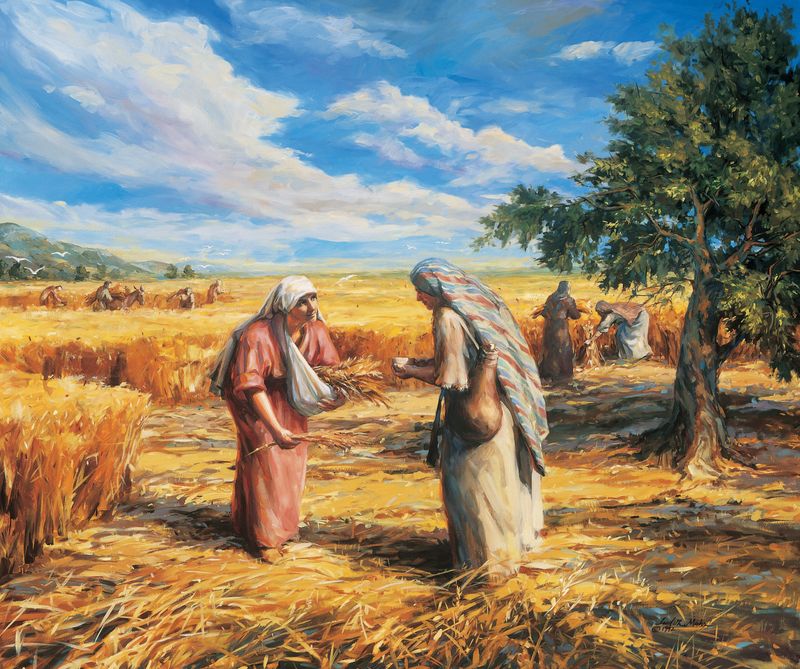
Story: Read about Ruth in the scripture story on page 8. She worked hard and gathered grain to take care of her husband’s mother. God blessed her for serving others.
Activity: Cut out pieces of paper in the shape of grain kernels. Use a stick or long piece of paper as a stem. Glue or tape your kernels to the stem to make a stalk of grain. Whenever you serve someone, pull off a kernel. Keep going until the stem is bare!
Friend July 2026 “Basket Craft Service” Make this basket with pieces of wheat to remember Ruth and her kindness! On each piece, write one way you can serve someone this week. When you do that service, put that piece of wheat into your basket.
Why was Hannah was sad? What can we do when we are sad? Read to the children 1 Samuel 1:10, and invite the children to listen for what Hannah did. Ask the children how they feel when they pray. Read from verse 18 to explain that after her prayer, Hannah “was no more sad.” Help the children see that they can always pray to Heavenly Father, especially when they are sad.
Use this week’s activity page to teach the children that they can pray to Heavenly Father and He will help them. While the children are coloring, sing or play a recording of a song that teaches about prayer, such as “A Child’s Prayer” (Children’s Songbook, 12–13).
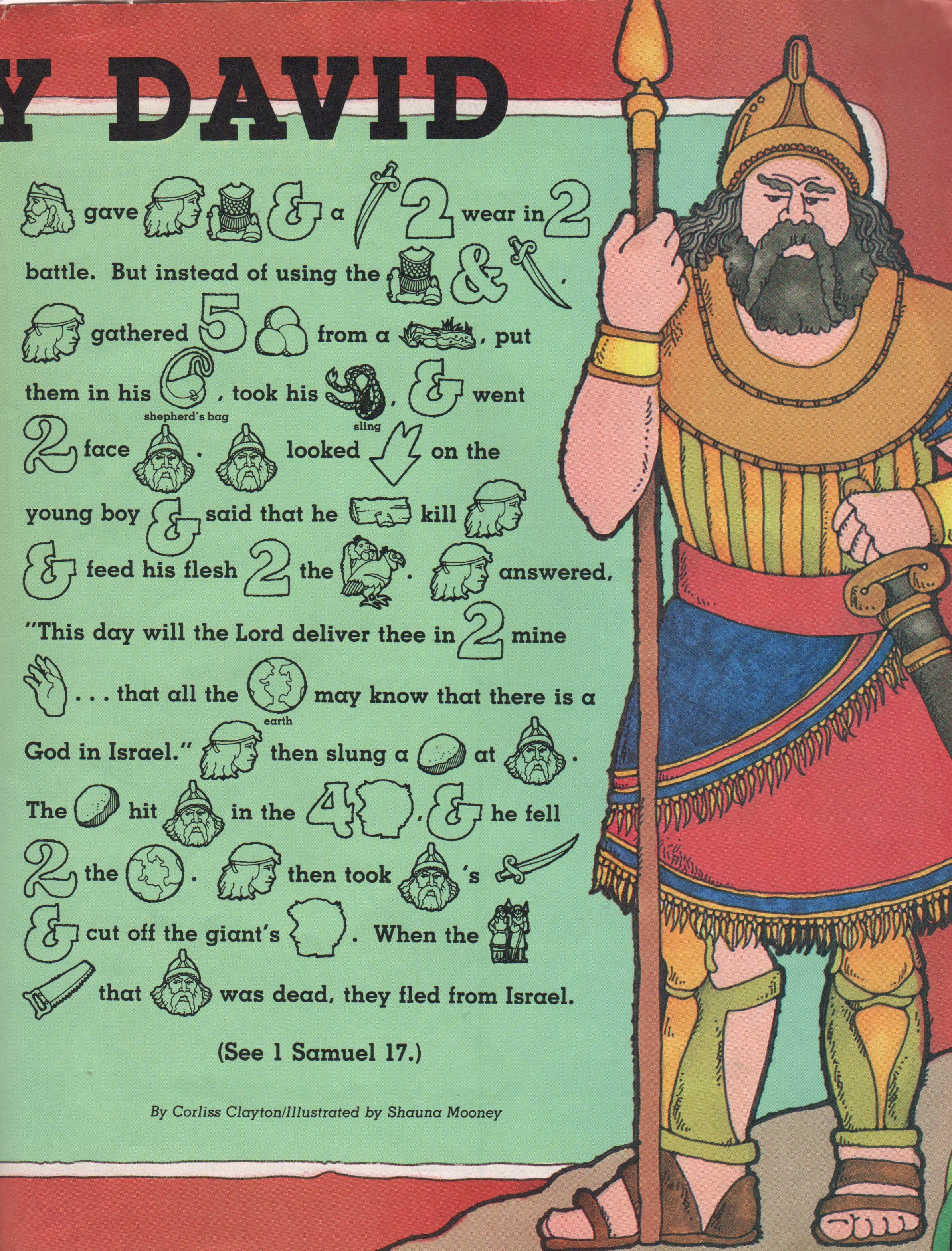
Come, Follow Me—For Primary: Old Testament 2022 Let them take turns acting out the story of David and Goliath. Prompt the child pretending to be Goliath to say, “Give me a man, that we may fight together” (1 Samuel 17:10). Prompt the child pretending to be David to say, “I come to thee in the name of the Lord” (1 Samuel 17:45). Testify that when we have faith in the Lord, He will help us have courage like David had.
“David and Goliath” (July 2002 Friend) Use this cutout scene to tell the story of David slaying Goliath.
“God’s Power Within You” (January 2002 Friend) President Gordon B. Hinckley tells the story of David and Goliath and teaches that we can overcome the Goliaths in our lives.(includes images of the story)
Friend July 2022 “Stand for What You Believe” Elder Rasband tells of his youth and often being the only Church member at school. He says that When we live the gospel, we will be different. The Apostle Peter said we would be “peculiar” (1 Peter 2:9). And that’s OK. We don’t need to worry about being different when we stand for what we believe. David stood for what he believed. He wasn’t alone. God’s power was with him. He beat Goliath. God will help us even when we face Goliath-sized challenges.
Friend August 2018 “David Trusted God” Story and goal card. (Young David trusted God and did hard things, and I can too!)
David and Bathsheba
“King David” in Old Testament Stories, 117–20, can help you tell your children the story in 2 Samuel 11. You might ask your children to identify the wrong choices David made and suggest good choices he could have made instead. What are some things we can do when we are being tempted that can help us make the right choice?
Video tells story of David. President Oaks compares David’s story to looking at pornography.
King Solomon
“Lesson 96: 1 Kings 1–10,” Old Testament Seminary Student Material We read in 1 Kings 3:16–23 that two women petitioned King Solomon to judge a difficult situation. The two women lived in one house and had borne children at about the same time. One night, one of the women woke up to find that her baby had died. Rather than mourn the loss of her baby, she switched her dead baby with the other woman’s baby. The next morning, when the second woman awoke to nurse her child, she found the other woman’s dead baby in her arms instead of her son. When the women came before Solomon, the first woman fervently denied the other woman’s accusation that she had switched the babies.
Read 1 Kings 3:24–27 to find out how Solomon identified the child’s rightful mother.
We read in 1 Kings 3:28 that all of Israel heard of this experience and recognized that God had blessed Solomon with wisdom. According to 1 Kings 4, knowledge of Solomon’s wisdom spread to other nations.
The Temple of Solomon
Explain to the children that David, Solomon’s father, had wanted to build a temple but was denied the privilege. The Lord instead chose Solomon to direct the seven years of construction. When the elaborate temple (much of it was overlaid with gold) was finished, the priests carried the ark of the covenant, which contained the two tablets of stone the Lord gave Moses, “to the most holy place” of the building (1 Kings 8:6). Then the glory of the Lord filled the temple (see 1 Kings 8:10–11), and Solomon offered the dedicatory prayer (see 1 Kings 8:22–53.)
Rehoboam
Rehoboam, Solomon’s son, becomes king.
After the death of Solomon, his son Rehoboam became king and increased the people’s burdens. The people revolted and were divided into the Northern Kingdom of Israel and the Southern Kingdom of Judah. Jeroboam, king of the Northern Kingdom, introduced idolatry and other wicked practices among his people. Later, Elijah was a prophet during the reign of Ahab in the Northern Kingdom.The Lord sent a drought according to Elijah’s word.
Story: Elijah was a prophet. He learned that the Holy Ghost speaks in a still, small voice. You can read this story on page 8 or in 1 Kings 19:11–12.
Song: “The Holy Ghost” (Children’s Songbook, 105)
Activity: Have everyone sit in a line. The first person whispers some words to the next person. Each person whispers the words to the next person. The last person tells everyone what they heard. What can you do to hear the Holy Ghost better?
Activity: The Holy Ghost speaks in a still, small voice. Have one person read the verses above in a quiet voice. While they read, everyone else makes storm noises as loud as they can! Can you hear what the scriptures are saying? Then have everyone be quiet and listen to the scriptures again. What do you learn about the Holy Ghost and how He speaks to us?
Story: Naaman had a sickness called leprosy. The prophet Elisha told him to wash seven times in the Jordan River to be healed. At first, Naaman didn’t want to. But when Naaman did what Elisha said, he was healed! (See 2 Kings 5.)
Activity: Make or draw a pretend river using rocks, sticks, chalk, or blankets. Then jump on your river seven times. Talk about how doing simple things God asks us to do can help us.
Read the story of Elisha and the young servant in 2 Kings 6:8–23.
Get a thin stick that could be easily broken.
Challenge someone to break it.
Put 10 or more sticks together. Challenge the same person to break the group of sticks without separating any.
Why was the challenge more difficult the second time?
Read 2 Kings 6:16-17: “Fear not: for they that be with us are more than they that be with them. And Elisha prayed, and said, Lord, I pray thee, open his eyes that he may see. And the Lord opened the eyes of the young man; and he saw: and behold, the mountain was full of horses and chariots of fire round about Elisha.”
Whom did Elisha and the young servant see protecting them?
Read the following: “Like that servant of Elisha, there are more with you than those you can see opposed to you. Some who are with you will be invisible to your mortal eyes” (Henry B. Eyring, “O Ye That Embark,” Liahona, Nov. 2008, 58).
Discussion: Read Doctrine and Covenants 84:88. At times when we might feel alone, how can we trust that we are not? How is the Lord protecting and helping us today? (For ideas, see Ronald A. Rasband, “Be Not Troubled,” Liahona, Nov. 2018, 18–21.)
The examples of Esther and Mordecai can help your children understand that bravery means doing what is right even when you are afraid. Consider writing the phrases Mordecai was brave when he … and Esther was brave when she … . As you learn the story of Esther together, your children could suggest ways to finish the sentences. You could read Esther 3:1–11; 4:10–17 or “Queen Esther” (in Old Testament Stories, 166–70).
After reviewing the story of Esther, attach a card with the name of one of the characters from the story on the back of each child. Invite the children to try to find out whose name is on their backs by asking other children questions like “Was this person righteous?” or “Was this person a woman?” Then discuss how Mordecai and Esther were instruments for the Lord to save the Jews.
Esther was courageous in approaching the king and saving her people.
Sit in a circle and ask a family member to name a scripture hero who was courageous, stating one way in which the person showed courage (example: Esther, courage to speak).
The next person in the circle says the name of the first hero and then chooses another person in the scriptures they think was courageous and explains why.
Continue around the circle, naming each scripture character who has been selected and adding a new one. Keep playing until everyone in the family has had at least one turn.
Discussion: How can we be courageous in our time and in our specific circumstances? How can we bless the lives of others when we act courageously and do the right thing?
Friend July 2022 “Stand for What You Believe” Elder Rasband tells of his youth and often being the only Church member at school. He says that When we live the gospel, we will be different. The Apostle Peter said we would be “peculiar” (1 Peter 2:9). And that’s OK. We don’t need to worry about being different when we stand for what we believe. David stood for what he believed. He wasn’t alone. God’s power was with him. He beat Goliath. God will help us even when we face Goliath-sized challenges.
Lesson 29: David and Jonathan,” Primary 6: Old Testament (1996), 125–30 To help the children understand how to be a true friend. Lesson 30: King David and Bathsheba,” Primary 6: Old Testament (1996), 131–34 To help the children keep their thoughts and actions pure.
Friend October 2018 “The T-E-S-T” One day, when Sharon’s father was reading to her the Bible story about Daniel in the lion’s den, he traced the word “test” on her forehead. He told her she would have tests like Daniel, but she should follow Heavenly Father’s commandments and not give into fear. (Also includes a lion activity of ways Heavenly Father helps us with challenges. )
Friend November 2018 “Coloring Page: I Love Scripture Stories” Children acting out story of Daniel in lion’s den.
Isaiah served as prophet from 740–701 BC, almost 40 years. At the time of his calling, Isaiah might not have been the white-haired old man we often imagine. You can read about his calling in 2 Nephi 16.
Isaiah was married and had at least two sons. You can read about his wife, “the prophetess,” and the naming of his newborn son by the Lord in 2 Nephi 18:3.
Isaiah is the most frequently quoted prophet in scripture.
His prophecies focus heavily on three major areas: the life and Atonement of Jesus Christ, the latter-day gathering of Israel, and the Second Coming
Come, Follow Me—For Individuals and Families: Book of Mormon 2020 Engraving on metal plates is not easy, and space on Nephi’s small plates was limited. So why would Nephi go to the tedious effort of copying a large amount of Isaiah’s writings into his record? In an article in the Ensign September 1998, it explains that Nephi’s own commentary on Isaiah begins in 1 Nephi 19, where he tells us that in order to “more fully persuade them [Nephi’s people] to believe in the Lord their Redeemer” he would turn particularly to the prophet Isaiah (see 1 Ne. 19:23).
Friend August 1994 “Isaiah and the Time Machine” Anthony was having a hard time following along during his family’s Book of Mormon study time. They were reading the words of Isaiah in 2 Nephi, and he didn’t understand them. Anthony loved playing in his pretend time machine and his father decided to help the children understand Isaiah by using the time machine. (Excellent story!)
Liahona March 2012 “How Can I Understand the Words of Isaiah?” Article includes the following: know Isaiah’s main topics, the reasons for studying Isaiah, the events of Isaiah’s days that he used symbolically, helpful hints to understanding his words, etc.
Friend November 1994 “Isaiah” Isaiah prophesied of many things that would happen in his day and in the future. This article includes an explanation of Isaiah’s most quoted prophecies.
Friend November 1994 “Isaiah” Isaiah prophesied of many things that would happen in his day and in the future. This article includes an explanation of Isaiah’s most quoted prophecies


![New Testament stories [art]](https://i0.wp.com/assets.churchofjesuschrist.org/ec/2a/ec2a2dc88fb57b25f81d6fbae0c54751cc0916ed/servants_holding_money_paul_mann.jpeg?w=640&ssl=1)
![New Testament stories [art]](https://i0.wp.com/assets.churchofjesuschrist.org/a2/1f/a21fa13a4d4822ed38190690b257dc9f864c4973/master_paying_servants_paul_mann.jpeg?w=640&ssl=1)
![New Testament stories [art]](https://i0.wp.com/assets.churchofjesuschrist.org/cd/9a/cd9ac4842515f345145fba985b3e38d5d61d0512/servant_doubles_talents_paul_mann.jpeg?w=640&ssl=1)
![New Testament stories [art]](https://i0.wp.com/assets.churchofjesuschrist.org/c4/b2/c4b2d98ccb77899357ec8ec8477af6962efaeaae/servant_doubles_talents_paul_mann.jpeg?w=640&ssl=1)
![New Testament stories [art]](https://i0.wp.com/assets.churchofjesuschrist.org/68/a1/68a170b69a1e66a57dfe03627bbff55c6accb9d8/servant_buries_talent_paul_mann.jpeg?w=640&ssl=1)
![New Testament stories [art]](https://i0.wp.com/assets.churchofjesuschrist.org/9d/13/9d13be787362d9bb490d125b741e39b474771272/master_accounting_with_servants_mann.jpeg?w=640&ssl=1)
![New Testament stories [art]](https://i0.wp.com/assets.churchofjesuschrist.org/7d/3a/7d3a9c810569135e7f8221f847cf25700204d00a/servant_accounting_with_master_mann.jpeg?w=640&ssl=1)
![New Testament stories [art]](https://i0.wp.com/assets.churchofjesuschrist.org/17/30/17301eeb940e4b8083580b9396383b53cb1d4312/servant_four_talents_mann.jpeg?w=640&ssl=1)
![New Testament stories [art]](https://i0.wp.com/assets.churchofjesuschrist.org/25/79/2579f8dd4c1986ad024cae9cf58e3955ee763c61/servant_one_talent_mann.jpeg?w=640&ssl=1)
![New Testament stories [art]](https://i0.wp.com/assets.churchofjesuschrist.org/b3/1a/b31a2703a1c0b24f75c871a05504187ab99d37e2/master_taking_giving_talent_mann.jpeg?w=640&ssl=1)


![New Testament stories [art]](https://i0.wp.com/assets.churchofjesuschrist.org/31/c0/31c0aa64bf262e237eee0627eae3617ef9867201/rich_man_donates_money_mann.jpeg?ssl=1)
![New Testament stories [art]](https://i0.wp.com/assets.churchofjesuschrist.org/b4/49/b4493c0363c57059c953a19b5941eed445d39cf4/widow_gives_two_mites_mann.jpeg?ssl=1)
![New Testament stories [art]](https://i0.wp.com/assets.churchofjesuschrist.org/e6/35/e635cb38fedc7e3ce527001bceebfc1e3a7e72fb/jesus_preaching_paul_mann.jpeg?ssl=1)
![New Testament stories [art]](https://i0.wp.com/assets.churchofjesuschrist.org/f6/92/f6923a91b24891044f32208d96769c3cabb71013/rich_man_counting_money_mann.jpeg?ssl=1)
![New Testament stories [art]](https://i0.wp.com/assets.churchofjesuschrist.org/b4/d7/b4d78ee85bc32a6418dcb928f905889841065a1d/jesus_teaching_disciples_paul_mann.jpeg?ssl=1)