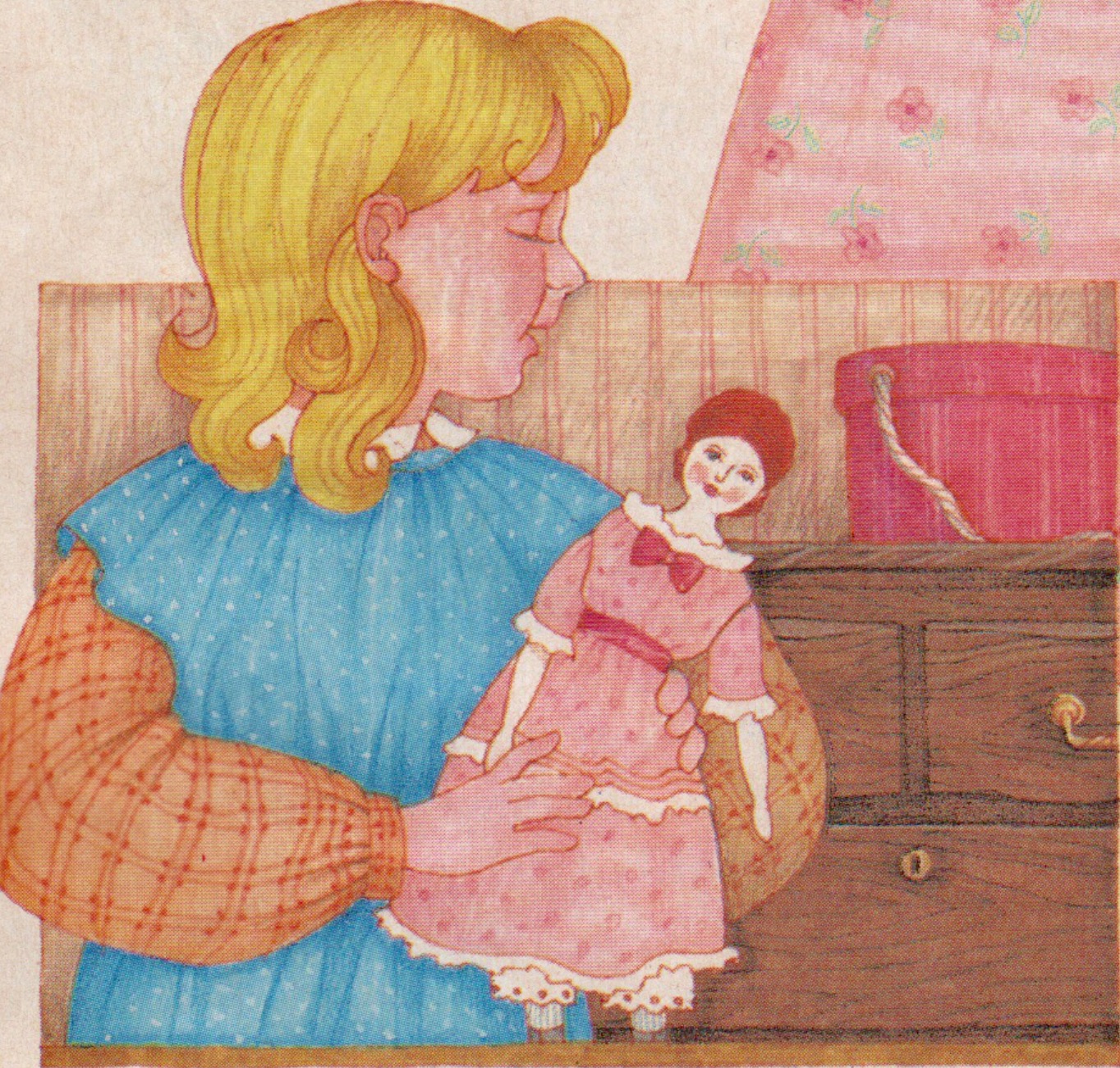
Friend November 2019 “James Taught the Gospel” James, the brother of Jesus, taught the gospel and helped lead the church when he grew up. One of his teachings in James 1:5. says that if we have questions, we can ask God. Many years after James wrote this scripture, a boy named Joseph Smith read it. He prayed to know which church to join. Joseph’s prayer was answered!When I have questions, I can ask God, like James taught. (Memorize James 1:5 as a family. Talk about how this verse led Joseph Smith to receive the First Vision.)
Friend September 2023 “The Best Present” Josiah and Madeline make gifts for their father’s birthday celebration. Afterwards, they happily helped clean up. Their father said that when they are helping and being kind to one another, it is the best gift. Later, they fight over toys and they notice their father’s sad face. They decide to try harder to be kind to each other. When their father walks by and smiles, they feel like they have succeeded in giving him a great present.
Fathers Support Their Children
Friend July 2018 “Race Day with Dad” When Elder Natriss was a child he wanted to build a derby car. His father helped him. Then he took his car to a derby race. His car wasn’t fancy like the other cars and people were laughing, but he was okay because his dad was with him. He won all the races and got second place.
We can also have confidence in our righteous choices, even though they may not be popular, because our Heavenly Father is with us.
Fathers Help Their Children
Friend June 2019 “Guess Who?” Action Rhyme of guessing who the person is.
Friend June 2017 “Running with Dad” TJ is sad and lonely after moving, but he feels better after he and his dad start preparing to run a marathon together.
Friend May 2022 “A Prayer in the Storm” Alexis was scared of the thunder in the storm and didn’t feel safe. She found her dad and asked if they could say a prayer. After the prayer she felt peaceful and wasn’t afraid anymore.
Fathers Teach Their Children
The Price of Shaving Cream – A father teaches his son honesty and consequences of stealing. Friend June 1984
Through Service
Friend June 2018 “An Unbeatable Team” Tyrell was excited to watch his father play church basketball, but when they got there his father noticed no one had cleaned the building, so he and Tyrell cleaned.
Through Example
Friend June 2017 “Why are Fathers so Important?” Elder Christopherson’s father set an example of honesty and service and Elder Christopherson wanted to be just like his father.
Friend June 1986 “For Little Friends: Daddy’s Shoes” Poem about boy who fills his daddy’s shoes when he helps his mother. He also observes the things his father does in his shoes.
Father’s Love
Friend June 1988 “My Dad’s Shoes” Annie has to give a talk about her father. Her father isn’t a member of the church, but he shows love for others and his family, and that is what Annie talks about.
Kim’s Father – Kim’s father wasn’t raised to show affection and love, but he feels it. Friend June 1986
Father’s Blessings
Friend February 2016 “You are Special” Emma gets a father’s blessing.
Proud of Dad/ See the Good
Friend February 2022 “Danilo’s Dad” Danilo got teased at school because his dad was the custodian. He tried to avoid his dad at school. Then his dad got an award for the best teacher because he was a hard worker and always cheerful, and he taught that by example. Danilo knew how hard his father worked, and also, his dad didn’t let what others say bother him. Maybe his dad could teach Danilo how to do that. He gave his dad a big hug and told him he was proud of him.
Fathers Need to Make Time for their Children
Friend June 2020 “Swimming Like a Seahorse” Robin passed off his seahorse swimming badge and wanted to show his father what he could do. His father promised he would go swimming with Robin, but he never seemed to have time. One morning as he was praying, Robin asked Heavenly Father to give his dad some extra time so they could go to the pool. After Robin’s prayer, his dad came in and said they should go to the pool. His dad said that he felt the Holy Ghost reminding him that he needed to make time for his son.
Stepfathers
Friend June 2020 ” The Strongest Person She Knew” Olivia had to write a paper about the strongest person she knew.. Her stepfather lifted weights and ran so she decides to write about him. Then, Olivia started noticing all the things her stepfather did for the family and realized that there were many ways to be strong, like doing hard things.
Story: The Lord asked Moses and his people to build a tabernacle. A tabernacle is like a temple. The Lord told them to build it like a tent so they could take it with them as they traveled to the promised land. You can read about it in Exodus 39:33–43.
Song: “I Love to See the Temple” (Children’s Songbook, 95)
Activity: Build a tent like the tabernacle. You can use blankets, towels, chairs, and anything else in your home. Then sit in your tent and talk about why temples are important. Or you could make a small tabernacle with blocks or other items.
The tabernacle not only allowed the children of Israel to have the presence of God with them, but it also taught them things they could do to become more like God.
Younger Children: Display a picture of the ancient tabernacle (see this week’s outline in Come, Follow Me—For Individuals and Families). Ask the children to find different parts of the tabernacle in the picture, such as the candlestick or the altars, and explain that these things were meant to help the Israelites think about the Lord (for more information about the tabernacle, see Exodus 40:17–34). What holy places do we have today that help us think about the Lord?
Older Children: Invite the children to use Exodus 40:17–33 to identify things that were part of the tabernacle and find some of them in a picture of the ancient tabernacle (see this week’s outline in Come, Follow Me—For Individuals and Families). Invite the children to draw their own pictures of the tabernacle. Talk about how each part of the tabernacle could teach about the Savior or Heavenly Father. For example, the ark of testimony could remind us of God’s commandments, the altar could remind us of Jesus Christ’s sacrifice, the candlestick could remind us that the Savior is the Light of the World, and so on.
Complete the activity page with the children. As you do, sing a song with them about the temple, such as “I Love to See the Temple” (Children’s Songbook, 95).
The ark, containing the two tablets of stone, is placed in the holy of holies—The glory of the Lord fills the temple—Solomon offers the dedicatory prayer—He asks for temporal and spiritual blessings upon repentant and prayerful Israel—The people sacrifice and worship for fourteen days.
Explain to the children that David, Solomon’s father, had wanted to build a temple but was denied the privilege. The Lord instead chose Solomon to direct the seven years of construction. When the elaborate temple (much of it was overlaid with gold) was finished, the priests carried the ark of the covenant, which contained the two tablets of stone the Lord gave Moses, “to the most holy place” of the building (1 Kings 8:6). Then the glory of the Lord filled the temple (see 1 Kings 8:10–11), and Solomon offered the dedicatory prayer (see 1 Kings 8:22–53.)
For the Israelites, building and dedicating the temple was an opportunity to turn their hearts to the Lord and recommit to “walk in all his ways” (1 Kings 8:58). How can you help the children you teach “walk in all his ways”?
Show the children a picture of a modern temple and the temple that Solomon built (see this week’s outline in Come, Follow Me—For Individuals and Families). Explain that when Solomon built a temple for the Israelites, he encouraged them to “walk in all [the Lord’s] ways” (1 Kings 8:58). Tell the children how the temple helps you walk in the Lord’s ways. Invite the children to share how they feel about the temple. Sing with the children a song about the temple, such as “I Love to See the Temple” (Children’s Songbook, 95).
Give some of the children paper hearts and other children paper footprints. Read 1 Kings 8:58, and ask the children to hold up the hearts when you say the word “hearts” and the footprints when you say the phrase “walk in all his ways.” Help the children understand that we walk in the Lord’s ways when we follow Jesus and try to become like Him. Ask the children what they do to walk in the Savior’s ways. You could sing a song about following Jesus, such as “I’m Trying to Be like Jesus” (Children’s Songbook, 78–79).
As you read 2 Nephi 5:15–16 to your children, they could pretend they are helping Nephi build a temple. You could also show them pictures of different buildings, including a temple. How are temples different from other buildings? Share with each other why the temple is important to you (see also “I Love to See the Temple,” Children’s Songbook, 95).
Here are some of the key blessings associated with LDS temples:
Participation in Ordinances: Temples are the only places where certain sacred ordinances — such as the Endowment, sealing of couples in marriage for eternity, and baptism for the dead — can be performed. These ordinances are considered essential for individual progression and salvation.
Eternal Families: The temple is where families can be sealed together, meaning they can be together forever, not just “until death do us part.” This sealing extends to children as well, who are considered to be sealed to their parents for eternity.
Learning and Instruction: In the temple, individuals receive instruction and make covenants related to the Plan of Salvation and their relationship with God. These teachings provide guidance for personal development and spiritual growth.
Personal Revelation: Many members of the LDS Church report that the peaceful, sacred atmosphere of the temple is conducive to receiving personal revelation and divine guidance.
Service to Others: In the temple, members perform vicarious ordinances on behalf of those who have died, providing them with the opportunity to accept these ordinances in the afterlife. This service to others is considered a significant blessing and a manifestation of love and selflessness.
Peace and Comfort: Many Latter-day Saints find that attending the temple provides a sense of peace and comfort, offering a spiritual refuge from the world. It can be a place to seek comfort, find answers to prayers, and feel closer to God.
Communion with the Divine: Temples are considered “Houses of the Lord,” and as such, are places where individuals can feel a special closeness to God and Jesus Christ.
Protection and Power: The covenants and ordinances performed in the temple are believed to provide spiritual protection and power from God, including the power to resist temptation and overcome worldly challenges.
Friend July 1988 Nephi helps his people build buildings, a temple, and swords to defend themselves.
Kirtland Temple
The Lord Instructed His Servants on How To Build Temples
Consider how you will help the children feel love for the temple and a desire to worship the Lord there when they are ready.
Show the children how to make a temple “spire” by raising their arms and touching their fingertips together. Read Doctrine and Covenants 88:119, and ask them to make a spire every time you say the word “house.” Explain that Heavenly Father wanted Joseph Smith and the Saints to build a temple, or a “house of God.” Display a picture of a nearby temple as you talk about the differences between a temple and a Church meetinghouse.
Share your testimony of the temple, and sing together a song about the temple, such as “I Love to See the Temple” (Children’s Songbook, 95). Invite the children to draw a picture of themselves going to the temple.
Give each child a piece of paper and a crayon or pencil. Ask the children to each draw a picture of a temple, and give them a few minutes to do so. Let each child display his or her picture to the rest of the class.
Explain that it probably was not too hard for the children to draw a temple because they know what temples look like. They have seen temples or pictures of temples. However, when Joseph Smith was commanded to build a temple, he had never seen a temple or even a picture of one. The Lord revealed the plans for the Kirtland Temple to the Prophet Joseph in a vision.
Today there are more than a hundred temples all over the world. But when Joseph Smith was commanded to build a temple in Kirtland, Ohio, he had never even seen one! The Kirtland Temple was the first temple built in the latter days.
Since Joseph Smith did not yet know what a temple ought to look like or exactly how it was to be used, Heavenly Father revealed to him a plan for the temple. He and his counselors saw a vision of the completed building. In the vision, Joseph Smith, Sidney Rigdon, and Frederick G. Williams saw the pattern of the temple both inside and out.
When an architect suggested that the seats in the building be rearranged, the Prophet Joseph would not allow it. He had seen them in the vision. According to his mother, Lucy Mack Smith, when the Saints wanted the temple to be built as a frame or log house, he said, “‘Shall we, brethren, build a house for our God, of logs? No, I have a better plan than that. I have a plan of the house of the Lord, given by himself.’”* The temple walls, two feet thick and over sixty feet tall, were to be built of stone.
Bring two identical sets of blocks (or paper cut in block shapes) that could be used to create a small building. Divide the children into two groups, and have them sit so the members of each group cannot see what the other group is doing. Have one group “build” a temple with their blocks, and then have them give directions to the second group on how to build an identical temple. Have the second group try to build an identical temple by listening to the directions, without looking at the first group’s temple. (You may need to set a time limit for this activity.)When the second group is done building, have them look at the first group’s temple and make any corrections needed to make theirs identical. Remind the children that Joseph Smith not only received verbal directions on how to build the Kirtland Temple, but he also saw the temple in a vision, so he knew exactly how it should be built.
In December 1832 the Lord commanded the members of the Church to build a temple in Kirtland, Ohio. They were to “establish a house, even a house of prayer, a house of fasting, a house of faith, a house of learning, a house of glory, a house of order, a house of God” (D&C 88:119).
The Saints were very poor and they knew the temple would cost a lot of money, so they did not start building it right away. Six months later they still had not started building the temple. In June 1833 the Lord revealed to Joseph Smith that he was displeased with the Saints for not starting to build his house. The Lord said the Saints had committed “a very grievous sin” by not obeying this commandment (D&C 95:3). The Church members repented of their delay, and four days later men began hauling stone and digging trenches in preparation for building the temple.
Joseph Smith asked some of the other Church leaders how they thought the temple should be built. Some said it should be made of logs, while others said it should be of wooden boards. Joseph said, “Shall we, brethren, build a house for our God, of logs? No, I have a better plan than that. I have a plan of the house of the Lord, given by himself; and you will soon see by this, the difference between our calculations and his idea of things” (quoted in Lucy Mack Smith, History of Joseph Smith, p. 230). The plans for the Kirtland Temple were shown to the First Presidency of the Church—Joseph Smith, Sidney Rigdon, and Frederick G. Williams—in a vision. Frederick G. Williams reported that the Lord told Joseph to gather with his counselors, and the Lord would show them how to build the temple (see D&C 95:14).
The three men knelt to pray, and they saw a vision of the temple. First they saw the outside, and then the building seemed to pass over them and they saw the inside. Frederick G. Williams said that when the Kirtland Temple was completed it looked exactly as it had in the vision. During the building of the temple someone tried to get Joseph Smith to change some of the design, but Joseph insisted that the temple be built just as it appeared in the vision.
The Kirtland Temple was not exactly like today’s temples, where families are sealed for time and all eternity and work is performed for the dead. It was more like a special meetinghouse where the Saints held their Church meetings. The Lord told the Saints exactly how big to build the temple (D&C 95:15). It was 110 feet from the ground to the dome. The temple was built of stone, and the outside walls were covered with plaster. Inside, the main floor had three ascending rows of three pulpits each at both the east and west sides. The rows at one end of the floor were the Melchizedek Priesthood pulpits, and the rows at the other end were the Aaronic Priesthood pulpits. The seats in the room were reversible so that the audience could face either direction.
After being chastised for not building a house of the Lord in Kirtland, Church leaders chose a site in a wheat field where they would build. Hyrum Smith, the Prophet’s brother, immediately ran to get a scythe and begin clearing the field. “We are preparing to build a house for the Lord,” he said, “and I am determined to be the first at the work” (in Teachings of Presidents of the Church: Joseph Smith [2007], 271, 273).
What do we learn about chastening from Doctrine and Covenants 95: 1-2? What do we learn about the Lord? How do these insights affect the way we receive chastening or chasten others?
The Lord’s People Contributed to the Building of Temples
Even the children in Kirtland helped, in small but meaningful ways, to build the Kirtland Temple. Help the children you teach strengthen their love for the Lord’s holy house.
Show a picture of the Kirtland Temple (see this week’s outline in Come, Follow Me—For Individuals and Families). Use phrases from Doctrine and Covenants 95:8 to teach the children about the Lord’s commandment to build this temple. Let the children take turns holding the picture and saying “The temple is the house of the Lord.”
Tell the children that on every temple is written “Holiness to the Lord. The House of the Lord.” If possible, show them a picture of these words on a temple. Why is the temple a special place? Read phrases from Doctrine and Covenants 97:15–16 that teach about the temple being the Lord’s house, and share your feelings about the temple.
Invite the children to pretend they are helping to build a temple (cutting wood, hammering nails, painting walls, and so on). Explain how important the temple is to the Lord, how hard the Saints worked to build the Kirtland Temple, and how much they sacrificed for it (see Saints,1:210).
Ask the children to talk about times when they were supposed to do something but didn’t do it immediately. Help a child read Doctrine and Covenants 95:3, 8, and ask the children what commandment the Lord said the Saints hadn’t obeyed. Read together verse 11. What did the Saints need to do so they could build the temple? What can we learn from the Lord’s promise to them?
On cards, write principles about the temple found in Doctrine and Covenants 95 and 97, along with the corresponding scripture references, and place the cards in a bag. For example: Building temples requires sacrifice (Doctrine and Covenants 97:11–12) and We must be worthy to enter the temple (Doctrine and Covenants 97:15–17). Divide the children into pairs. Let each pair draw a card from the bag and then work together to read the scripture on the card and talk about what the principle means to them. Help the children understand what they are reading as needed.
How have making and keeping temple covenants brought “power from on high” into our lives? Perhaps family members could share how they feel about the temple or share experiences when they have felt blessed with “power from on high” through worship in the temple.
Jesus told the Saints to build a temple (see Doctrine and Covenants 95:8). Temples are important places where we can make covenants (promises) with Heavenly Father and be sealed to our families.
Ponder how you will help the children feel reverence for the Lord’s house and look forward to the day when they can enter the “place of [His] holiness” (Doctrine and Covenants 109:13).
Ask the children to tell you something they love about their homes. Show the children a picture of the Kirtland Temple, and use Doctrine and Covenants 109:12–13; 110:1–7 to tell them about the day the temple was dedicated and became the Lord’s house . To show that the temple is the Lord’s house, read the following from the dedicatory prayer that Joseph Smith gave: “It is thy house, a place of thy holiness” (Doctrine and Covenants 109:13). Ask the children to share something they love about the temple.
Read through a few of the accounts from the “Voices of the Restoration” section at the end of the September 27–October 3 lesson in the Come, Follow Me manual.
Discussion: Why are temples important to you? Share spiritual experiences you have had because of temples.
How will you share with the children your love for the Lord’s house? Consider how you will inspire them to accept Elder Quentin L. Cook’s challenge “for each of us, wherever we live, to see ourselves in the temple” (“See Yourself in the Temple,” Ensign or Liahona, May 2016, 98).
In some ways, the Kirtland Temple was different from temples we know today. There were no altars and no baptismal font, and ordinances like baptism for the dead and sealing had not yet been restored. But the blessings described in section 109, the dedicatory prayer for the Kirtland Temple, are the blessings we receive in the Lord’s house today.
Choose verses from section 109 or 110 that you feel highlight the blessings of the temple (such as the ones listed below from this week’s outline in Come, Follow Me—For Individuals and Families). List these blessings on the board, and invite the children to search the verses you chose to find those blessings. How might we explain to someone why the temple is important to us?
Ask the children to silently read Doctrine and Covenants 110:1–10, and invite them to share something they learn about Jesus Christ or the temple from these verses. Invite the children to draw a picture of themselves and the Savior in the temple.
Ask the children to imagine that a friend is trying to find their house. How can we help our friend know which house is ours? How do we know that the temple is the Lord’s house? Read Doctrine and Covenants 109:12–13 with the children, and tell them how you know that the temple is the house of the Lord. Show pictures of temples, and let the children share their feelings about the Lord’s house.
The Kirtland Temple is important in Church history. Jesus Christ appeared there, along with ancient prophets. These prophets committed priesthood keys to Joseph Smith that are needed to do God’s latter-day work.
Invite the children to search Doctrine and Covenants 110:11–16 (or watch the below video) to find the names of three ancient prophets who appeared in the Kirtland Temple. Then help them find words in these verses that describe what each prophet “committed,” or gave, to Joseph Smith and Oliver Cowdery. You can find a helpful description in “Chapter 40: Visions in the Kirtland Temple” (Doctrine and Covenants Stories, 156–57)..
You could use this week’s activity page or “Chapter 40: Visions in the Kirtland Temple” (in Doctrine and Covenants Stories, 155–57, or the corresponding video in Gospel Library) to tell the children about the heavenly beings who visited the temple. You could also use the picture at the end of this outline.
To learn about the importance of what happened in the Kirtland Temple, you and your children could talk about what keys do. (With a set of keys, you can do a lot of things that you wouldn’t otherwise be able to do—enter buildings, drive cars, and open trunks, among other things. Keys, basically, mean authority and access.) A priesthood key is the authority or permission to act in Heavenly Father’s name.
To illustrate the importance of priesthood keys, discuss with the children the problems of losing a house key or car key. How is this similar to the problems of priesthood keys being lost? Help them find the word keys in Doctrine and Covenants 110:11–16, and talk about the blessings that these keys unlock.
You might explain that priesthood keys are God’s permission to lead His Church. Explain that one of the reasons the Kirtland Temple was built was to provide a place where the Lord and his servants could restore additional keys of priesthood authority. Share your gratitude that the Lord gave us priesthood keys. These keys unlock power and blessings so we can do God’s work in His Church, such as sharing the gospel and doing temple work
Sing with the children “The Spirit of God” (Hymns, no. 2), and tell them it was sung at the Kirtland Temple dedication—and in temple dedications today. Why was this a good song for the Kirtland Temple dedication?
Salt Lake Temple
Isaiah’s Prophecy about Latter Day Temples
Another fulfillment of this prophecy has to do with the Lord’s house being established in the “top of the mountains” (Isaiah 2:2). Not only does the prophecy have symbolic reference to putting the temple in the highest place in our lives, but it also has a literal fulfillment in the location of the Church headquarters in the latter days. Old Testament Seminary Student Study Guide “Isaiah 2”
Come, Follow Me—For Primary: Book of Mormon 2020 “2 Nephi 11-25” Read 2 Nephi 12:3, and explain that in this verse a prophet named Isaiah prophesied that there would be temples in the last days. Read the verse again, and and invite the other children to listen for reasons why Isaiah said we need temples. Emphasize that when we go to the temple, the Lord “will teach us of his ways” and help us “walk in his paths.”
2 And itshall come to pass in the last days, that the mountain of the Lord’s house shall be established in the top of the mountains, and shall be exalted above the hills; and all nations shall flow unto it.
3 And many people shall go and say, Come ye, and let us go up to the mountain of the Lord, to the chouse of the God of Jacob; and he will teach us of his ways, and we will walk in his paths: for out of Zion shall go forth the law, and the word of the Lord from Jerusalem.
To illustrate the phrase “we will walk in his paths” from 2 Nephi 12:3, you could make a path on the floor, leading to a picture of a temple. As your children walk on the path, they could name things they can do to walk in the Lord’s paths.
Friend July 2019 “Elder Andersen Visits Ivory Coast” Elder Neil L. Andersen and his wife, Sister Kathy Andersen, traveled to Ivory Coast for the groundbreaking of a new temple. (Activity: Children sing the words “I love to see the temple” in many different languages. Follow the line from each of these sentences to the correct language.)
Temple Construction
Friend March 2019 “Watching the Rome Temple Grow” Gioele and Michele were excited to have a temple being built closer to their home. From time to time, they would go and see the progress of the construction, Their father, who worked on the temple, even invited them to see the angel Moroni being placed.
Temple Open Houses & Dedications
Friend December 2017 “The House of the Lord” Idea: Place each item on a folder layout or board as you discuss temple open houses and dedications.
Friend September 2020 “Isaac and the Temple” Isaac was excited to go to the temple open house. He saw lots of paintings on the walls, but his favorite was a painting of Jesus holding out his arms. His dad told him that Jesus always has His arms open for him because he loves each of us. He imagined walking next to Jesus in the temple. He imagined Jesus giving him a hug.
Inviting Others
Friend July 2022 “The Sweetest Goal” David can’t wait to go to the Dubai Temple when it is built. He was preparing by praying, reading the scriptures, and trying to follow Jesus. He tells his Aunt Ana about the temple and wants to invite her and his friends to come see it when it’s done.
Dedications
Friend October 2017 “The Temple Dedication” At his first temple dedication, CJ’s heart was filled with peace and the Spirit, and he knew that what the Apostles were saying was true.
Friend September 2019 “Elder Stephenson Visits Chile” Elder Stephenson visits Chile for a temple dedication, the second temple in Chile.
Friend February 2020 ” Come Follow Me For Little Ones” Read 2 Nephi 12:2 and help your little ones say, “The temple is the house of the Lord.” Then use items around your house to build a model temple. You could look at pictures of different temples in the photo gallery at temples.ChurchofJesusChrist.org.
Friend September 2020 “For Older Kids” The celestial room is peaceful and beautiful. It represents what heaven is like. In this room, people think, pray, and feel the Spirit. Crack the code to find out which temple this is.
Friend July 2020 “For Older Kids” In the temple, a man and a woman can be married and sealed together forever. This room in the temple is where the bride gets ready. Unscramble the letters to find out which country this temple is in.
Friend February 2020 “For Older Kids” Some temples have paintings on the walls to remind us of Heavenly Father and Jesus Christ’s beautiful creations. The temple in this photo took 40 years to build and is now closed for renovation. Can you guess which temple it is?
Temple Grounds
Friend June 2023 “Friends by Mail”Pepijn B., age 5, visited the Hague Netherlands Temple. He noticed many circles around the temple. A circle symbolizes eternity! (See image at link.)
Friend October 2021 “Dear Friends” “I cut out the picture of the Barranquilla Colombia Temple and drew my family inside (Dec. 2019). I want my family to be together forever!” Lane S., age 10, Iowa, USA (See image at linkP)
Friend July 2019 “Elder Andersen Visits Ivory Coast” Elder Neil L. Andersen and his wife, Sister Kathy Andersen, traveled to Ivory Coast for the groundbreaking of a new temple. (Activity: Children sing the words “I love to see the temple” in many different languages. Follow the line from each of these sentences to the correct language.)
Friend March 2019 “Watching the Rome Temple Grow” Gioele and Michele were excited to have a temple being built closer to their home. From time to time, they would go and see the progress of the construction, Their father, who worked on the temple, even invited them to see the angel Moroni being placed.
Friend October 2017 “From Paris to Sapporo” Two children tell of their excitement to get a temple near them.
Friend May 2018 “Show and Tell” Three children tell of their excitement to have a temple built in their country—India.
Friend September 2019 “Elder Stephenson Visits Chile” Elder Stephenson visits Chile for a temple dedication, the second temple in Chile.
Friend October 2025 “Maria’s Baptism Journal” Maria was excited to be baptized. She had been preparing by reading the Book of Mormon everyday and made a poster to reminder her to pray every day. Her parents also gave her a journal to write the feelings and thoughts she receive from the Holy Ghost. That night she prayed about her decision to be baptized and received a yes and joy in her heart. She wrote about it in her journal. She continued to write down her spiritual experiences in her journal, including about her baptism day.
Friend January 2026 “A Chat with Emily about Baptism” Emily tells how she prepared for baptism (spiritually and physically), her special memories of her baptism (feeling the Spirit and inviting nonmember friends) , and how she is keeping her baptism covenants (going to church and taking the sacrament, and also praying daily, reading the scriptures, serving others).
Friend March 2017 “Worth the Wait” Sadie’s dad won’t let her get baptized until she is older. Sadie is sad about that, but she tries to think of the things she can still do at church.
Friend June 2018 “Heavenly Father Knows You” A group of people in a small town in ArgentIna had learned the gospel and wanted to get baptized but couldn’t because they lived far away from other towns; no church leaders had come to visit their town for some time. They were able to pool their money so one man could go find the missionaries. They were eventually able to get baptized in a portable swimming pool.
Clean Again
Friend March 2017 “A Great Feeling” Paulo didn’t want the feeling he had when he was baptized to go away, but the next day he yelled at his brother. Through repentance and the sacrament he was able to get the feeling back.
Friend May 2024 “Clean Again” Emily wanted to keep the good feeling she had when she was baptized. She felt sure she could do it. But then her brother did something that made her angry and she yelled at him. I’ve ruined it, she thought. I couldn’t even choose the right for one day! But then she was reminded during her confirmation that because of Jesus she can repent and be forgiven, and when she takes the sacrament she can promise again to follow Jesus.
Friend January 2026 “A New Start” He liked the idea of being clean and new. But how would he stay clean after baptism because he was constantly forgetting things and making mistakes? His father explained that when he took the sacrament it would remind him of his baptism covenant and to repent and keep trying to follow Jesus.
Baptism Questions and Concerns
Friend June 2018 “Twin Jitters” Kaylee is nervous about getting baptized. She worries about being dropped or not being able to breath. Her twin brother is also nervous. Her grandmother suggests they get a blessing from their father. Afterwards they feel much better.
Friend July 2019 “Show and Tell” “When I was little, I was afraid of water. Even though people told me I didn’t need to worry about being baptized, I was scared. The missionaries told me that Jesus Christ was baptized to set an example, and I could feel my fear go away. When I was baptized, I felt a great joy.” Sarah T., age 11, Île de France, France
Friend February 2019 “He Calmed the Waters” Daniel lives on an island in the Pacific. He was worried about getting baptized because he had to get baptized in the ocean, and the waves can be big. The waters were rough on the day of his baptism, but during his baptism they were calm. Heavenly Father answered his prayer and helped him.
Convert Baptism
Friend July 2023 “Baptism Stories” As Mary turns 8 and prepares to get baptized she learns that her other family members got baptized at older ages because they were converts.
Friend February 2022 “Carol’s Three-Year Wait” After Carol and her friends found the church, their parents said they had to wait until they were older to get baptized. They took the bus every week to church for three years and then Carol and another friend were finally able to get baptized.
Friend February 2021 “Feeling Christ’s Love” When Elder Takashi Wada Of the Seventy was young he read the Bible in school and wanted to know more about Jesus. Then he met the missionaries and they gave him a Book of Mormon and her learned more about Jesus. He wanted to be baptized and follow Jesus.
Friend April 2019 “Feeling New” Rasmussen and his mom took the missionary lessons and read the Book of Mormon, and then Rasmussen’s mom decided to get baptized. After the baptism, Rasmussen is excited to turn eight so he can be baptized and feel new too.
Friend February 2025 “Mom’s Baptism” Scott’s mom got baptized on the same day he did. His mom hadn’t grown up going to church like Scott had. She had started going to church after she met Dad. The missionaries had come to their house a lot, but it had taken years before Mom felt ready to be baptized.
Friend July 2025 “A Little Like Heaven” When Tahira, from India, was visiting her uncle and aunt she went to church with them. It felt like heaven. She learned about Jesus and about families being together forever. She wanted to learn more, so the missionaries taught her. She knew the gospel was true, and her parents gave her permission to be baptized.
Inviting Others to Baptism
Friend November 2021 “Let’s Invite Everyone” Most of Jarom’s family were not members of The Church of Jesus Christ of Latter-day Saints. They did not know much about baptism. But they knew it was a special day for Jarom, so when he invited them to his baptism they said, “We will be there!”
Friend July 2019 “Will You Come to My Baptism” Oliver tells everyone about his upcoming baptism and invites them to it. He likes being a missionary.
Friend February 2024 “Friends Following Jesus” Saria went to a Christian school. That meant they all learned about Jesus Christ together even though not everyone went to the same church. When she invited her friends to her baptism they wanted to know why she wasn’t baptized as a baby. She didn’t know what to say. Later, Saria’s mother explained that we believe that when we’re baptized, we make a sacred covenant. And we need to be old enough to understand the promises we make. Saria realized that she and her friends had differences, but one thing was the same. They all loved Jesus and wanted to follow Him.
Friend February 2025 “Sundae’s Song” Sundae invited her friend Amy to her baptism. She sang a song and could tell that Amy was feeling the Holy Ghost.
Receiving Holy Ghost at Baptism
Friend February 2021 “Wrapped Up in Love” Abby received a soft white blanket from her grandparents at her baptism to remind her of how the Holy Ghost feels. After her baptism she felt warm and happy and knew she had made the right decision. She knew it must be the Holy Ghost.
Who Can Baptize?
Friend June 2021 “My Brother Baptized Me” Océane’s brother holds the Aaronic priesthood and her parents asked if she would like him to baptize her. She agreed and her brother practiced with her. At her baptism, every member of her family had a part, musical numbers, talks, witnesses and her father confirmed her. (Photo at link)
Friend September 2025 “Harvey’s Baptism Shirt” Harvey is excited to be baptized, but when they get to the church he realizes his white shirt was left in the taxi. He prayed that the taxi driver would bring it back, but if not, he would wear the one that came down to his knees that was in the closet because he wanted to get baptized. The taxi driver did bring the shirt and Harvey was grateful.
Baptism Covenant
Friend February 2026 “My Baptism” Henry tells about his baptism and the covenant he made with Heavenly Father. After his baptism the Bishop asked him to stand on a chair and look at a picture of Jesus Christ that was hanging on the wall. Henry could also see a reflection of himself in the glass of the picture’s frame. It taught him that Jesus will always be with him when he needs Him.
Friend November 2020 “Food and Fun” The Aboriginal people in Australia use dot painting to tell stories and create beautiful artwork. Here’s a craft for you to make your own!
Friend November 2020 “Food and Fun” Damper is a traditional Australian bread. Travelers would sometimes make this bread outside over a campfire with hot coals. Here’s a version you can try!
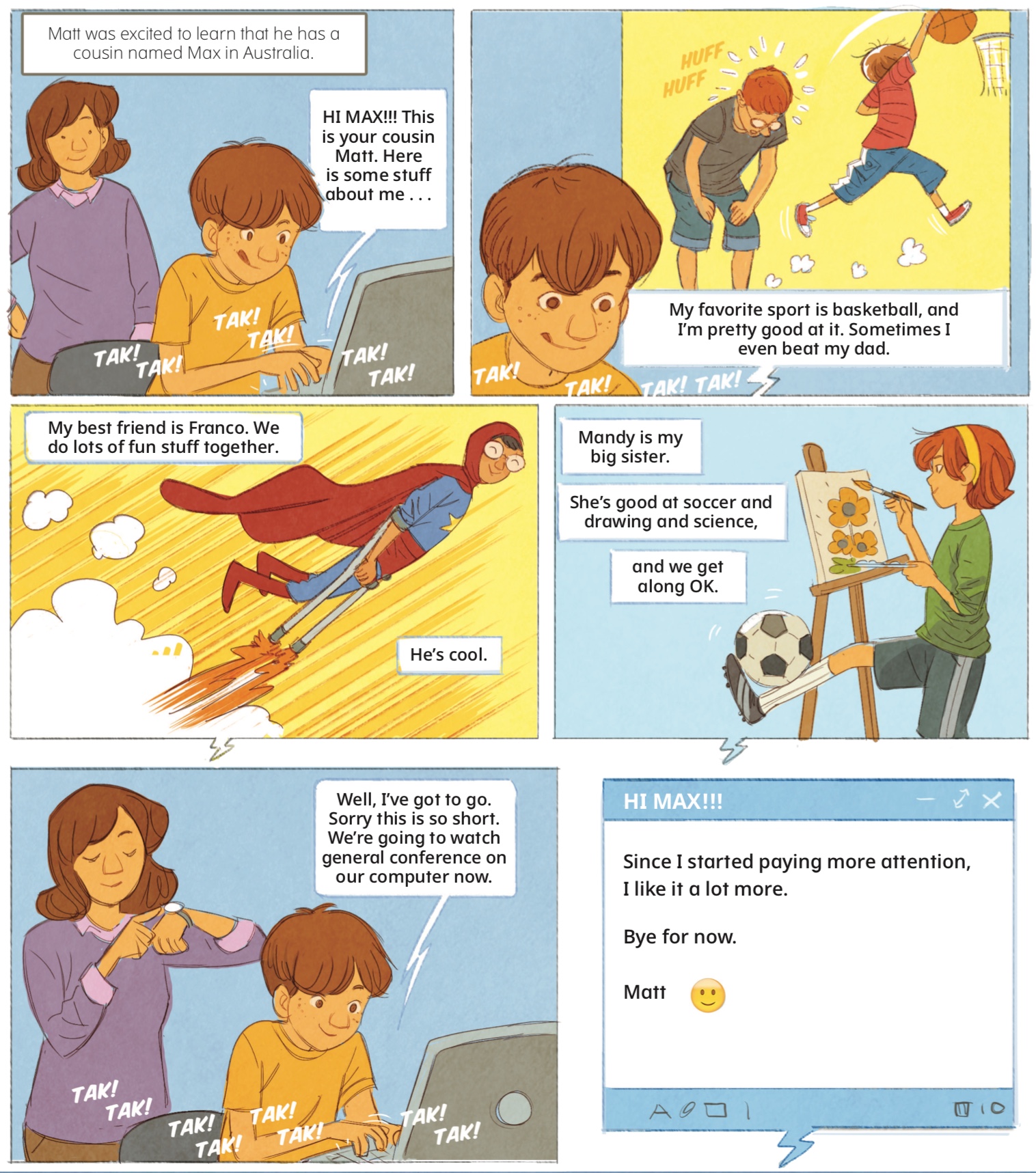
Friend July 2018 “Matt and Mandy” Matt gets an email from his cousin in Australia. He doesn’t know what a lot of the things are that his cousin talks about in the email, but they do have one thing in common: the gospel. Matt’s cousin tells about his baptism and his family getting sealed in the temple.
Friend October 2018 “Matt and Mandy” Matt sends an email to his cousin in Australia telling about himself. Then he goes and watches conference, which is something his cousin would be doing too.
Friend January 2020 “Matt and Mandy” As they walk in the snow, Matt tells his friend that in Australia it’s summer and that his cousin is probably at the beach. Also, he tells him that his cousin has never felt snow or played in it.
Friend October 2021 “Margaret Cummings” Margaret’s family experienced difficulties getting to the temple to be sealed together, but their prayers were answered and they were blessed.
Friend April 2025 “Following Jesus in Australia” After her baptism, Lirael wanted to always think of Heavenly Father and Jesus Christ like she promised. So when she had a hard time in her math class at school, she said a prayer. When she asked for help from her parents, teacher, and Heavenly Father, it got much easier.
Friend May 2022 “The Footy Decision” Sam loved playing footy and when he found out the games were on Sunday he was sad. He prayed about what to do. He knew it was important to make Sunday special so he decided to go to practices on Thursdays but go to church on Sundays.
Friend July 2021 “Meet Eta from American Samoa” Eta’s mom owns a dessert bakery. Eta and her older sister, Talai, love to share the desserts with their teachers and leaders and with people who might be having a hard time. (includes photo)
Eta followed Jesus by sharing food with others.
Challenge: Look for a chance to share what you have with your friends and family, even if it seems small.
Tahiti
Friend February 2021 “Adventures in Tahiti with Margo and Paolo”
Friend February 2021 “Meet Raiarii from Tahiti” Story of Raiarii sharing the gospel by explaining scriptures and praying with two of his grandmother’s friends. (See story and photos at link.)
Friend November 2023 “Coconuts and Tithing” During the summer Avehei and her brother work in the coconut groves. She always pays my tithing with the money she receives because she knows she and her family are blessed when she obeys.
Friend March 2020 “Food and Fun” Make Samoan coconut rolls and a pretend Samoan Siapo cloth.
Friend May 2022 “Tom and the Terrible Flu” Tom helped take are of his dad and other villagers when the Spanish Flu hit. He gave them coconut milk, made chicken soup for them, and got them water.
Friend December 2023 “Following Jesus in New Zealand” Tarnae is preparing to go to the temple to do baptisms. His nan (grandma) found information about some ancestors so he could be baptized for them. “I am really excited to enter the temple,” says Tarnae. “I feel honored to help do the work for my ancestors.”
When their cousin got baptized, Nephi shared his testimony. Nephi told those at the baptism about Jesus Christ. “I know it is important to share my testimony to strengthen others,” Nephi says.
Friend November 2019 “Fun and Food” A popular flavor of ice cream in New Zealand is hokey-pokey, or honeycomb toffee. Here’s how to make a version at home.
Friend November 2019 “Food and Fun” Here are some fun words from New Zealand. Now find them in the word search!
Friend November 2019 “Jesus is Real” (story about New Zealand kids at school) Everyone at Ismay’s table at school were excitedly talking about Christmas and their favorite traditions such as going to a church service. Suddenly Charlotte spoke up and said, “Jesus isn’t even real.” Ismay was sad to hear this and she quietly bore her testimony to Charlotte that Jesus was real, and that she felt it in her heart. She was glad she had spoken up and planted a seed about Jesus.
[unitegallery 2019Nove]
Friend May 2021 “Pioneers in Every Land: Sam Beazley”Sam was called to serve as a Labour Missionary building a church school for teenagers. His labor also helped build the Hamilton New Zealand Temple which he later was called to serve in.
Friend July 2022 “Rākau Sticks” The Māori people of New Zealand play a game by tapping, throwing, and catching sticks to a rhythm. Find four sticks or paper rolls to play your own version of this game!
Friend July 2021 “Vaha’i Tonga”Vahai’ was determined to remain faithful, so he said his prayers every night at boarding school. At first the other kids made fun of him, then they started to join him. He invited them to a district conference and 77 of them came. Seven of them wanted to be baptized after the conference.
Friend March 2023 “Following Jesus in Kiribati” Scott is such a good friend to his cousin that he always calls him his younger brother. Scott prays every night and every morning. He always wants to go to Church activities, and he loves home evening. He likes to help others too. “Helping other people makes me happy,” he says. (See more images at link.)
Friend July 2017 “Pioneer Night” A family celebrates Pioneer Day for Family Home Evening.
Friend July 2019 “For Older Kids” “I got to play a part in the British pageant. I have really enjoyed portraying a wonderful girl. I have learnt the sorrow she felt and the brave personality she was. The opportunity of being in the pageant has bought me closer to the Saviour, and I will never forget it!” Poppy F., age 11, West Sussex, England
Pioneer Courage
Friend July 2017 “Road to Zion” After Mary’s father has a stroke, Mary gets her family to Utah traveling alone in their wagon.
Friend January 1986 “Ellen Pucell Unthank” While crossing the plains in handcarts, Nellie’s parents died and Nellie’s feet froze and had to be amputated, but she remained faithful and thankful.
Friend June 1988 “The Scent of Lilacs” Becky and her brothers and sisters lose both their mother and their father as they travel to the salt lake valley.
Friend June 1987 “Jacob Hamblin” Jacob has a reputation for being honest with the Indians, which his son finds out.
A pioneer is someone who goes before others and prepares the way for them.
Friend July 2018 “A Different Kind of Pioneer” Gabby doesn’t have any ancestors that crossed the plains to tell about at Primary Activity Day, so she tells about her great-grandmother who was a pioneer through her faith in God. Her faith influenced Gabby’s mother to join the church.
Friend July 2016 “A Priceless Heritage” When President Eyring’s great grandfather joined the church he left a priceless heritage for his descendants.
“A Different Kind of Pioneer” – Friend July 1984 – Girl gives a Primary talk about her family joining the church.
Friend July 2019 “Mara the Pioneer” Mara learns that she is a pioneer because the church has only been in Cambodia for 25 years.
[unitegallery 2019July]
Pioneers are the First Person to Do Something
Friend October 2024 “Joshua the Pioneer” Joshua decided to give a talk in Primary about pioneers. He finds out he is a pioneer too. He was adopted and was the first person in his birth family to join the Church.
Pioneers in Every Land
Friend April 2021 “Julia Mavimbela” During a time of racism and violence in South Africa, Julia wanted to bring goodness to her community, so she started a community garden. She taught love and forgiveness. Then she met missionaries and joined the church. She continued to teach love and helped start Women for Peace, a group to promote unity and peace in South Africa.
Friend February 2021 “Pioneers in Every Land: Vicky Tadić” Vicky was curious why the family next door was different. The mom invited her to church in their home (because there wasn’t a church building in Bosnia). Vicky learned about the Holy Ghost. The next day a voice in her mind told her to stay away from some trash cans. Suddenly a car crashed into them. She was glad she listened. Soon her whole family was learning about the gospel and was baptized.
Friend June 2025 “Articles of Faith” What this means: Spiritual gifts are blessings given from Heavenly Father through the Holy Ghost. Everyone has at least one spiritual gift. Some spiritual gifts are speaking or knowing languages, having faith in Jesus Christ, and helping heal people who are sick.
Memorization Tip: Article of Faith 7 is about gifts of the Spirit. Seven and Spiritboth begin with s!
Articles of Faith in Action: When I was seven, I was sick with a fever for a few days. I prayed about what to do. A warm feeling came to me, and the Holy Ghost told me to ask for a blessing. I asked my dad for a blessing. He called our home teacher to come help. When my dad gave the blessing, I felt the Spirit. At the end of the day, I felt much better. Faith M., age 11, Minnesota, USA
Jehovah is one of the names of Jesus Christ and refers to the premortal Savior. The Joseph Smith Translation clarifies that the prophets Abraham, Isaac, and Jacob knew the Lord by this name (see Exodus 6:3, footnote c). Usually, when the phrase “the Lord” appears in the Old Testament, it refers to Jehovah. In Exodus 3:13–15, the title “I AM” is also a reference to Jehovah (see also Doctrine and Covenants 38:1; 39:1).
Premortal Life
Lesson 1: Heavenly Father’s Plan for Us,” Primary 6: Old Testament (1996), 1–5 To help the children understand that they are spirit children of Heavenly Father and that he has a plan that will help them become like him and return to live with him again.
Lesson 2: Jesus Christ Was Chosen to Be Our Savior,” Primary 6: Old Testament (1996), 6–8 Purpose: To help the children understand the importance of using their agency to choose and act for themselves.
Lesson 4: The Fall of Adam and Eve,” Primary 6: Old Testament(1996), 13–1 To help the children understand the fall of Adam and Eve and to have a desire to return to the presence of Heavenly Father.
Because of the Book of Mormon and other latter-day revelations, we have a unique perspective on the Fall. For example, consider what the prophet Lehi taught his family about Adam and Eve in 2 Nephi 2:15–27. How do Lehi’s teachings clarify what happened in the Garden of Eden and help us understand why it was important?
Article of Faith 2
Memorizing Tip: Adam and Eve were the first two people to live on the earth, and Article of Faith 2 is about Adam.
To transgress means to break a law or commandment. In the Garden of Eden, God told Adam and Eve not to eat the fruit of the tree of knowledge of good and evil, but they ate it anyway. We are each responsible for our own decisions. We can’t be punished for someone else’s sins. (Friend Jan 2015)
Ask the children to think of opposites—such as happy and sad, hot and cold, hard and soft, smooth and rough, heavy and light, high and low, or fast and slow—to illustrate the importance of opposition (see 2 Nephi 2:11, 15). Let the children describe their experiences with opposites. To help them get started, you might use the following examples: After someone has been sick, they can better appreciate feeling well. Or without darkness, you cannot recognize light, which is why you cannot see the stars during the day. To illustrate this second example, you might bring a flashlight and show how its light is barely noticeable in a well-lit room, but the light is much brighter when you darken the room.
“Enoch” (December 1994 Friend) A retelling of the story of Enoch.
“Enoch Builds Zion” (October 1998 Friend) A retelling of the story of Enoch. Includes figures to use in telling the story.
“Follow the Prophet” (May 2001 Friend) A retelling of the story of Enoch. Includes figures to use in telling the story.
“Being Like a Missionary” (January 2010 Liahona and Friend) Learn about and color a picture of Enoch and then draw clothing on a boy to show what missionaries look like today.
Friend February 2026 “Weekly Family Scripture Fun” The Lord helped Enoch teach the gospel. Teach the gospel like Enoch by sharing your testimony! Say a prayer to receive help from Heavenly Father. Write or draw something you believe. Then share your testimony with someone you love.
The people of Enoch were “of one heart and one mind” (Moses 7:18). That means they all served each other and worked together. Practice working together by doing a three-legged race! With a partner, use a scarf to tie one of your legs to one of their legs. How fast can you move together?
“The City of Enoch” (April 2002 Friend) Create a moving picture to use in telling the story of the city of Enoch being taken up to heaven.
Larger PDF version of the October 2002 Friend activity and story visual aid “Noah’s Ark”
Friend February 2026 “Weekly Scripture Fun: Origami Noah’s Ark” Use the origami instructions to make a paper boat. Then cut out Noah and his animals (below) to go inside! As you make your ark, talk about ways you can follow Heavenly Father and grow your faith.
2017 Outline for Sharing Time Identify the doctrine (playing a matching game): Draw a simple ark on the chalkboard. Prepare several sets of two identical animal pictures. Give one picture to each child. Ask the children to stand and make the sound that the animal in their picture makes and to listen for someone else who is making a similar sound. When the children with matching pictures find each other, have them stand together until all the animals have been paired. Ask the children to come as pairs and put their animals on the ark drawing. Ask the children, “Which prophet did the Lord ask to gather the animals into the ark?” Point out that it was probably a difficult task to gather so many animals into the ark, but Noah chose to obey the Lord’s command.
Liahona February 2022 “Noah’s Ark” For 120 years, Noah repeatedly “called upon the children of men that they should repent; but they hearkened not. … Despite “the long suffering of God … in the days of Noah, … [only] eight souls were saved” (1 Peter 3:20).
Story: God told the prophet Noah to build a large boat called an ark. When there was a big flood, Noah, his family, and the animals stayed in the ark while it floated on the water, and they were safe. Today, we can stay safe by following the prophet.
Song: Verse three of “Follow the Prophet” (Children’s Songbook, 110–11)
Activity: Fill a bowl with water. Take turns putting leaves, rocks, and other waterproof items in the water. Do they float or sink? Whenever something floats, say something you can do to follow the prophet.
The Lord gave Noah specific instructions to prepare him and his family for the coming flood. “And Noah did according unto all that the Lord commanded him” (Genesis 7:5). Even though there was no evidence of rain, Noah listened and gathered the animals into the ark.
Briefly tell the story of Noah and the ark (see Genesis 6-8). Discuss how Noah was commanded to help animals enter the ark (see Genesis 6:20; 7:14).
Name different kinds of animals that Noah might have brought on the ark.
Then play a game of 20 questions with your family. Have one person think of an animal that was on the ark. Everyone else takes turns asking yes or no questions to try and guess the animal.
Continue asking questions until someone guesses the animal correctly or until 20 questions have been asked.
Repeat the game until everyone has had a turn thinking of an animal.
Discussion: What are some ways Noah acted in faith? What are some things the Lord has asked us to do? How will we be blessed as families by following the teachings of Jesus Christ?
Liahona February 2022 “Flood Warning” How can you help…[your children or grandchildren] avoid the obscenity, violence, and pornography in today’s media?
As you talk about Noah together, help your children see how blessed we are to have a prophet of God today. Help your children search Moses 8:16, 19–20, 23–24to find things Noah taught that the Lord’s prophets still teach today. How are we blessed when we obey these teachings?
Have each person draw themselves obeying something specific that the prophet has taught us to do. Place their pictures in the ark below while reminding them that it will bring safety and peace to their lives.
Display the picture An Angel Saves Abraham (ChurchofJesusChrist.org), and invite the children to share what they know about the story it depicts, found in Abraham 1:12, 15–17. Ask the children to read these verses and share things they learn about prayer.
President Joseph Fielding Smith, commenting on the human sacrifices that took place during the time of Abraham, wrote: “Abraham was of the [tenth] generation from Noah. Several hundred years had passed since the flood, and people had multiplied and spread over the face of the earth. The civilizations of Egypt, Chaldea, Assyria and the petty nations of Canaan, had been established. In the midst of this scattering the true worship of the Father was nearly lost. Sacrifice instituted in the days of Adam and continued in the practice and teaching of Noah, in the similitude of the great sacrifice of the Son of Man, had become perverted. Instead of offering clean animals, such as the lamb and bullock, the apostate nations had dwindled in unbelief to the extent that human sacrifice was offered to their idol gods” (The Way to Perfection, 85).
Liahona February 2022 “The Abrahamic Covenant” God promised Abraham that “as many as receive this Gospel shall be … thy seed” (Abraham 2:10). Our covenants at baptism and in the temple allow us access to the blessings of the Abrahamic covenant and make us part of the covenant people of God, as long as we are faithful (see Ezekiel 11:20).
Genesis CHAPTER 13 Abram returns from Egypt—He and Lot part—The Lord will make Abram’s seed as the dust of the earth in number—Abram settles in Hebron.
Your children might enjoy acting out the story from Genesis 13:5–12, pretending to be Abraham, Lot, and the herdsmen. How can we follow Abraham’s example of being a peacemaker with our family or friends? Try role-playing their answers.
“Lesson 9: Jehovah Makes Covenants with Abraham,” Primary 6: Old Testament Bring some sand in a container. Let the children try to count the grains they can hold between their thumb and forefinger. Imagine the vastness of Abraham’s posterity. Ask the children how they personally can help fulfill the promises made to Abraham that his seed would become as numerous as the grains of “sand which is upon the sea shore” (Genesis 22:17)
Invite the children to read Genesis 17:1–8 and Abraham 2:8–11 and make two lists: what Abraham was asked to do and what the Lord promised him in return. What do we learn about the Lord from these verses?
“Lesson 9: Jehovah Makes Covenants with Abraham,” Primary 6: Old Testament Pages 35–38 Have the children take turns choosing slips of paper with the following scripture references on them that tell of the promises made to Abraham. Explain that seed means descendants. Have them read each verse aloud and, if they desire, mark the verses in their own scriptures. Abraham 2:9—His name would be great among all nations. Abraham 2:10—All who accept the gospel through baptism would be known as Abraham’s descendants. Abraham 2:11—The Lord would bless those who blessed Abraham and curse those who cursed Abraham. Abraham 2:11—His descendants would have the priesthood. Abraham 2:11—His seed would have the responsibility to be missionaries and take the gospel to all nations. Abraham 2:19—Abraham and his descendants would be given the land of Canaan. Genesis 22:17—The Lord would multiply Abraham’s seed greatly (Abraham would have many descendants).
“Lesson 9: Jehovah Makes Covenants with Abraham,” Primary 6: Old Testament (1996), 35–38 To help the children understand that as God’s covenant people we each have the responsibility to live the gospel and share it with others. Lesson 10: Abraham and Lot,” Primary 6: Old Testament (1996), 39–4 To strengthen each child’s desire to show love to others. Lesson 11: Abraham and Isaac,” Primary 6: Old Testament (1996), 43–4 Purpose: To help the children understand that we should trust Heavenly Father and Jesus Christ completely.
Friend March 2018 “Abraham and Sarah made Covenants” Link includes story and goal card ideas to learn more about how to be like Abraham and Sarah.
Friend February 2026 “Weekly Family Scripture Fun” God hears your prayers. Make a prayer banner. On small pieces of paper, write or draw things you want to pray for or talk to Heavenly Father about. Then poke holes and hang them on a string. Use this banner to give you ideas of what to pray for. Ask
Friend March 2026 “Come, Follow Me: Weekly Scripture Fun” Abraham and Sarah had to be patient and wait a long time before God blessed them with a baby. You can be patient too. Wrap a toy or treat in several layers of paper. Then unwrap one layer every time you read a verse from the scriptures above about Abraham and Sarah’s story. When you’re done, talk about how sometimes blessings don’t come right away. But as we are patient and trust God, His blessings will always come.
Using pictures of Abraham and Isaac and of the Crucifixion (see Gospel Art Book, nos. 9, 57) can help your children compare the story in Genesis 22 with the Savior’s sacrifice. How does the story of Abraham and Isaac remind us of the sacrifice Heavenly Father and Jesus Christ made for us.
Isaac was Abraham and Sarah’s only son (see Genesis 22:2).
Jesus was the Only Begotten Son of the Father (see John 3:16).
Isaac was to be offered on a mountain in the land of Moriah, which tradition holds was the temple mount in Jerusalem (see Genesis 22:2; 2 Chronicles 3:1).
Jesus was crucified on a hill outside of Jerusalem (see Mark 15:22).
Isaac was to be a burnt offering (see Genesis 22:2).
All sacrifices are to be done in similitude of Jesus Christ (see Moses 5:5–7).
Isaac carried the wood for the sacrifice (see Genesis 22:6).
Lesson 11: Abraham and Isaac,” Primary 6: Old Testament, Pages 43–46 Purpose: To help the children understand that we should trust Heavenly Father and Jesus Christ completely.
Story: Heavenly Father gives us commandments to help us and keep us safe. Angels told a man named Lot to leave his home in a wicked city. Because Lot listened and obeyed, he stayed safe.
Song: “Keep the Commandments” (Children’s Songbook, 146–47)
Activity: Now play a game! Take turns being the leader. The leader tells others to do actions, like “jump up and down” or “run in a circle.” Everyone else follows them. How can following the commandments help you?
When these three messengers arrived in Sodom, they met Lot, Abraham’s nephew. For reasons that are not clear, Lot had moved his family from living near Sodom (see Genesis 13:12) to living in Sodom (see Genesis 14:12). In the last lesson, you learned about the great wickedness that existed in Sodom and the Lord’s decision to destroy the city (see Genesis 18).
There are two indications in the scriptures that the phrase “looked back” was an idiomatic way of saying “she turned back” or “returned to Sodom.” The implication is that Lot’s wife started back to Sodom, perhaps to save some possessions, and was caught in the destruction.
Most scholars agree that the most probable site of Sodom is now covered by the southern part of the Dead Sea, a body of water with a high salt content. If Lot’s wife returned to Sodom, she would have been caught in the destruction. Her becoming a pillar of salt could be a figurative way of expressing this outcome.
Story: Rebekah helped Abraham’s servant by bringing water for his 10 camels (see Genesis 24:10–20). Abraham’s servant was thankful for her kindness.
Song: “I’m Trying to Be Like Jesus” (Children’s Songbook, 78–79)
Activity: You can serve like Rebekah! Draw 10 camels (see page 12 to learn how). Hang them up where your family can see them. Each time you do something kind for someone else, color in a camel.
Lesson 12: Isaac and Rebekah,” Primary 6: Old Testament Pages 47–51 Purpose:To teach the children that the same eternal blessings promised to Abraham, Isaac, and Jacob can be theirs if they make and honor temple marriage covenants.
To highlight Rebekah’s impressive example of kindness, you could show your children the picture below or this week’s activity page as you summarize the story in Genesis 24:10–21. This could lead to a conversation a.
Show the picture of Rebekah in this week’s activity page. Point out details in the picture as you summarize the story in Genesis 24:10–21, in which Rebekah showed kindness to the servant of Abraham. Point out that her words and act of kindness were the sign that Rebekah was the one that God wanted to marry Abraham’s son Isaac.
Your children might enjoy acting out the story. Invite the children to pretend to be the servant arriving with his camels or Rebekah getting water for them. Give them phrases to recite from the scriptures, such as “Let me … drink a little water” (verse 17) and “I will draw water for thy camels also” (verse 19). Why is it important for us to be kind to others?
Friend March 2026 “Come, Follow Me: Weekly Scripture Fun” Rebekah was kind. She gave a stranger and his camels water. Go on a kindness hunt! Walk around your home or your neighborhood and look for ways you can show kindness. Then do them!
Bracelets and Scriptures – The manual suggests, “Your family could look in these verses for attributes that made Rebekah a worthy eternal companion for Isaac. Encourage family members to pick one of these attributes that they feel they should develop.”
Scriptures: Read Genesis 24:15–28, 55–60 and let each person choose one way they want to be more like Rebekah.
Bracelet: Write that attribute on a strip of paper and draw specific things you might do if you have that attribute. Tape/staple the strip to make a bracelet. Wear it to remind you of the story of Rebekah. Could also write the attribute on the below jewels and cut them into two strips to make a bracelet.
She was kind and diligent. Abraham’s servant traveled far to find someone for Abraham’s son Isaac to marry in the covenant. He stopped at a well and prayed that the woman who would draw water for both him and his 10 camels would be the one God had appointed to marry Isaac. Rebekah did this. (See Genesis 24:1–28.)
She had great faith. When she was asked the next day if she would go back with Abraham’s servant, Rebekah said she would. She had faith in the Lord, who had guided him. (See Genesis 24:50–58.) Also, over 20 years of childlessness, she kept up hope in her covenants (see Genesis 25:20, 26).
She [sought out] received revelation for her family. When Rebekah was pregnant with twins, [and the children struggled together within her; and she said, If it be so, why am I thus? And she went to inquire of the Lord.] the Lord told her, “The elder shall serve the younger” (Genesis 25:23). She later saw how the elder twin, Esau, rejected the Lord’s counsel and disrespected his birthright and how the younger twin, Jacob, was faithful. She helped Jacob receive the birthright blessing and warned him that his brother wanted to kill him. (See Genesis 27.)
“Joseph, Son of Israel (Part 1)” (May 1990 Friend) An illustratedretellingof thestory of Joseph’s brothers being angry and selling him into slavery.
“Joseph, Son of Israel (Part 2)” (June 1990 Friend) An illustrated retelling of the second half of the story of Joseph, including Joseph’s experience with Potiphar, interpreting the dreams of Pharaoh, and giving his family food.
Come, Follow Me—For Primary: Old Testament 2022 “Genesis 37–41” Jealousy led Joseph’s brothers to make terrible choices. Their wrong choices hurt Joseph and broke their father’s heart. This story can help the children choose to be happy when others are blessed by the Lord.
Invite the children to review Genesis 37:3–11 and draw pictures of Joseph’s coat and his two dreams. How did Joseph’s brothers feel about Joseph? How could they have responded differently? Discuss why it is important to be happy when good things happen to other people.
Sometimes a person might feel envious or jealous if a sibling or close friend receives an important award; is selected for an athletic team, band, orchestra, or choir; or performs the best in his or her class on an exam.
What is the danger of feeling envious or jealous of others who experience good fortune?
We can learn the following principle from the account of Joseph and his brothers: Choosing to hate or envy others can lead us to commit additional sins.
Here’s an object lesson that can help your children follow Joseph’s example of fleeing from Potiphar’s wife: Use two magnets to represent Jesus Christ and Satan. Use a small metal object, like a paper clip, to represent us. Then let your children see how the influence of a magnet on the metal object is stronger when they move the object closer to it. How does Joseph’s experience in Genesis 39:7–12 illustrate this truth?
As the children you teach face temptations throughout their lives, they can gain strength from Joseph’s example of fleeing temptation.
Show a picture of Joseph and Potiphar’s wife (see Gospel Art Book, no. 11), and share the story in Genesis 39:7–12. How did Joseph resist temptation?
Help your children think of temptations they might face. Let them role-play how they could “flee” from these temptations.
When your children face hard times, they need to know that the Lord will be with them, as He was with Joseph. Perhaps you could help your children make a list of hard things that happened to Joseph (see Genesis 37:23–28; 39:20; or “Joseph’s Inspired Dreams” and “Joseph in Egypt,” in Old Testament Stories, 47–51, 52–56). After each hardship they find, invite your children to repeat, “The Lord was with Joseph” Genesis 39:1–3, 20–23 . Invite the children to share what they think the phrase “the Lord was with Joseph” means (Genesis 39:2). Invite them to share experiences when they felt that the Lord was with them or their families during a hard time. Share similar experiences from your life.
“Lesson 14: ” Primary 6: Old Testament “Joseph was Sold into Egypt” Pages 62-66 Ask the children if they have ever had something small, like a piece of sand, in their eye. How did it feel? Show the children the picture of the oyster and the pearl, or, if available, show a pearl and some sand. Explain that something as beautiful as a pearl can develop from the irritation caused by a small grain of sand inside an oyster shell. Explain that there are things in our lives that can cause irritations, like being hurt, disappointed, mistreated, or misjudged. We can complain, be sad, be angry, or be jealous, or we can have a positive attitude and make the best of the situation.
“Joseph and His Brothers” (May 1995 Liahona and September 1994 Friend) Read the story of Joseph in the Old Testament and then circle the true statements from the story and X off those that are false.
Friend May 2018 “Joseph Forgave” Story, video, and goal card.
When Joseph met his brothers again after many years, how did they demonstrate that they had changed since he last saw them? What can we learn about repentance from their experiences?
Joseph recognized that although his experience in Egypt had been difficult, “God meant it unto good” (Genesis 50:20). Has your family experienced any trials that God turned into blessings?
Joseph was sold by his brothers into the hands of the Gentiles, just as Jesus was (see Genesis 37:25–27; Matthew 20:19).
Judah, the head of the tribe of Judah, proposed the sale of Joseph. Certain leaders of the Jews in Jesus’ day turned Jesus over to the Romans. Judas (the Greek spelling of Judah) was the one who actually sold Jesus. (See Genesis 37:26; Matthew 27:3.)
Joseph was sold for twenty pieces of silver, the price of a slave his age. Christ was sold for thirty pieces of silver, the price of a slave His age. (See Genesis 37:28; Matthew 27:3; Exodus 21:32; Leviticus 27:5.)
In their very attempt to destroy Joseph, his brothers actually set up the conditions that would bring about their eventual temporal salvation—that is, Joseph, by virtue of being sold, would become their deliverer. Jesus, by His being given into the hands of the Gentiles, was crucified and completed the atoning sacrifice, becoming the Deliverer for all mankind.
Joseph began his mission of preparing salvation for Israel at age thirty, just as Jesus began His ministry of preparing salvation for the world at age thirty (see Genesis 41:46; Luke 3:23).
When Joseph was finally raised to his exalted position in Egypt, all bowed the knee to him. All will eventually bow the knee to Jesus. (See Genesis 41:43; D&C 88:104.)
Joseph provided bread for Israel and saved them from death, all without cost. Jesus, the Bread of Life, did the same for all men. (See Genesis 42:35; John 6:48–57; 2 Nephi 9:50.)
You and your children could look at the picture of Jacob blessing his sons at the end of this outline and discuss what is happening (see Genesis 48:8–9). If needed, explain that Jacob, Joseph’s father, wanted to give priesthood blessings to his family. Perhaps you could share with each other any experiences you’ve had receiving help from God through a priesthood blessing. What are some reasons we might ask for a priesthood blessing?
Joseph Prophesied about Joseph Smith
Come, Follow Me—For Primary: Old Testament 2022 “Genesis 42–50” Thousands of years in advance, Joseph of Egypt saw that the Lord would call Joseph Smith to do a great work in the latter days. Teach the children how the Lord has blessed us through the Prophet Joseph Smith.
Give the children descriptive clues about Joseph Smith, and invite them to guess who you are describing. Include clues from Joseph Smith Translation, Genesis 50:27–33 (in the Bible appendix), such as “he taught us about covenants” (see verse 28), “he gave us the word of the Lord” (see verse 30), and “he was named after his father” (see verse 33). After the children guess correctly, invite them to find these clues in the verses. What else do we learn about Joseph Smith from the prophecy of Joseph in Egypt?
Liahona February 2020 “Meet the Four Josephs” Lehi tells his son Joseph about some of the prophecies that Joseph of Egypt made about Joseph Smith, who was named after his father, Joseph. The article includes the following: What Did Joseph of Egypt Say about Joseph Smith? How Was Joseph Smith Like Joseph of Egypt? How Did Lehi Know about Joseph of Egypt?
Moses is born to Levite parents, is raised by Pharaoh’s daughter, slays an Egyptian in defense of an Israelite, flees to Midian, and marries Zipporah—Israel in bondage cries to the Lord.
Friend March 2026 “Come, Follow Me: Weekly Scripture Fun” Moses’s mother put baby Moses in a basket and hid him near a river so that he would be safe! Make a small basket using materials in your home. You could use craft sticks, paper, or even fruits or vegetables. Then try floating your basket in some water. Read the scriptures above and talk about how the Lord helped Moses. God’s miracles kept Moses safe!
The Lord appears to Moses at the burning bush—Moses is called to deliver Israel from bondage—The Lord identifies Himself as the God of Abraham, Isaac, and Jacob, and as the Great I AM—He promises to smite Egypt and bring His people out with great wealth.
Jehovah is one of the names of Jesus Christ and refers to the premortal Savior. The Joseph Smith Translation clarifies that the prophets Abraham, Isaac, and Jacob knew the Lord by this name (see Exodus 6:3, footnote c). Usually, when the phrase “the Lord” appears in the Old Testament, it refers to Jehovah. In Exodus 3:13–15, the title “I AM” is also a reference to Jehovah (see also Doctrine and Covenants 38:1; 39:1).
Come, Follow Me—For Primary: Old Testament 2022 “Exodus 7–13” The Israelites were in captivity and could not free themselves, but the Lord showed His power and delivered them. How can you use this story to help the children trust the Lord and His power?
Junior: Read selected verses from Exodus 7–11 to teach the children about the ten plagues that the Lord sent upon the Egyptians. Invite the children to draw pictures that portray some of the plagues. Ask the children to hold up their pictures as you review the plagues again. Read phrases from Exodus 7:5 and 9:14 to explain why the Lord sent the plagues to Egypt.
Senior: Give each child a paper divided into ten sections, and invite the children to draw pictures of the plagues described in these verses: Exodus 7:17–18; 8:1–4; 8:16–17; 8:20–22; 9:1–6; 9:8–9; 9:22–23; 10:4–5; 10:21–22; 11:4–7. What do the plagues teach us about God’s power? Why is it important to know about His power?
Lesson 19: Moses Delivers the Israelites from Bondage,” Primary 6: Old Testament Pass out numbered slips of paper with the scripture references for each of the ten plagues on the corresponding numbered paper. Have each child look up his or her reference and tell the class about it. You could supply the class with art materials and let them draw pictures of the plague that they read about. They could then show the picture to the class as they tell about the plague. What were the ten plagues the Lord commanded Moses to call down upon Egypt because Pharaoh refused to let Israel go? (See enrichment activity 1.)
Story: Moses was a prophet. He told Pharaoh to let God’s people go free (see Exodus 8:1). Pharaoh said he would let them go. But then he broke his promise. God sent frogs, lice, flies, and other plagues to warn Pharaoh to follow the prophet.
Song: “Follow the Prophet,” verse 5 (Children’s Songbook, 110–11)
Activity: Play a game! Have everyone get in a line. Then crouch down low. One person puts their hands on another person’s back and jumps over each person one by one, like a frog. Take turns until everyone has gone. Each time you hop, say one way you can follow the prophet.
All of God’s children come into a world of sin and may find themselves in bondage to Satan and the powers of sin. (The terminology of slavery is used in such scriptures as 2 Nephi 2:29; Alma 34:35; D&C 84:49–51; Moses 4:4; 7:26.) Thus, the pharaoh could be thought of as a type or symbol of Satan. In light of this truth, it should be noted that what finally released the children of Israel from the bondage of the pharaoh (the symbol of Satan) was the death of the firstborn of Egypt. In like manner the atoning sacrifice of the Firstborn Son of God freed the children of God from death, a bondage to Satan.
Leaven, or yeast, was seen anciently as a symbol of corruption because it so easily spoiled and turned moldy. Jesus used this imagery when He warned the disciples of the “leaven of the Pharisees” (Matthew 16:6), meaning their corrupt doctrine (see Matthew 16:6–12). In the law of Moses no leaven could be offered with the trespass offering (see Leviticus 6:17), suggesting that the offering must be without any corruption. For the Israelites, eating the unleavened bread symbolized that they were partaking of the bread which had no corruption or impurity, namely, the Bread of Life, who is Jesus Christ (see John 6:35). The careful purging of the household of all leaven (see Exodus 12:19) was a beautiful symbol of putting away all uncleanliness from the family.
Think of ways to share the story of the Israelites crossing the Red Sea in an interesting and memorable way. For example, you or another ward member could dress up like Moses to tell the story from Exodus 14:5, 9–10, 13–16, 19–22. The children could pretend that the chairs or blankets are the Red Sea, and they could follow the person portraying Moses as he makes a path between them. Or the children could pretend to be the water and move to separate sides of the room as Moses divides them. Emphasize that the Lord gave Moses the power to part the sea so the Israelites could be delivered from captivity.
The Red Crystal This site has a fun reenactment skit. (or you could use the skit below)
When the Lord parted the Red Sea, Moses and the Israelites saw how powerful He is. (see also “The Passover” in Old Testament Stories, 70–74). Then you could share with each other how you have seen God’s power in your lives.
As you read Exodus 14:1–10, imagine how the Israelites might have felt as they saw Pharaoh’s army closing in. Perhaps you feel that you need a miracle to survive a difficult challenge you are facing.
Your family members might enjoy trying to “divide” the water in a bowl or a bathtub, as Moses divided the Red Sea. Help them understand that the Red Sea could not be divided without the power of God. How have we seen God’s power in our lives and the lives of our ancestors?
With the Lord’s help, Moses led the children of Israel out of Egypt. They were frightened because they were trapped by the Red Sea and Pharaoh’s army was chasing after them. “And Moses said unto the people, Fear ye not, stand still, and see the salvation of the Lord” (Exodus 14:13).
Display a picture of the parting of the Red Sea. Read together Exodus 14:21–29. Note the actions in those verses.
Role-play the parting of the Red Sea, using the actions above. Play until everyone has had a chance to play the parts they want.
Discussion: How did the children of Israel exercise faith by doing what the Lord commanded? How can we exercise faith when we experience challenges in our lives?
Help the children act out the events in Exodus 15:23–25; 16:14–15; 17:1–6, pretending to be Moses or the Israelites. If possible, bring an object to help tell each story, such as a branch (to heal the water at Marah), a jar or pot (to fill with manna), and a stick and rock (for the water at Horeb). As you and your children read Exodus 15:23–25; 16:14–15; 17:1–6, let them help you find objects to help tell each story. What do these stories remind us about what Jesus Christ does for us? As part of your discussion, you might read Matthew 7:24–27; John 4:10–14; 6:29–35, 48–51; Helaman 5:12; Doctrine and Covenants 20:77, 79.
The Red Crystal Matching activity: One page has scriptures from Exodus, the other page has scriptures that tie it to Jesus. When a match is made, read both scriptures and ask the children how the object taught them about Jesus.
Come, Follow Me—For Primary: Old Testament 2022 “Exodus 14–17” Divide the class into pairs or small groups, and assign each group to read one of the following passages: Exodus 15:23–25; 16:14–15; 17:1–6. Ask the children in each group to draw pictures representing what they read in these verses, and then ask other class members to guess what they have drawn. Help the children identify what these stories teach about Jesus Christ. What trials do people have today? How do Heavenly Father and Jesus Christ help us with our trials?
As you review these stories, ask the children why bread and water were so important to the children of Israel. What would have happened if they hadn’t had these things?
The accounts of the Lord providing food and water for the Israelites in the wilderness teach us that He can provide for our needs. If we turn to Jesus Christ, He can help us during difficult times in our lives, just as He helped the children of Israel.
Lesson 21: The Ten Commandments,” Primary 6: Old Testament (1996), 90–94 To teach the children that keeping the Ten Commandments helps us be happy. Lesson 22: Israel and the Brass Serpent,” Primary 6: Old Testament (1996), 95–100 To encourage the children to be humble and have faith in Jesus Christ.
Friend April 2026 “Weekly Scripture Fun” Activity: Write the Ten Commandments on pieces of paper. Take turns choosing one and coming up with ways to remember it. You could make up a song, do actions with your hands, or draw pictures! Then see how many you can remember without looking at your list.
Friend June 2018 “Moses Obeyed God” Story, video, and goal card.
What blessings did the Israelites lose because of their disobedience?
When Moses came down from Mount Sinai and saw the golden calf and the people’s behavior, he broke the stone tablets that had been written by the Lord. Moses’s act of breaking the tablets reflected Israel’s broken covenant. President Jeffrey R. Holland explained that “there was considerably more on those tablets than the Ten Commandments.”
The Joseph Smith Translation clarifies that the broken tablets contained the Lord’s instructions for the ordinances and covenants of the Melchizedek Priesthood. These ordinances and covenants are necessary for us to become like God and dwell in His presence. However, because the Israelites hardened their hearts, they were not worthy to receive these blessings from the Lord.
Despite Israel’s disobedience, the Lord was still merciful to those who repented. When Moses climbed Mount Sinai later, the Lord instructed him to institute the “law of a carnal commandment,” or the preparatory gospel administered through the Aaronic Priesthood. This law came to be known as the law of Moses.
Coveting, in this context, means having a selfish desire for something that belongs to another person. Coveting can cause feelings of jealousy, envy, pride, and greed. Coveting can lead us to be ungrateful and never satisfied with what we have.
Story: The Lord asked Moses and his people to build a tabernacle. A tabernacle is like a temple. The Lord told them to build it like a tent so they could take it with them as they traveled to the promised land. You can read about it in Exodus 39:33–43.
Activity: Build a tent like the tabernacle. You can use blankets, towels, chairs, and anything else in your home. Then sit in your tent and talk about why temples are important. Or you could make a small tabernacle with blocks or other items.
Altar of sacrifice The altar in the outer courtyard was used for animal sacrifices. Animal sacrifices were symbolic of the atoning sacrifice of Jesus Christ.
Laver of water Here the priests washed their hands and feet before entering the tabernacle or officiating at the altar of sacrifice. This was a reminder for the Israelites of the need to be clean as they participated in sacred ordinances and prepared to enter the Lord’s presence.
Table of shewbread The 12 loaves of unleavened bread on the table of shewbread (pronounced showbread) served as a reminder to the Israelites that Jehovah was their continual provider. He is the bread of life.
Candlestick Light is a symbol of Jesus Christ, who is “the light of the world.” The light from the lamps can also symbolize other sources of light the Lord has blessed us with, including the Holy Ghost and the scriptures.
Altar of incense The altar of incense was placed in front of the veil leading to the Holy of Holies. The high priest burned incense each morning and night at this altar. The smoke from the incense represented the prayers of the faithful ascending to God.
Veil The veil symbolized the “separation between God and man.” Just as the veil of the temple gave the high priest access to the Holy of Holies, it is only through Jesus Christ and His Atonement that we can enter God’s presence.
Ark of the covenant The mercy seat represented the throne of God. After the Lord gave Moses instructions for creating the ark of the covenant, He promised, “There I will meet with thee, and I will commune with thee from above the mercy seat.”
Lesson 26: Ruth and Naomi,” Primary 6: Old Testament (1996), 114–16 To help the children have the desire to follow the example of righteous people and to be good examples themselves.
Friend July 2018 “Ruth was a Loyal Friend” Link includes story and goal card ideas to learn how to be a good friend like Ruth.
Friend July 2022 “Stand for What You Believe” Elder Rasband tells of his youth and often being the only Church member at school. He says that When we live the gospel, we will be different. The Apostle Peter said we would be “peculiar” (1 Peter 2:9). And that’s OK. We don’t need to worry about being different when we stand for what we believe. David stood for what he believed. He wasn’t alone. God’s power was with him. He beat Goliath. God will help us even when we face Goliath-sized challenges.
Lesson 29: David and Jonathan,” Primary 6: Old Testament (1996), 125–30 To help the children understand how to be a true friend. Lesson 30: King David and Bathsheba,” Primary 6: Old Testament (1996), 131–34 To help the children keep their thoughts and actions pure.
Friend October 2018 “The T-E-S-T” One day, when Sharon’s father was reading to her the Bible story about Daniel in the lion’s den, he traced the word “test” on her forehead. He told her she would have tests like Daniel, but she should follow Heavenly Father’s commandments and not give into fear. (Also includes a lion activity of ways Heavenly Father helps us with challenges. )
Friend November 2018 “Coloring Page: I Love Scripture Stories” Children acting out story of Daniel in lion’s den.
Friend August 1994 “Isaiah and the Time Machine” Anthony was having a hard time following along during his family’s Book of Mormon study time. They were reading the words of Isaiah in 2 Nephi, and he didn’t understand them. Anthony loved playing in his pretend time machine and his father decided to help the children understand Isaiah by using the time machine. (Excellent story!)
Liahona March 2012 “How Can I Understand the Words of Isaiah?” Article includes the following: know Isaiah’s main topics, the reasons for studying Isaiah, the events of Isaiah’s days that he used symbolically, helpful hints to understanding his words, etc.
Friend November 1994 “Isaiah” Isaiah prophesied of many things that would happen in his day and in the future. This article includes an explanation of Isaiah’s most quoted prophecies
Write phrases from Doctrine and Covenants 58:27–28 on strips of paper, and hand one to each child. Invite them to read the verses silently and ponder their phrase. Invite the children to sit in the order in which their phrases appear in verses 27–28 and share with each other what they learned. What is the Lord’s message to us in these verses?
Perhaps family members could make a list of some of the things they are “anxiously engaged” in. Are all of them “good cause[s]”? Why does the Lord want us to do “many things of [our] own free will”? Ask each family member to think of what they can do this week to “bring to pass much righteousness.” Later they can report on what they did. (Come, Follow Me—For Individuals and Families: Doctrine and Covenants 2021 “Doctrine and Covenants 58-59”)
Sing a song about choices, such as “Choose the Right” (Hymns, no. 239). Ask questions to help the children ponder the words of the song—for example, Who helps guide you to make the right choice? Who tries to get you to make the wrong choice? How does choosing the right make you feel?
King Benjamin built a tower and taught his people that when we serve each other, we are really serving God (see Mosiah 2:17).
Build a tower. It can be a chair, an ottoman, a few boxes, etc.
Take turns getting up on your tower and thanking someone in the family for the service they have done recently.
Now take turns getting on the tower again and sharing with the family one way you’re going to provide service this week.
Discussion: Why is it important to serve others? How does it make you feel when someone serves you? How can we serve someone (and God) as a family this week?
Friend July 2019 “Family Night Fun” A Family Home Evening lesson idea about helping others, coming up with ideas on how to help them, and making goals to serve. (Also includes a refreshment idea.)
Why Serve
Many People in the World Need Help
Friend January 2021 “You Can Help Like Jesus” When Jesus was on the earth, he helped all he saw. Today many people in the world need our help. Each of us can do something to help, even children. About years ago, children helped build the Primary Children’s hospital by collecting pennies. (See more at link)
President Nelson told about some ways people need help in the world today, such as 1 out of 9 people don’t have enough food and many don’t have clean water to drink. The article discusses how the church helps and how we can help people in need. (The article includes photos of the ways people need help, a quote handout idea, and a coloring page.)
Heavenly Father knows the needs of each of His children, and He often uses other people—like the children you teach—to help meet those needs. How can you help the children recognize the needs of others and serve them?
Read Doctrine and Covenants 81:5 to the children, and help them understand phrases like “succor the weak” and “lift up the hands which hang down.” Let them act out ways we can do what the Lord asks in this verse. Use pictures or videos to tell simple stories of Jesus Christ serving others (see Gospel Art Book, nos. 41, 42, 46, 47, 55; biblevideos.ChurchofJesusChrist.org). How can we follow the Savior’s example of helping others?
Friend August 2021 “Jesus Helped in Many Ways” When Jesus was younger, He helped His father with his carpentry work. One of His first miracles was helping His mother when the wine had run out at a wedding. When He saw someone who was blind, He healed him. He helped children feel loved and included.
Friend June 2017 “Jesus Healed People” Story of Jarius’s daughter being raised from the dead, and the story of the women with an issue of blood being healed when she touches the hem of Jesus’s robe.
Sing the fourth verse of “I Feel My Savior’s Love” (Children’s Songbook, 74–75) or another song about service. Tell about a time when someone helped you feel the Savior’s love by serving you.
Invite the children to do actions that go along with the story in Acts 3:1–10, such as putting out their hands for money and leaping for joy. How did Heavenly Father bless the man who couldn’t walk?
Bring a bag containing pictures that represent ways that we can bless and serve others. Let the children take turns choosing pictures from the bag and sharing how they can bless others in that way.
Friend January 2026 “Food & Fun” “As we [follow the Savior’s] perfect example, our hands can become His hands; our eyes, His eyes; our heart, His heart.” Elder Dieter F. Uchtdorf.
Show a picture of a child being baptized (such as Gospel Art Book, no. 104). Ask the children what the child is doing. Explain that when we are baptized, we make covenants, or promises. Read Galatians 6:2 or Mosiah 18:8 to help the children learn one of the things we promise to do: bear one another’s burdens. Invite the children to draw pictures of ways they can help others who are carrying burdens. (Come, Follow Me—For Primary: New Testament 2023 “Galatians” )
Friend May 2020 “Ali’s Head Start” Ali learns that when she is baptized she will be covenanting (promising) to bear one another’s burdens, (or in other words, she will be promising to help those who are going through a hard time). Ali decides to get a head start on her covenants when she sees children without hair as she walked through the hospital to go visit a friend. She decides to donate some of her long hair so those children can have wigs.
Read to the children this phrase from Galatians 6:2: “Bear ye one another’s burdens.” To illustrate what this means, give one of the children something heavy to carry. Then ask for a volunteer to help the child carry the object. Explain to the children that many things can feel like a burden, such as being sick or feeling sad or lonely. What could we do to help a person with this kind of burden? (Come, Follow Me—For Primary: New Testament 2023 “Galatians”)
Draw pictures of hands and knees on the board. Ask the children to read Doctrine and Covenants 81:5 to learn what the Lord says about these body parts. Watch the video “Pass It On” (ChurchofJesusChrist.org), or share how you and the children have seen people serve each other. How can we be more aware of people in need around us? Invite the children to serve at least one person this week. For ideas about ways to serve others, sing a song about service, such as “Have I Done Any Good?” (Hymns, no. 223).
Invite the children to take turns setting up dominoes (or similar objects) while naming ways they can serve others. Ask a child to knock over one domino and notice how it affects the others. How can our service have a similar effect on people around us? (See also the video “Dominoes,” ChurchofJesusChrist.org.) Tell about how someone’s loving service encouraged you to serve someone else. (Come, Follow Me—For Primary: Doctrine and Covenants 2021 “Doctrine and Covenants 81-83”)
Jesus taught that we should “lift up the hands which hang down” (Doctrine and Covenants 81:5). That means helping others and encouraging them when they are sad or tired.
Make a helping hand! Trace your hand on a piece of paper and cut it out. Write something on it that you will do to help others and then hang it up where you can see it. If you want, you could hang your family’s hands up together to make a helping hands tree!
For Doctrine and Covenants 81–83: Think of someone your family can serve. Give them a treat or card or help them with something. Help your little ones say, “I can help others!”
Serving others makes us feel good. Perhaps your children could talk about a time when they loved or served someone and how that experience made them feel. What are some reasons people might not want to serve others? What could we say to someone to invite them to help people in need? Look for ideas in Mosiah 4:16–26.
Friend February 2023 “Twelve Smiley Stickers” Antonio’s Primary teacher said that one way to become like Jesus is to serve others, and she gave them each a paper and some smiley stickers. Every time they served someone they got to put a smiley sticker on their paper. That week when Antonio was serving others he saw the happiness that it brought. Pretty soon he was serving not for stickers but because he liked it and it made him feel happy as well.
Friend November 2019 “Helping Our Brothers and Sisters” President Nelson told about some ways people need help in the world today, such as 1 out of 9 people don’t have enough food and many don’t have clean water to drink. The article discusses how the church helps and how we can help people in need. (The article includes photos of the ways people need help, a quote handout idea, and a coloring page.)
Friend February 2020 “Garage-Sale Service” TeAroha wanted to help some people in a village who had lost their homes. Her mother suggested they send money to the Church Humanitarian Aid Fund because they use money to help places like that. TeAroha sold some of her toys at a family garage sale and she did chores to earn money to donate.
Friend April 2020 “Come Follow Me for Little Ones” Read Mosiah 4:26 together and help your little ones say, “I can help those in need.” This would be a great time to do a family service project. For example, young children could decorate paper bags and help fill them with snacks or other items to comfort people who seem sad or lonely.
(See also the video “Widow of Nain” on ChurchofJesusChrist.org.) Share a time when someone showed love for you in a time of need and how you felt. Invite the children to share their experiences.
Show the video “Gordon Hinckley: Lessons I Learned as a Boy” or “The Coat” (ChurchofJesusChrist.org). How did the children in these videos follow Jesus’s example? Invite the children to share other situations when someone might be in need. What can we do to help them?
Sing a song about showing love and kindness to others, such as “Kindness Begins with Me” (Children’s Songbook, 145).
Friend December 2023 “Lighting the World Together” Dallin H. Oaks “As followers of Jesus Christ, we should be the friendliest of all people. We should serve those around us and those not of our faith. We should also notice the good done by others. Jesus Christ’s light guides all of us to help those in need.”
Show several pictures of the Savior (see Gospel Art Book,nos. 38, 39, 40, and 41), and help the children see things that He did with His hands. What can we do with our hands to help others?
Below song includes a story about a boy that didn’t have any friends and another boy learns in FHE and then befriends the lonely boy.
Sing a song about loving others, such as “Jesus Said Love Everyone” or “Love One Another” (Children’s Songbook, 61, 136), with the children. Show pictures of different people (such as a parent, sibling, teacher, or friend), and ask the children to share how they could serve that person. Invite the children to think of someone they could serve and then write a note or draw a picture to give that person. If they need other ideas about how to serve, show the video “Pass It On” (ChurchofJesusChrist.org).(Come, Follow Me—For Primary: New Testament 2023 “1 Corinthians 8–13” )
Come, Follow Me—For Individuals and Families: New Testament 2023 “1 Corinthians 8-13” Paul’s definition of charity might make an inspiring motto for your family. You could assign each family member to study a phrase in verses 4–8 and teach the rest of the family what it means using definitions, examples, and personal experiences. How is the Savior an example of these attributes? You could also make posters together for each of these phrases and display them throughout your house. Be creative!
4 Charity suffereth long, and is kind; charity envieth not; charity vaunteth not itself, is not puffed up,
5 Doth not behave itself unseemly, seeketh not her own, is not easily provoked, thinketh no evil;
6 Rejoiceth not in iniquity, but rejoiceth in the truth;
7 Beareth all things, believeth all things, hopeth all things, endureth all things.
8 Charity never faileth: but whether there be prophecies, they shall fail; whether there be tongues, they shall cease; whether there be knowledge, it shall vanish away.
The Lord Wants Me to Share What I Have with Those In Need.
Section 104 is a revelation given to Joseph Smith the Prophet. The occasion was likely that of a council meeting of members of the United Firm, which discussed the pressing temporal needs of the Church.
Consider how you will help the children understand the Lord’s way of providing for His people when they are in need.
Give the children a few minutes to make a list of blessings God has given them. Encourage them to list as many as they can. Then read together Doctrine and Covenants 104:13–18, looking for answers to questions like these: Who is the true owner of all things? Why does He give them to us? What does He want us to do with these things? Help the children think of ways they can share their blessings with others.
Share an experience in which someone gave you something you needed, and ask the children to share similar experiences. Or show a video about serving others, such as “The Coat” (ChurchofJesusChrist.org). What do we learn from these experiences about serving others? Invite the children to be aware of those in need and find someone to serve this week, such as someone at school or especially someone in their family. (Come, Follow Me—For Primary: Doctrine and Covenants 2021 “Doctrine and Covenants 102-105)
Friend July 2021 “Meet Eta from American Samoa” Eta’s mom owns a dessert bakery. Eta and her older sister, Talai, love to share the desserts with their teachers and leaders and with people who might be having a hard time. (includes photo)
Friend March 2020 “Harry Shares” Harry is playing with toys. He is having fun. Harry sees a girl who looks sad. Harry shares toys with her. Now they are both having fun!
Invite the children to search the Children’s Songbook or Hymns for songs that have to do with service or helping others (see the topical indexes). Sing one or two songs together, and talk about what these songs teach us.
Show the children several pictures of others serving or helping people in need, including pictures of the Savior (such as Gospel Art Book, nos. 42, 44, 46). Ask the children to tell you what is happening in each picture. Read to the children Proverbs 22:9. Explain that one way we can serve is by giving “bread to the poor,” but there are many other ways to help those in need. Invite the children to draw a picture of themselves helping someone.
Bring to class several objects that you can share with the children, such as pictures or crayons. As you give one to each child, say, “I will share with [child’s name].” Let the children take turns sharing the objects with each other. What are some other things we can share with others?
Sing together a song about service, such as “‘Give,’ Said the Little Stream” (Children’s Songbook, 236). Or show the video “Gordon Hinckley: Lessons I Learned as a Boy” (ChurchofJesusChrist.org). Ask the children how they feel when they help others.
Every seven years, all debts are to be released—The people are admonished to care for the poor—Hebrew servants are to be released and given gifts during the seventh year—The firstling males of herds and flocks are the Lord’s.
Write who,why, and how on the board. Invite the children to read Deuteronomy 15:7–11 to find out who we should help, why we should help them, and how our hearts should feel about helping. Let them write on the board what they find. Sing a song that reinforces the message in these verses, such as “Have I Done Any Good?” (Hymns, no. 223).
Friend January 2021 “You Can Help Like Jesus” When Jesus was on the earth, he helped all he saw. Today many people in the world need our help. Each of us can do something to help, even children. About years ago, children helped build the Primary Children’s hospital by collecting pennies. (See more at link)
President Nelson told about some ways people need help in the world today, such as 1 out of 9 people don’t have enough food and many don’t have clean water to drink. The article discusses how the church helps and how we can help people in need. (The article includes photos of the ways people need help, a quote handout idea, and a coloring page.)
food bank
Refugees
Ask the children to think of someone they could help—especially in their own family. Provide time for them to write down what they will do this week to help that person. If possible, make plans to reach out as a class to someone in need.
2 Corinthians CHAPTER 11 Maintain the simplicity that is in Christ—Satan sends forth false apostles—Paul glories in his sufferings for Christ.
2 Corinthians CHAPTER 12 Paul is caught up to the third heaven—The Lord gives men weaknesses that they may triumph over them—Paul manifests the signs of an Apostle.
2 Corinthians CHAPTER 13 Saints should test themselves as to righteousness—Be perfect and of one mind; live in peace.
Sing together a song about service, such as “When We’re Helping” (Children’s Songbook, 198), several times. The first time, ask the children to sing cheerfully; then ask them to sing the song with different emotions or attitudes, such as sad, tired, angry, or scared. Remind the children that Heavenly Father wants us to help others gladly. Then sing the song cheerfully again. (Come, Follow Me—For Primary: New Testament 2023 “2 Corinthians 8-13” )
Help the children make pictures of smiling faces and frowning faces. Ask them to hold up their pictures of smiles when they hear the words smile or smiling as they sing “Smiles” (Children’s Songbook, 267). They could do the same thing with their pictures of frowns and the words frown and frowning. Help the children identify which face is cheerful and which one is not. Explain that one way to be cheerful and serve others is to smile and help others smile.(Come, Follow Me—For Primary: New Testament 2023 “1 Corinthians 14–16” )
Plan a class activity to serve someone, such as a child who does not attend Primary or a ward member or neighbor in need. You might plan to visit this person’s home, write kind notes or draw pictures, or make a treat to share. (Come, Follow Me—For Primary: New Testament 2023 “2 Corinthians 8-13” )
Friend February 2017 “Friendship Brownies” Grace’s Primary class makes brownies and a huge card to take to a classmate who hasn’t been coming.
Write the words of 2 Corinthians 9:7 on the board, with key words left blank. Invite the children to guess what the missing words are. Then let them read the verse in the scriptures to fill in the blanks. What does it mean to give “grudgingly, or of necessity”? What does it mean to be “a cheerful giver”? (Come, Follow Me—For Primary: New Testament 2023 “2 Corinthians 8-13” )
To sow means to plant seeds. Who are the sowers in this comparison?
Consider how giving to others is like sowing seeds in a field. What happens if we only sow sparingly? What happens when we sow bountifully?
According to 2 Corinthians 9:7, how does the Lord expect us to sow, or give?
From 2 Corinthians 9:6–7 we learn the following truth: If we give to those in need with a cheerful heart, God will generously bless us.
Invite the children to help you find pictures of the Savior serving others (there are several in Come, Follow Me—For Individuals and Families). Ask them what they see in these pictures that helps them know that Jesus served others with love. Set a goal as a class to say yes when family members or others ask us to serve in the coming week, such as by helping around the house or caring for others.(Come, Follow Me—For Primary: New Testament 2023 “2 Corinthians 8-13” )
The Red Crystal They can color in a heart when they have completed an act of service.
Activity: On slips of paper, write down the names of people who might need your help. Then write how you can help that person. Put the papers in a hat or basket and shake them up. Choose one and do what it says!
Heavenly Father wants us to share our blessings freely with each other so that we can be “equal in earthly things” and in “heavenly things” (verse 6).
To teach what it means to be “equal in earthly things” (verse 6), give children pictures of people in need (such as people who are hungry, injured, or cold. (Tip: Google search for images)). Then give other children objects that would help (such as food, a bandage, or a blanket). Invite these children to share what they have to help the people in the pictures. Let other children have a turn sharing. Help the children understand that Heavenly Father wants all of His children to have what they need, and to do this He often asks us to share what we have with others.
Ask the children to pretend they are helping someone build a house, sharing food, or serving in another way. How do we feel when we are helping and sharing? Help the children think of things Jesus Christ shares with us.
Friend December 2019 “Martin’s Favorite Toys” Martin was not happy about having to move, but eventually he got used to his new home. One Sunday, he noticed a lot of new people at church. He found out that they were refugees. He wanted to help them, but he didn’t want to give them any of his toys because he brought them from his old house. Then he realized that many of the children had to leave everything behind. He remembered how hard it was for him to move, but at least he got to bring his things with him. He then wanted to give them his favorite toys to help them be happier.
Ministering
Friend January 2019 “President Ballard Visits Texas” Ministering means serving and loving. Jesus Christ ministered to others, and so do His Apostles. How are the people below ministering? How can you help someone today?
Summarize the parable in Matthew 25:34–46. Help the children understand that when we are serving others, we are serving Jesus.
The “right hand”: In ancient times, being seated at the right hand of the king, or next to the king on his right side, was the most honorable position at a feast.
Hold up a picture of a child with a picture of Jesus hidden behind it. What can we do to serve this child? Remove the child’s picture and explain that when we serve each other, we are serving Jesus.
Invite the children to draw pictures of themselves serving others in the ways the Savior describes in Matthew 25:35–36. Ask the other children to guess what they are drawing.
35 For I was an hungred, and ye gave me meat: I was thirsty, and ye gave me drink: I was a stranger, and ye took me in:
36 Naked, and ye clothed me: I was sick, and ye visited me: I was in prison, and ye came unto me.
Match the pictures as the above scripture is read.
Read the following or similar situations to the children (use situations that are within the children’s experiences). Ask them what they think they should do if:
They see a younger child who is thirsty but can’t reach the water.
They know a child who hasn’t been to church for several weeks.
They know someone who doesn’t have enough to eat.
They see someone who doesn’t have a warm coat, and it is very cold.
They know someone who has been home for a long time with an illness or disability.
What would Jesus want you to do? Why do you think you should help others in situations such as these?
The Lord wants His Saints to care for the poor and needy. Help the children understand that when they are serving people in need, they are also serving the Savior.
If Jesus Christ were in our class today, what would we say to Him? How would we treat Him? Show a picture of the Savior, and explain Jesus’s teaching that when we show love to others, we are also showing love to Him. Help the children repeat verse 38 with you, a few words at a time.
You might show your children a Tithing and Other Offerings slip and talk about how to use it to give what we have to bless others (see also “Tithing and Donations Online”).
Friend February 2024 “Tommy’s Very Bad Day” Everything had gone wrong during Tommy’s day and he wanted to just sit so nothing else bad would happen, but that just made him feel worse. Then he saw his neighbor raking leaves and having a hard time putting them in the bag. Tommy decided to help, and pretty soon he was having so much fun he forgot about his bad day.
Service Doesn’t Have to Be Big
Friend April 2022 “Meet Tristan from Canada” You don’t need to do big things to help others.Tristan likes to help in lots of small ways. He gives his mom and dad hugs and kisses when they feel tired. He cleans his room and gathers items for recycling. He prays, and he tries to help everyone feel good. He also sang at his friend’s baptism.
How Can We Help
Friend June 2024 “Serving Those in Need” The Church of Jesus Christ of Latter-day Saints is committed to serving those in need. It works with many people to do this. All children of God are inspired to serve one another the best they can.
A good example of service is a man named Mr. Gabriel. He saw that many children in East Africa needed help. He asked other teachers to help him make what they called “tree schools.” Children came to have lessons under the shade of a tree. Mr. Gabriel did not wait for others to do something. He did what he could to help thousands of children learn.
You can make a difference like Mr. Gabriel! Do as many of the activities below as you can. Can you do all 10?
Friend March 2019 “Service Survey” Questions to ask people to find out how you can help serve them.
Friend February 2019 “Helper Like You” Tell how you could help out in each situation.
Friend January 2018 “Family Night Fun” Hide slips of paper with difficulties someone may be enduring written on them. When someone finds a paper, have them say how they could help that person.
Friend August 2024 “Circle-Toss Game” Each player decorates four paper plates or paper circles so they can tell which is theirs during the game. Use rope or string to mark a big circle on the ground. Stand far away and take turns tossing your plates into the circle. With each turn, say one way you can serve someone. Whoever gets the most plates to land inside the circle wins!
I Can Help Others by Sharing What I Have Been Given.
The Lord encouraged the Saints in Ohio to help other Saints by sharing their land and their money.
Explain that the Lord commanded the Saints in New York and other areas to gather to Ohio, but many of them didn’t have enough money to build a house when they arrived. Help the children find in Doctrine and Covenants 48:2 what the Lord asked the Saints in Ohio to do to help. Ask the children what they would want to do to help if they were living in Ohio at this time. What have we been given today that we could use to help others?
Friend May 2021 “Pioneers in Every Land: Sam Beazley”Sam loved to build things. He was called to serve as a Labour Missionary building a church school for teenagers. His labor also helped build the Hamilton New Zealand Temple which he later was called to serve in.
After His Ascension, the Lord directed his Church through the Holy Ghost. Revelation helped leaders call a new Apostle, spread the gospel, and find those in need. This same practice is followed today.
Scatter pillows, couch cushions, and other soft objects throughout the room.
Assign someone in the family to be the “person in need” at the end of the obstacle course.
Place a blindfold on a member of the family and assign someone else to whisper directions into the person’s ear to guide them safely through the course to the person in need.
Discussion: When was a time you felt directed by the Holy Ghost to help someone else? How did you recognize those promptings? What recent changes have been announced by President Russell M. Nelson and others? How are these changes evidence of the Lord guiding His Church today?
Never too Young to Serve
Friend September 2025 “Five Loaves and Two Fish” A boy gave his five barley loaves, and two small fishes to the Savior. Because he gave all he had to the Savior, many people were fed who were hungry.
You can give too! Draw a picture of a way you can serve others.
Friend August 2016 “For Parents of Little Ones” Letting children help when they ask to help teaches them to serve others.
Friend March 2016 Ideas on what to talk about when visiting patients at hospitals or nursing homes.
“Cheer up a Friend” – Ideas of things to make and do for a friend who is sick. Friend February 1984
Friend January 2016 – Our Father lifts us and we can lift and help others.
Friend May 2016 Ideas on how to help family member who is grieving the loss of a loved one
Humanitarian Aid
Friend August 2019 “Elder Rasband Visits Cape Verde” Elder Rasband visited a school were many of the children don’t have parents to take care of them. The Church gives money to help the children’s school that Elder Rasband visited. (Activity: Four children donated money to the Church’s Humanitarian Aid Fund. Follow the shapes along the path to see what each child’s money was used for. (Also includes instructions on how to donate money to humanitarian aid.)
Community Service
Friend May 2022 “Sandy Service” This family is helping clean up the beach. Follow each path! Who picked up the most trash? Who saw the most starfish?
Friend January 2026 “Garden Service” This Primary in New Zealand used their helping hands to pick vegetables at a community garden to share with others. Find the hidden objects below.
Serving Homeless
Friend June 2022 “Jesus Fed the Hungry” A group of boys in Utah, USA, organized a sock drive to help local charities that serve people without homes. They delivered flyers. Then a few days later, they collected socks and money to buy more socks. They were able to donate 750 pairs of socks! (Photo at link)
Friend June 2023 “For Older Kids” Walking dogs is a fun act of service for people who can’t walk their dogs or for people who are out of town. It makes me happy to walk people’s dogs because it makes them so thankful. Alli G., age 11, Nevada, USA
Make a copy of the calendar for each child to color and take home as a gift for the family. This calendar could be used during the year as a reminder to follow Jesus Christ.
Read the ideas to the children and let them choose some they want to do.
Make a copy of the calendar and cut out each section. The children can choose those ideas they want to take home as reminders.
Using the calendar as a pattern, have the children make their own calendars.
Draw the calendar on a poster for display in the classroom.
Friend January 2021 “Show and Tell” “I went on a litter-picking walk with my dad and collected 322 pieces of litter! It felt good to make our neighbourhood cleaner and tidier for other people to enjoy.” Sam D., age 8, Suffolk, England
Friend February 2019 “Show and Tell” Our family decided to collect food in our neighborhood for the homeless shelter. My brother and I decorated notes to tell our neighbors about it. A few days later we collected the food. It made me feel happy to help lots of people. Asher W., age 6, Ontario, Canada
Friend July 2018 “Show and Tell” As friends, we wanted to honor the people in our neighborhood who serve our country in the military. We sang patriotic songs and shared cupcakes with them!
Addelyn S., Julianne W., Connor M., Eli S., Ansel S., and Easton M., ages 5, 11, 8, 7, 11, and 6, Missouri, USA
To celebrate Pioneer Day, Primary children of the Lebanon Pennsylvania Ward, USA, and their friends helped refugees close to home by making cards and putting together hygiene, school, and cleaning kits to help welcome them.
Friend June 2018 “Show and Tell” “I was excited to donate 12 inches (30.5 cm) of my hair to make wigs for children with cancer!” Lavona R., age 8, West Java, Indonesia
Friend April 2018 “Furry Fun” Camila and her brother Tomás found a fun and furry way to serve their neighbors! Every Saturday, they walk dogs for people who have a hard time getting around.
Friend February 2018 “Show and Tell” I like to serve the sisters in our ward by playing with their children. I love the happy feeling I get from serving! Masha K., age 11, Central Federal District, Russia
Friend January 2018 “Show and Tell” (Click on link to show pictures of the following children.)
We made a paper kindness garden and put a flower or bug sticker on it every time we served or were kind to others. At Christmas, we sent it as a gift to our grandparents who live very far away. Adding stickers reminded us how much we love them! Deltree and Calan A., ages 10 and 8, Victoria, Australia
I fasted for my brother-in-law so he could get a good job. A week later, he got a job! Caden J., age 8, Ohio, USA
At school, I help a friend understand the assignments. Serving my friend helps me feel the love of my Heavenly Father. Allison M., age 9, Santa Ana, El Salvador
I like to play soccer with younger kids and teach them new skills. It is one way I like to serve! Sasha K., age 11, Moscow, Russia
Friend January 2017 “Kylie’s Parents” Kylie is like her earthly parents, and she is also like her Heavenly Parents. PDF version
We Can Become Like Our Heavenly Father
Friend February 2019 “He Wants the Best for Me” Elder Martinez recalls a time his earthly father demonstrated his love by wanting his son to be a better doctor than him when he grew up. This made it easier for Elder Martinez to accept the missionaries teachings that he could become like God because God the Father would want the best for his children. (Activity: Baby animals also grow up to be like their parents. Follow the path from the baby animals to their parents.)
Heavenly Family
Friend July 2016 “No Matter Who You Are” Andi worries because her family aren’t members and they haven’t been sealed in the temple, but her teacher reminds her she is also a child of God.
Heavenly Father Loves All His Children
Friend January 2018 “Am I a Child of God?” Chloe hears the song “I am a Child of God”in Primary and wonders why she wasn’t born to “parents kind and dear,” and wonders whether or not she’s is a child of God. She was adopted out because her original parents weren’t kind.
Friend May 2021 “A Birthday Crown” Wyatt wonders if he is special because he gets to wear a birthday crown on his birthday. His father tells him he is special because he is a child of God and that everyone else is too. When a girl was afraid to go down the slide, Wyatt remembered that everyone is special to Heavenly Father and he encouraged her and praised her.
We Feel His Love When We Pray
Friend February 2017 “Explorer Everett” Everett knows Heavenly Father loves him because He answers Everett’s prayers. Activity: Find the things in the picture that show Heavenly Father and Jesus’s love.
Different but all Children of God
Friend September 2020 “Children of Heavenly Parents” Lisa Harkness of the General Primary Presidency visited the people in Africa. She found that the people of Africa come from many different countries and cultures and they speak many different language, but they are rich in their faith and their knowledge that they are children of God.