Adversity: Lesson Ideas
- Why Adversity
- Difficulties
DANIEL CHAPTER 1 Daniel and certain Hebrews are trained in the court of Nebuchadnezzar—They eat plain food and drink no wine—God gives them knowledge and wisdom beyond all others.
Come, Follow Me—For Primary: Old Testament 2022 “Daniel 1–6” Daniel and his friends refused the meat and wine the king offered them because they wanted to follow God’s commandments and avoid harming their bodies. Today the Word of Wisdom helps us avoid substances that would harm our bodies.
Old Testament Scripture Readers “Daniel and His Friends”
Show the children pictures of things the Word of Wisdom teaches us to eat or use and things it tells us not to eat or use (see Doctrine and Covenants 89). Invite the children to pretend to eat the good things and say no to the bad things. Testify that the Lord blesses us when we care for our bodies. Sing together a song about caring for our bodies, such as “The Lord Gave Me a Temple” or “The Word of Wisdom” (Children’s Songbook, 153, 154–55). What does this song teach us?

Come, Follow Me—For Individuals and Families: Doctrine and Covenants 2021 “Doctrine and Covenants 89-92” Your family members might enjoy drawing or finding pictures of foods and other substances mentioned in Doctrine and Covenants 89. Then you could play a game—family members could take turns selecting pictures at random, putting the things we shouldn’t use in the trash and the things we should use on a plate. How have the promises in verses 18–21 been fulfilled in our lives?
What does the Word of Wisdom say is good for our bodies? – Game

What does the Word of Wisdom say is bad for our bodies? – Game


See also “Lesson 40: Daniel and the King’s Food,” Primary 6: Old Testament (1996), 176–79
See more at Word of Wisdom
Daniel Chapter 2 Nebuchadnezzar’s dream is revealed to Daniel—The king saw a great image, a stone cut from the mountain without hands destroyed the image, and the stone grew and filled the whole earth—The stone is the latter-day kingdom of God.
Come, Follow Me—For Primary: Old Testament 2022 “Daniel 1–6” When Daniel gave his inspired interpretation of Nebuchadnezzar’s dream, he saw a stone “cut out of the mountain without hands” (Daniel 2:45). This stone represents The Church of Jesus Christ of Latter-day Saints, which is destined to fill the earth.
“Lesson 146: Daniel 1–2,” Old Testament Seminary Teacher Material
(2018) Who did Daniel say the head represented? (Nebuchadnezzar and the Babylonian Empire.) What else did Daniel reveal about the king’s dream? (The other sections of the image represented kingdoms that would rise after Babylon fell.)
“Lesson 146: Daniel 1–2,” Old Testament Seminary Teacher Material
(2018)
Many kingdoms” next to verses 41–43. Point out that the time of many kingdoms includes the latter days (see verse 44, footnote a).
Explain that this stone represents The Church of Jesus Christ of Latter-day Saints. Ask the children to name some things Heavenly Father did to set up His Church in the latter days. To give them ideas, show pictures of events in the Restoration of the Church (see Gospel Art Book, nos. 90–95).

Old Testament Coloring Book “Daniel and the King’s Dream”

Invite a student to read Daniel 2:46–49 aloud. Ask the class to follow along, looking for King Nebuchadnezzar’s response to the interpretation of his dream.
Daniel CHAPTER 3 Nebuchadnezzar creates a golden image and commands all men to worship it—Shadrach, Meshach, and Abed-nego refuse and are cast into the fiery furnace—They are preserved and come out unharmed.

Friend November 2022 “Saved from the Fire”


“Lesson 41: Shadrach, Meshach, and Abednego,” Primary 6: Old Testament (1996), 180–84 Lesson ideas
Daniel CHAPTER 4 Daniel interprets Nebuchadnezzar’s dream of the great tree, describing the king’s fall and madness—The king learns that the Most High rules and sets the basest of men over earthly kingdoms.
The below video is not produced by the church or its members but it has a good overview of Daniel 3-5.
Daniel CHAPTER 5 Belshazzar and his revelers drink from the vessels of the temple—A hand writes upon the wall, telling of Belshazzar’s downfall—Daniel interprets the words and reproves the king for pride and idolatry—That night Babylon is conquered.
Daniel CHAPTER 6 Darius makes Daniel the first of his presidents—Daniel worships the Lord in defiance of a decree of Darius—He is cast into the den of lions—His faith saves him, and Darius decrees that all people are to revere the God of Daniel.
Old Testament Stories “Daniel and the Lion’s Den”
Friend November 2018 “Daniel and the Lions”


Come, Follow Me—For Primary: Old Testament 2022 “Daniel 1–6” Daniel was willing to risk his life so he could pray to Heavenly Father each day. How can you help the children develop a similar desire to pray?
“Daniel and the Lions’ Den” (October 2005 Friend)
A retelling of the story of Daniel and the lions’ den told with pictures. Includes an activity.

Latter Day Kids “Daniel and the Lion’s Den” Lesson ideas
Come, Follow Me—For Individuals and Families: Old Testament 2022 “Daniel 1-6”
According to these verses, how was King Darius affected when the Lord delivered Daniel from the lions? You could also read in Daniel 2:47; 3:28–29 about how King Nebuchadnezzar was affected in a similar way. What opportunities do we have to influence others? Discuss examples you have seen of how the faith of other people, including family members, has influenced others for good.
“Lesson 42: Daniel in the Lions’ Den,” Primary 6: Old Testament (1996), 185–88 To help each child understand the value of daily prayer.
Come, Follow Me—For Primary: Old Testament 2022 “Daniel 1–6” The book of Daniel contains stories of people who chose to follow God’s commandments even when doing so was hard. How will you help the children learn from these examples?


Friend November 2022 “Come, Follow Me Activities: Daniel and the Lion’s Den”

Story: The prophet Daniel prayed each day. Some jealous men tricked the king into making a bad law. Anyone who prayed to God would be thrown into a den of lions! Daniel prayed anyway. He was thrown into the lions’ den, but God sent an angel to protect him. (See Daniel 6.)
Song: “I Want to Live the Gospel” (Children’s Songbook, 148)
Activity: Cut out the finger puppets on page 17 and use them to tell the story of Daniel and the lions’ den. Why is it good to pray?

Friend October 2018 “The T-E-S-T” One day, when Sharon’s father was reading to her the Bible story about Daniel in the lion’s den, he traced the word “test” on her forehead. He told her she would have tests like Daniel, but she should follow Heavenly Father’s commandments and not give into fear. (Also includes a lion activity of ways Heavenly Father helps us with challenges. )


Coloring page: “Daniel Chooses the Right” (September 2010 Friend)

The stories in Daniel 1, 3, and 6 can give the children you teach courage and faith to make good choices, even when they feel alone.

Friend November 2018 “Daniel Bravely Followed God” Story and goal card. (I can stand up for what I believe)

Come Follow Me with Living Scriptures “Trust in God” Lesson ideas

“Daniel, Lions, and Me” (October 2005 Friend) Color and cutout a lion that will remind you to have faith and courage like Daniel.

Friend January 1983 “Strolling Puppeteer”

“Daniel in the Lions’ Den” (September 2007 Friend)
Find the hidden objects and then color this illustration of Daniel praying in the lions’ den.

Friend November 2018 “Coloring Page: I Love Scripture Stories” Children acting out story of Daniel in lion’s den.

Friend August 2018 “The No-Fighting Promise” After a few days of staying at cousin Timmy’s house, Madi and Timmy start to fight. Timmy suggests they be like the Anti-Nephi-Lehies and make some toy swords and bury them and promise they won’t fight each other anymore. After that they found ways to compromise so they didn’t fight.


Friend October 2025 “Art-Time Trouble” Adam was excited to make new friends in his art group. The teacher gave them supplies to make a group art project, but his group members had different ideas on what they should do with them. One of them wanted to make a tree, another one wanted to make a house. Adam didn’t want his new friends to fight. Then he had an idea. Maybe they could make a tree and a house, a treehouse. It was a great solution and they all agreed to it and had fun working together.


Old Testament Stories “Jeremiah the Prophet” Images and Video
Come, Follow Me—For Individuals and Families: Old Testament 2022 “Jeremiah 1–3; 7; 16–18; 20” At first, Jeremiah didn’t think he would make a good prophet. “Behold, I cannot speak,” he protested when the Lord first called him (Jeremiah 1:6). The Lord reassured him, “I have put my words in thy mouth” (verse 9). Jeremiah felt that he was an inexperienced “child” (verse 6), but the Lord explained that he was actually more prepared than he realized—he had been ordained to this calling even before he was born (see verse 5). So Jeremiah set aside his fears and accepted the call. He warned Jerusalem’s kings and priests that their pretended holiness would not save them from destruction. The “child” who thought he could not speak came to feel God’s word “in [his] heart as a burning fire” and could not be silent (Jeremiah 20:9).
Come, Follow Me—For Home and Church: Old Testament 2026 & Come, Follow Me—For Primary: Old Testament 2022 “Jeremiah 1–3; 7; 16–18; 20”
Friend March 2010 “Follow the Prophet”

Friend October 2026 “Prophets Are Called to Speak the Words of the Lord”

Verse 5
Foreordination See Gospel Topics: Foreordination

Verse 7 God speaks through his prophets
Play a simple game by giving instructions to one child and asking him or her to repeat the instructions for the other children. Help them see that following the child’s instructions is the same as following your instructions and that following the prophet is the same as following the Lord. Read to them the last line of Doctrine and Covenants 1:38: “Whether by mine own voice or by the voice of my servants, it is the same.”
Verse 10
Prophets warn the nations, but if they do not heed the prophets words…
When the Lord first called Jeremiah to be a prophet, He told him that his mission would be “to root out, and to pull down” (Jeremiah 1:10)—and in Jerusalem, there was plenty of wickedness to root out and pull down.
Prophets also build and help us grow.
Ensign June 2016 “We Believe in Following the Prophet”

Verse 1: We listen to a prophet’s voice and hear the Savior too. With love he bids us do the work the Lord would have us do. The Savior calls his chosen seer to preach the word of God, That men might learn to find the path marked by the iron rod.
Verse 2. In ev’ry land, in ev’ry tongue, our prophet will be heard; How swiftly round the world his voice reveals the gospel word! The sacred message that he brings will witness and agree, With ev’ry prophet called of God throughout earth’s history.

Friend June 2022 “I Will Follow the Prophet”

Latter Day Kids “Prophets” Lesson ideas
Come, Follow Me—For Home and Church: Old Testament 2026 & Come, Follow Me—For Primary: Old Testament 2022 “Jeremiah 1–3; 7; 16–18; 20” Because we lived with God before we came to earth, He knows us, even if we can’t remember Him
We lived in Heaven: Explain that before we were born on earth we lived in heaven with Heavenly Father.

We were spirits there. A spirit is what is inside of us that makes us alive. When we were spirits, we didn’t have flesh and bones like our bodies have now, but we looked the same.

If your children would like to learn more, you could help them find “Premortal Life” in the Guide to the Scriptures. They could look for answers to “who,” “when,” and “what” questions about the premortal life.
Latter Day Kids “My Heavenly Father Knows Me” Lesson ideas
Come, Follow Me—For Home and Church: Old Testament 2026 & Come, Follow Me—For Primary: Old Testament 2022 “Jeremiah 1–3; 7; 16–18; 20”
Friend October 2022 “Come Follow Me Activites: Fishers of Men”

Friend October 2022 “Fishing Game”


Come, Follow Me—For Home and Church: Old Testament 2026

Friend October 2026 “Weekly Scripture Fun”


Friend October 2026 “Clay Recipe” Set aside extra time to make the clay recipe (the clay mixture needs time to cool before you can use it).

The Red Crystal “Jeremiah 1–3; 7; 16–18; 20”

Come, Follow Me—For Primary: Old Testament 2022 “Jeremiah 1–3; 7; 16–18; 20”
To help family members visualize these verses, you could demonstrate what happens when you put water in a cracked or broken container. What might the “fountain of living waters” and “broken cisterns” represent? (Jeremiah 2:13). How do we drink from the Lord’s living water?
Come, Follow Me—For Home and Church: Old Testament 2026 & Come, Follow Me—For Primary: Old Testament 2022 “Isaiah 58–66”
Some of the children you teach may be old enough to fast. But even those who are not can benefit from learning about the Lord’s law of the fast and preparing to fast when they are ready.
Friend Feb 1983 “Why do we Fast”
“Fasting and Fast Offerings” You can fast for many purposes. You can fast as you ask Heavenly Father to bless the sick or afflicted (see Matthew 17:14–21). Fasting may help you and those you love receive personal revelation and become converted to the truth (see Alma 5:46; 6:6). Through fasting you can gain strength to resist temptation (see Isaiah 58:6). You can fast as you strive to humble yourself before God and exercise faith in Jesus Christ (see Omni 1:26; Helaman 3:35). You may fast to receive guidance in sharing the gospel and magnifying Church callings (see Acts 13:2–3; Alma 17:3, 9; 3 Nephi 27:1–2).
Encourage the children to think of a reason they might need special help from the Lord, and suggest they make that reason part of their fast during the next fast Sunday.
New Era August 2013 “Blessings of Fasting”

Friend September 2000 “Fasting and Prayer” Dad told the family that their grandma was very sick. They decided to pray and fast for her. That night their mom called to say that their grandma was going to be okay. They realized that fasting helped them feel closer to Heavenly Father, and it wasn’t as hard to do because they were fasting for their grandmother.


Friend November 2019 “Searching for Sir Crunch-a-Lot” Mackenzie’s family shop at the bishop’s storehouse for their food because they didn’t have much money after her dad lost his job. Mackenzie wishes she didn’t have to eat boring food like granola instead of her favorite cereal brand, and sandwiches instead of pizza at school. But then she finds out that a friend sitting next to her isn’t eating lunch because she is fasting for a family member. Mackenzie realizes how hard it must be to fast, and she is grateful for all the people who fast and give fast offerings so she and her family don’t go hungry.


Come, Follow Me—For Home and Church: Old Testament 2026 & Come, Follow Me—For Primary: Old Testament 2022 “Isaiah 58–66”

Read to the children from Isaiah 58:14: “Then shalt thou delight thyself in the Lord.” Explain to the children that the Sabbath is a special day—a time when we can think about the things Heavenly Father and Jesus did to help us be happy. Help the children think of things they can do on the Sabbath to remember Heavenly Father and Jesus. Invite them to draw their ideas and share their pictures with one another and their families.
“Sunday Box: Pencil Spin” (July 2006 Liahona and Friend)
An game that can be played on the Sabbath.


Latter Day Kids “The Sabbath is a Delight” Lesson ideas
For additional teaching ideas see Teaching Children the Gospel “Sabbath Day” and Resources for Teaching Children “Sabbath Day”
Come, Follow Me—For Home and Church: Old Testament 2026 & Come, Follow Me—For Primary: Old Testament 2022 “Isaiah 58–66”
Isaiah prophesied that in the last days, the Lord’s people would be like a light for those who are in darkness. Consider how you can help the children “arise” and “shine.”


Friend December 2016 “A Shining Light”

Friend November 2015 “Be a Shining Light” Ways we can become examples so our lights will shine.


Isaiah 61:1–3 gives a powerful description of the Savior’s mission of teaching and healing. Ponder how you might best use Isaiah’s words to strengthen the children’s testimonies of Jesus Christ as their Savior and Redeemer.


Friend October 2022 “Come, Follow Me Activities: Trees of Righteousness”

Story: Isaiah taught that Jesus Christ would come to heal and comfort those who are sad or need help (see Isaiah 61:1). He also said that those who obey Jesus’s teachings would be like “trees of righteousness” (Isaiah 61:3).
Song:“I Feel My Savior’s Love” (Children’s Songbook, 74–75)
Activity: Draw a picture of a tree. Cut out some leaves. Write on the leaves ways Jesus helps you when you obey His teachings. Then glue the leaves onto the tree.
Come, Follow Me—For Home and Church: Old Testament 2026
Isaiah saw a time when God’s people will have peace and joy. This prophecy will be fulfilled when Jesus Christ returns to earth and reigns for a thousand years—an era called the Millennium.

In the Old Testament, the prophet Jacob (or Israel) had 12 sons. Their families, or tribes, were scattered across the earth. Heavenly Father wants all of them to come back together and learn the gospel.
Zion is a name for those who love God and for the place where they live. The New Jerusalem is the city that faithful people will build before Jesus returns to earth. When Jesus returns, He will be our King. The earth will be beautiful and clean again, like a paradise (or paradisiacal).
“Article of Faith 10” (September 2011 Friend)
The pictures help illustrate what the tenth article of faith means.

The Red Crystal “Isaiah 58-66” Lesson ideas

Come Follow Me Kid Lesson ideas
Come, Follow Me—For Primary: Old Testament 2022 “Isaiah 50–57” In Isaiah 51 and 52, the Lord used phrases like “awake,” “stand up,” and “put on thy strength” to inspire His people to live up to their divine potential. Consider how these phrases could inspire the children you teach.
Come, Follow Me—For Home and Church: Old Testament 2026


Your children could also read Isaiah 51:1, 4, 7 and identify who the Lord is speaking to and what He wants them to do. What does it mean to “hearken unto” the Lord? How can we show the Lord that we “hearken unto” Him?
Friend October 2026 “Weekly Scripture Fun” Activity: The Lord’s strength blesses all of us. Jesus invites us to put on His strength and become spiritually strong. Play a strength game! Everyone write down on a piece of paper one strength activity, like doing push-ups or jumping jacks. For each strength activity you write, also write a spiritually strong activity you can do—like reading a scripture or singing a Primary song. Through the week, pull out one of the papers to do your activities!

Friend August 2020 “Let God Prevail!” President Russel M. Nelson tells what it means to let God prevail in our lives.


Come, Follow Me—For Home and Church: Old Testament 2026 & Come, Follow Me—For Primary: Old Testament 2022 “Isaiah 50–57”


He bore—for all people and specifically for you. You might replace words like “we” and “our” with “I” and “my” as you read. (Come, Follow Me—For Individuals and Families: Old Testament 2022 “Isaiah 50–57”)
Come Follow Me Kid Replace words like “we” and “our” with “I” and “my”.

The Red Crystal Tape these to heavy items. When you teach this, add the items to a bag one at a time as the children tell you what makes them feel sad. You may want to share about someone you loved who has died and explain that this is called “Grief.” After everything is added- all our sadness and sorrow- let the children take turns carrying it. Then read Isaiah 53:4, and bear testimony that our Savior has carried all those things, so He knows how we feel and how to comfort us.

Latter Day Kids “He Will Carry Our Sorrows” Lesson ideas
How can you use the words of Isaiah to help the children understand more deeply what the Savior did for them?
| “He is despised and rejected of men” (Isaiah 53:3) | Jesus Christ was rejected by His own people and was spat upon, smitten, scourged, and mocked throughout His trials and Crucifixion. |
| “He hath borne our griefs, and carried our sorrows” (Isaiah 53:4) | As part of His atoning sacrifice, the Savior took upon Himself our pains, afflictions, sicknesses, and infirmities. |
| “He was wounded for our transgressions, he was bruised for our iniquities: the chastisement of our peace was upon him; and with his stripes we are healed” (Isaiah 53:5) | Jesus Christ suffered for our sins so that we can receive forgiveness, peace, and spiritual healing. |
| “He was oppressed, and he was afflicted, yet he opened not his mouth” (Isaiah 53:7) | Jesus remained silent during His trial before Herod. He was also quiet at times during His examinations by the chief priests and Pilate. |
| “He made his grave with the wicked, and with the rich in his death” (Isaiah 53:9) | Jesus was crucified between two thieves and was buried in the tomb of a rich man. |
Come Follow Me Lesson – He Was Wounded for Our Transgressions: Isaiah 50-57 Lesson ideas
Come, Follow Me—For Home and Church: Old Testament 2026 & Come, Follow Me—For Primary: Old Testament 2022 “Isaiah 50–57”
Friend September 2022 “Come, Follow Me Activities”

Story: Isaiah taught, “Seek ye the Lord” (Isaiah 55:6). That means we should pray, keep the commandments, and learn about the gospel. This will help us feel closer to Jesus Christ.
Song: “Seek the Lord Early” (Children’s Songbook, 108)
Activity: Choose one person to be the seeker. While their eyes are closed, hide a picture of Jesus. Softly sing a Primary song while the seeker looks for the picture. When they get closer, sing louder and louder until they find it. Take turns being the seeker. How can you seek Jesus Christ?


Come, Follow Me—For Home and Church: Old Testament 2026 & Come, Follow Me—For Primary: Old Testament 2022 “Isaiah 50–57”
Heavenly Father sees and knows all things. He can help us get to a higher place so we can see as well.

When we are up high we can see more. We can see which way to go to move away from difficult places and get to safe places.
The Red Crystal “Isaiah 50-57”


Come, Follow Me—For Home and Church: Old Testament 2026 & Come, Follow Me—For Primary: Old Testament 2022 “Isaiah 40–49”


Think of some ways to illustrate what it might mean to “prepare … the way of the Lord,” as described in Isaiah 40:3–5. For example, you and your children could straighten something that’s crooked, clear a cluttered floor, or make a clear path in rocky ground. You could also show pictures of John the Baptist and Joseph Smith (see Gospel Art Book, nos. 35, 87). How did they prepare the way for the Lord’s coming? (see Luke 3:2–18; Doctrine and Covenants 135:3). How can we help? This might be an opportunity to talk about how Aaronic Priesthood holders help prepare the way of the Lord (see Doctrine and Covenants 84:26–28).
If you get something straight, you make sure that you understand it properly or that someone else does.
Friend December 1991 “I Have a Testimony of Jesus Christ”
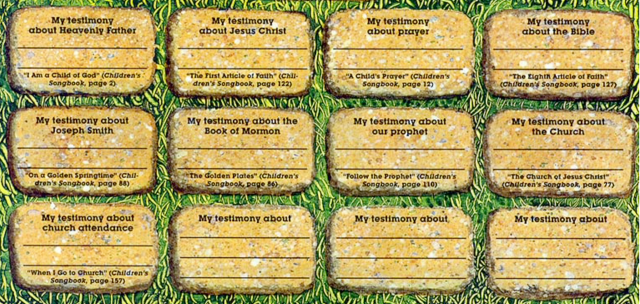


4 Every valley shall be exalted, and every mountain and hill shall be made low: and the crooked shall be made straight, and the rough places plain:
Latter Day Kids “Preparing the Way for the Lord” Lesson ideas
Come, Follow Me—For Home and Church: Old Testament 2026 & Come, Follow Me—For Primary: Old Testament 2022 “Isaiah 40–49” The
Friend November 2008 “Sharing a Testimony”

The other day I had a friend over who is not a member of the Church. He saw a picture of Jesus on our refrigerator, and told me that he did not believe that Jesus was real. I said, “Jesus is real, and I believe in Him!” I then told him that Jesus really lived on this earth a long time ago and that He died, but on the third day He was resurrected. I told him that because of Jesus, we will be able to live again after we die too.
My friend listened to what I was saying as he looked at the picture of Jesus. He seemed to believe that what I was telling him was true. I want to give him a Book of Mormon with my testimony written in it for his birthday. I know this Church is true, and I am thankful when I can share my testimony with my friends. (Brigham P., age 6, Montana)
Friend November 2019 “Jesus is Real” Everyone at Ismay’s table at school were excitedly talking about Christmas and their favorite traditions such as going to a church service. Suddenly Charlotte spoke up and said, “Jesus isn’t even real.” Ismay was sad to hear this and she quietly bore her testimony to Charlotte that Jesus was real, and that she felt it in her heart. She was glad she had spoken up and planted a seed about Jesus.

Friend September 1999 “We Can Testify of Jesus Christ and His Gospel” Lesson


Come, Follow Me—For Primary: Old Testament 2022 “Isaiah 40–49” When we make covenants with the Lord, He makes promises to be with us—even during our trials. Help the children see themselves as part of the Lord’s covenant people and as recipients of His promises.
Come, Follow Me—For Individuals and Families: Old Testament 2022 “Isaiah 40-49” It must have been discouraging, even devastating, for the Israelites to find themselves captive in Babylon. Many may have wondered if they had forever lost their place as God’s chosen, covenant people. Isaiah’s message to them and to us is simple: “Fear not” (Isaiah 43:1). All is not lost. The Lord has not forgotten you, and He has power over situations that seem out of your control. “Return unto me,” He pleads, “for I have redeemed thee” (Isaiah 44:22). He can heal, restore, strengthen, forgive, and comfort—whatever is needed for you.
We are also part of God’s covenant people.
Friend September 2019 “The Diabetes Dilemma” Joe prayed that his sister didn’t have diabetes. When they found out she did have diabetes, he was devastated. He didn’t understand why Heavenly Father didn’t answer his prayer. His mom explained that answers to prayers don’t always happen the way we want. Sometimes, instead of taking something hard away, He answers by giving us peace and helping us be strong. Joe then realizes that Heavenly Father was blessing his sister and family with peace.
Come, Follow Me—For Home and Church: Old Testament 2026
The Red Crystal In a wrapped box you could put items such as a picture of the prophet, a blanket (you can share how that is like the Holy Ghost), the scriptures, and a picture of your family. How can we receive these gifts with joy? How can we show God we are grateful for these gifts? Then, let the children share additional gifts that God has given us.

Come, Follow Me—For Primary: Old Testament 2022 “Isaiah 40–49” When we feel distant from the Lord because of sin, trials, or any other reason, the message of Isaiah 49:14–16 can bring comfort.
Come, Follow Me—For Home and Church: Old Testament 2026

Come, Follow Me—For Primary: Old Testament 2022 “Isaiah 40–49” Jesus Christ is the only one who can save us from sin and death. Ponder how you will inspire the children to put their trust in Him.
What would help us if we are sick?


What would help us if we were caught in a storm?


What can save us from death? Medicine, exercise, science, eating healthy? These things may extend our life, but everyone eventually dies.


Who can save us from our sins? The bishop, a policeman, our parents?


Jesus paid the price for our sins so that we could be forgiven if we repent.

Come, Follow Me—For Home and Church: Old Testament 2026 & Come, Follow Me—For Primary: Old Testament 2022 “Isaiah 40–49”

Red Crystal has some good activity ideas for this part of the lesson.
Friend September 2022 “Come, Follow Me Activities” Waves of the Seas

Story: Isaiah taught that if we keep the commandments, we will have peace like a river and “righteousness as the waves of the sea” (Isaiah 48:18).
Song: “Keep the Commandments” (Children’s Songbook, 146–47)
Activity: Make your own “waves of the sea”! Fill an empty bottle or jar halfway with water and turn it blue with food coloring. Fill the rest with oil. Put the cap on tightly. Then gently tilt the bottle back and forth to watch the waves! How does keeping the commandments help you feel peace?
The Red Crystal “Isaiah 40-49”