Friend July 2021 “Winfred’s New Recipe” Winfred is sad because she misses her father who has to work far away, and she misses her friends because of Covid. She figures out a recipe for happiness which includes prayer, reading scriptures, having faith, being grateful, and serving others.
Gratitude
Friend October 2017 “Bread and Gratitude” A man at a restaurant always find some fault in the meal no matter what extras the waiter provides. “As disciples of Jesus Christ, we are commanded to “thank the Lord [our] God in all things” (D&C 59:7). If we focus on the blessings we think we are missing, it can make us unhappy.”
Look for the Good
Friend March 1988 “Mike to the Rescue” Mike can’t do all the things his older siblings can do, but he finds lots of benefits to being little.
Serve Others
Friend December 2018 “The Secret Santa” After Tasha’s grandma and father died, Christmas was difficult and sad. But then a Secret Santa started dropping off gifts. She wanted to thank them and pass on the kindness, so she started doing kind things for others. She learned that helping others made her feel happy.
Friend August 2022 “What Makes Me Happy” Angeline tells of the things that make her happy. She says she feels happy when she helps others and follows Jesus. (Includes photo of Angeline)
Helping Others be Happy
Friend September 2024 “Cheering for Both Teams” Jayne wanted to win the family game, but her team was losing. Everyone was surprised when she got angry and didn’t want to play anymore. Her uncle told her that winning is everything and she should just try to have fun. She watched her uncle and she realized he was cheering for both teams. She decided to do that too. She could be happy for her family members even if she lost. She then discovered she was having fun.
Friend May 2025 “Follow the Happy Words” As Quinn’s family was drawing with chalk on the sidewalk, he noticed his mother was writing words. She said she was writing happy words for the school kids when they walk home. Quinn got an idea. He drew a walking line from one message to the next one so they could find all the happy words.
The Saints were very poor and they knew the temple would cost a lot of money, so they did not start building it right away. Six months later they still had not started building the temple. In June 1833 the Lord revealed to Joseph Smith that he was displeased with the Saints for not starting to build his house.
In Doctrine and Covenants 94 the Lord chastens the saints for not obeying this commandment. The Church members repented of their delay, and four days later men began hauling stone and digging trenches in preparation for building the temple.
For some background on sections 95 and 97, you could share with your children “The Kirtland Temple” in Doctrine and Covenants Stories for Young Readers (Gospel Library; see also Saints, 1:210). Your children might enjoy pretending they are helping to build the Kirtland Temple (cutting wood, hammering nails, painting walls, and so on).
Read together verse 11. What did the Saints need to do so they could build the temple? What can we learn from the Lord’s promise to them? (Obedience brings power to do His will.)
You could also show them a picture of the Kirtland Temple, like those in this outline, while you read Doctrine and Covenants 95:8 to teach your children why the Lord wants us to build temples.
8 Yea, verily I say unto you, I gave unto you a commandment that you should build a house, in the which house I design to endow those whom I have chosen with power from on high;
Give each child a piece of paper and a crayon or pencil. Ask the children to each draw a picture of a temple, and give them a few minutes to do so. Let each child display his or her picture to the rest of the class. (Or you could have them build a temple with blocks or sugar cubes.)
Explain that it probably was not too hard for the children to draw a temple because they know what temples look like. They have seen temples or pictures of temples. However, when Joseph Smith was commanded to build a temple, he had never seen a temple or even a picture of one. The Kirtland Temple was the first temple built in the latter days.
Since Joseph Smith did not yet know what a temple ought to look like or exactly how it was to be used, Heavenly Father revealed to him a plan for the temple. He and his counselors saw a vision of the completed building. In the vision, Joseph Smith, Sidney Rigdon, and Frederick G. Williams saw the pattern of the temple both inside and out.
The three men knelt to pray, and they saw a vision of the temple. First they saw the outside, and then the building seemed to pass over them and they saw the inside. Frederick G. Williams said that when the Kirtland Temple was completed it looked exactly as it had in the vision.
When an architect suggested that the seats in the building be rearranged, the Prophet Joseph would not allow it. He had seen them in the vision. According to his mother, Lucy Mack Smith, when the Saints wanted the temple to be built as a frame or log house, he said, “‘Shall we, brethren, build a house for our God, of logs? No, I have a better plan than that. I have a plan of the house of the Lord, given by himself.’”* The temple walls, two feet thick and over sixty feet tall, were to be built of stone.
The Kirtland Temple was not exactly like today’s temples, where families are sealed for time and all eternity and work is performed for the dead. It was more like a special meetinghouse where the Saints held their Church meetings.
Even the children in Kirtland helped, in small but meaningful ways, to build the Kirtland Temple.
Friend September 2021 “The Kirtland Temple”The Saints worked together to help build the temple. Men built tall walls. Women made curtains and carpets. Children helped bring tools and water to the workers.
Friend September 2025 “For Older Kids” God asked Joseph Smith and the early Saints to build a temple in Kirtland, Ohio, USA. Connect the dots to build the temple.
After reading together Doctrine and Covenants 97:15–16, you and your children could share with each other why the temple is special to you. You could also sing together a song to help your children feel reverence for the Lord’s house, such as “I Love to See the Temple” (Children’s Songbook, 95). What phrases in this song teach us why the temple is sacred?
Section 96 Revelation given to Joseph Smith the Prophet, showing the order of the city or stake of Zion at Kirtland, Ohio, June 4, 1833, as an example to the Saints in Kirtland. The occasion was a conference of high priests, and the chief subject of consideration was the disposal of certain lands, known as the French farm, possessed by the Church near Kirtland. Since the conference could not agree who should take charge of the farm, all agreed to inquire of the Lord concerning the matter.
Section 97
Section 97 This revelation deals particularly with the affairs of the Saints in Zion, Jackson County, Missouri, in response to the Prophet’s inquiry of the Lord for information. Members of the Church in Missouri were at this time subjected to severe persecution and, on July 23, 1833, had been forced to sign an agreement to leave Jackson County.
To help your children understand what the word pure could mean in Doctrine and Covenants 97:21, you could look at a glass of clean water together and add something to the water that makes it impure (such as dirt or pepper). Why is it important for water to be pure? Then your children could read verse 21 and put their finger on the word pure. What does it mean for our hearts to be pure? Verses 1–2 and 8–9 could provide some ideas. Help the children understand that being pure in heart doesn’t mean we never make mistakes. What can we do to become more pure in heart? How does the Savior help us?
21 Therefore, verily, thus saith the Lord, let Zion rejoice, for this is Zion—the pure in heart; therefore, let Zion rejoice, while all the wicked shall mourn.
Pure in Heart:
Someone who is genuinely clean and good in thought and action.
What are some examples of good thoughts and actions?
How have we done these things?
(This video isn’t made by members of the church, but it does give a good explanation for what it means to be pure of heart.)
The Prophet Joseph Smith taught, “We ought to have the building up of Zion as our greatest object” (Teachings: Joseph Smith, 186). To the Saints in the 1830s, Zion was a place, the literal “city of our God” (Doctrine and Covenants 97:19). But in the revelation recorded in section 97, the Lord expanded that view. Zion also describes a people—“the pure in heart” (verse 21).
Elder Bruce R. McConkie (1915–85) of the Quorum of the Twelve Apostles declared, “Whenever the Lord has had a people of his own; whenever there have been those who have hearkened to his voice and kept his commandments; whenever his saints have served him with full purpose of heart—there has been Zion. “Liahona September 2021 “Bring Forth Zion”
8 Verily I say unto you, all among them who know their hearts are honest, and are broken, and their spirits contrite, and are willing to observe their covenants by sacrifice—yea, every sacrifice which I, the Lord, shall command—they are accepted of me.
9 For I, the Lord, will cause them to bring forth as a very fruitful tree which is planted in a goodly land, by a pure stream, that yieldeth much precious fruit.
Do your children know what covenants we make with the Lord when we are baptized or in the temple? Consider reviewing those covenants with them by reading Mosiah 18:9–10, 13 or General Handbook, 27.2. Share with each other how you are striving to “observe [your] covenants by sacrifice” (Doctrine and Covenants 97:8).
You could invite your children to draw pictures of what Doctrine and Covenants 97:9 describes. As they share their pictures, talk about how the Lord has blessed you for keeping your covenants. How are those blessings like being a “fruitful tree which is planted … by a pure stream”?
Friend August 2023 “Walking along the Covenant Path” Heavenly Father sent you to earth to learn and grow so you can become like Him. As you follow Jesus Christ, you walk along the path back to your heavenly home. This is called the covenant path. Follow along and color these pictures to learn more.
In Matthew 7:1, the Savior may seem to be saying we should never judge, but in other scriptures (including other verses in this chapter), He gives us instructions about how to judge. If that seems puzzling, the Joseph Smith Translation of this verse might help: “Judge not unrighteously, that ye be not judged; but judge righteous judgment” (in Matthew 7:1, footnote a). What do you find in Matthew 7:1–5, along with the rest of the chapter, that helps you know how to “judge righteous judgment”?
To visualize the teachings in these verses, your family could find a mote (a tiny wood fragment) and a beam (a large piece of wood). What does comparing the two teach us about judging others? If you’d like to explore this topic further, you could use some of the resources in “Judging Others” (Gospel Topics, topics.ChurchofJesusChrist.org).
Read Matthew 7:2–5, looking for other teachings about judging. In verse 3, the Savior referred to a sliver of wood as a mote (see footnote b) and a large piece of wood as a beam (see footnote c).
Why would it be difficult for someone with a beam in their eye to remove a mote from someone else’s eye?
Friend June 2016 Parable about seeing a weed in someone else’s yard but not seeing all the weeds in own yard.
Friend October 2021 “Seeing Musa” Angie thinks the new boy, Musa, is mean because he made his sister walk behind him to school. But then she learned that Musa’s sister was supposed to wear sunglasses because of eye drops she put in her eyes, but she forgot so Musa walked in front of her the whole way to shade her from the sun.
Friend July 1985 “Sailboat” Boy learns not to jump to conclusions and make judgments about others.
Judging Ourselves
Friend January 2017 “Min-Jun Measures Up” Min-Jun and his grandfather walk to church during a storm and arrive muddy and wet. Min-Jun doesn’t feel good enough to go in, but his grandfather teaches him that the Lord doesn’t measure us by our appearance, he measures us by what is in our hearts, and Min-Jan’s intentions are pure.
Invite the children to imagine they were asked to pick someone to be a king. What qualities would they look for? Read together 1 Samuel 16:6–7 to find out what the Lord said to Samuel as he was looking for a new king for Israel. What do we learn from the Lord’s instructions?
Present an object lesson to illustrate to the children that judgments we make based on “the outward appearance” (verse 7) may not be correct. For example, you could show them some food or a book with a wrapper or cover that doesn’t match its true contents. What do 1 Samuel 16:7 and this object lesson suggest about how we should view ourselves and other people?
A cantelope is rough and drab on the outside but sweet and colorful on the inside.
Share an experience in which you learned why you should “look on the heart,” not just “the outward appearance” (verse 7). Let the children share any similar experiences they’ve had. Sing a song that emphasizes this principle, such as “I’ll Walk with You” or “We Are Different” (Children’s Songbook, 140–41, 263).
Reading these verses along with the following words from Elder Dieter F. Uchtdorf could inspire a discussion about why the Lord chose Saul and David: “If we look at ourselves only through our mortal eyes, we may not see ourselves as good enough. But our Heavenly Father sees us as who we truly are and who we can become” (“It Works Wonderfully!” Ensign or Liahona, Nov. 2015, 23). Perhaps family members could take turns talking about what good qualities they see in each other’s hearts (see 1 Samuel 16:7).
What are some ways people judge others “on the outward appearance”? What does it mean to look “on the heart,” as the Lord does? (1 Samuel 16:7). Consider how you can apply this principle to the way you see others—and yourself. How might doing so affect your interactions or relationships with others?
“Jehovah Looks on the Heart” (July 2010 Friend) Retelling of the story of Samuel anointing David to become king of Israel.
Friend May 2025 “The Mystery Can” Sadie’s family all try to guess what is inside of a tin can that didn’t have a label. They all guessed things that didn’t sound good, but when they opened it they found it was filled with lots of yummy fruit. They had a discussion about how sometimes we label people like that, and that we shouldn’t label people based on what we see on the outside, or believe false labels given to us. Because only God knows what we truly are inside.
Judging at Church
Friend July 2023 “Magnolia’s Amazing Dad” Some kids in Primary weren’t kind to Magnolia. They told her that her family wasn’t a good family because her Dad wasn’t a member of the church, but he went to church with them, and he did scripture study and prayer with the family. It made her want to cry because her father was an amazing dad. Magnolia talked to her parents and said. “Jesus taught us to be kind to everyone. Saying mean things doesn’t seem like following Jesus.” “You’re right,” said Dad. “Maybe when you feel like saying something mean, you can remember how you felt when others were unkind to you. Then you can say something kind instead.”
Section 85This section is an extract from a letter of the Prophet to William W. Phelps, who was living in Independence, Missouri. It answers questions about those Saints who had moved to Zion but who had not followed the commandment to consecrate their properties and had thus not received their inheritances according to the established order in the Church.
The Spirit Speaks with a “Still Small Voice.”
Come, Follow Me—For Primary: Doctrine and Covenants 2021 “Doctrine and Covenants 85-87” Elder Richard G. Scott said, “If you accomplish nothing else in your relationship with your students than to help them recognize and follow the promptings of the Spirit, you will bless their lives immeasurably and eternally” (“To Learn and to Teach More Effectively” [Brigham Young University Education Week devotional, Aug. 21, 2007], 5, speeches.byu.edu).
6 Yea, thus saith the still small voice, which whispereth through and pierceth all things, and often times it maketh my bones to quake while it maketh manifest, saying:
Ask the children what they would say if someone asked them how they know when the Holy Ghost speaks to them. Invite them to read about one way Joseph Smith described the Spirit’s voice in Doctrine and Covenants 85:6. They could then practice listening to and speaking in a small voice. You might also share experiences when the Spirit spoke to you in a still, small voice.
Friend May 2025 “Margo and Paolo: The Still, Small Voice” Margo had heard that the Holy Ghost talks in a quiet voice. But she didn’t think she had ever heard Him! Her grandmother told her that the Holy Ghost usually speaks to us through our thoughts and feelings. Then Margo remembered when she felt like I shouldn’t go to jiu jitsu on Sunday. She realized that the Holy Ghost does speak to her.
Friend August 2023 “A Special Gift” The missionaries teach Mehrimah’s family that the Holy Ghost helps us feel peace and comfort from Heavenly Father. He also encourages us to do good things, and He helps us know what is true. They invited the family to pay close attention to their thoughts and feelings that week, and look for times when when the Holy Ghost is speaking to them. Mehrimah notices that she felt felt calm and peaceful when they said family prayer. When she listened to a song about Jesus Christ she felt happy. It made her want to help other people. She felt warm and happy when she repented of a wrong doing. And when she was baptized she felt peaceful, like someone was telling her to live a good life, to help people, and to keep the commandments. She knew she all those feelings were from the Holy Ghost.
To help your children understand the phrase “still small voice,” you could play a children’s song quietly, such as “The Holy Ghost” (Children’s Songbook, 105). Ask one of the children to guess what song it is while other children make distracting noises. Then you could repeat the song with no distractions. What distractions can we remove from our lives to feel the Spirit more often?
New Era January 2019 “How to Get Better Revelation Reception” Use a cup and string communication device and put folded papers on the string of things that might interfere with receiving revelation. (See article for more information.)
How can you teach your family to recognize the still, small voice of the Spirit? Maybe you could play a game in which someone whispers important instructions amid distracting noises. What might be distracting us from hearing the Holy Ghost? Perhaps family members could share what they do to hear the voice of the Spirit.
For Doctrine and Covenants 85–87: Sing a hymn or Primary song very quietly. Practice concentrating on hearing and understanding the song. Help your little ones say, “I can listen for the Holy Ghost.”
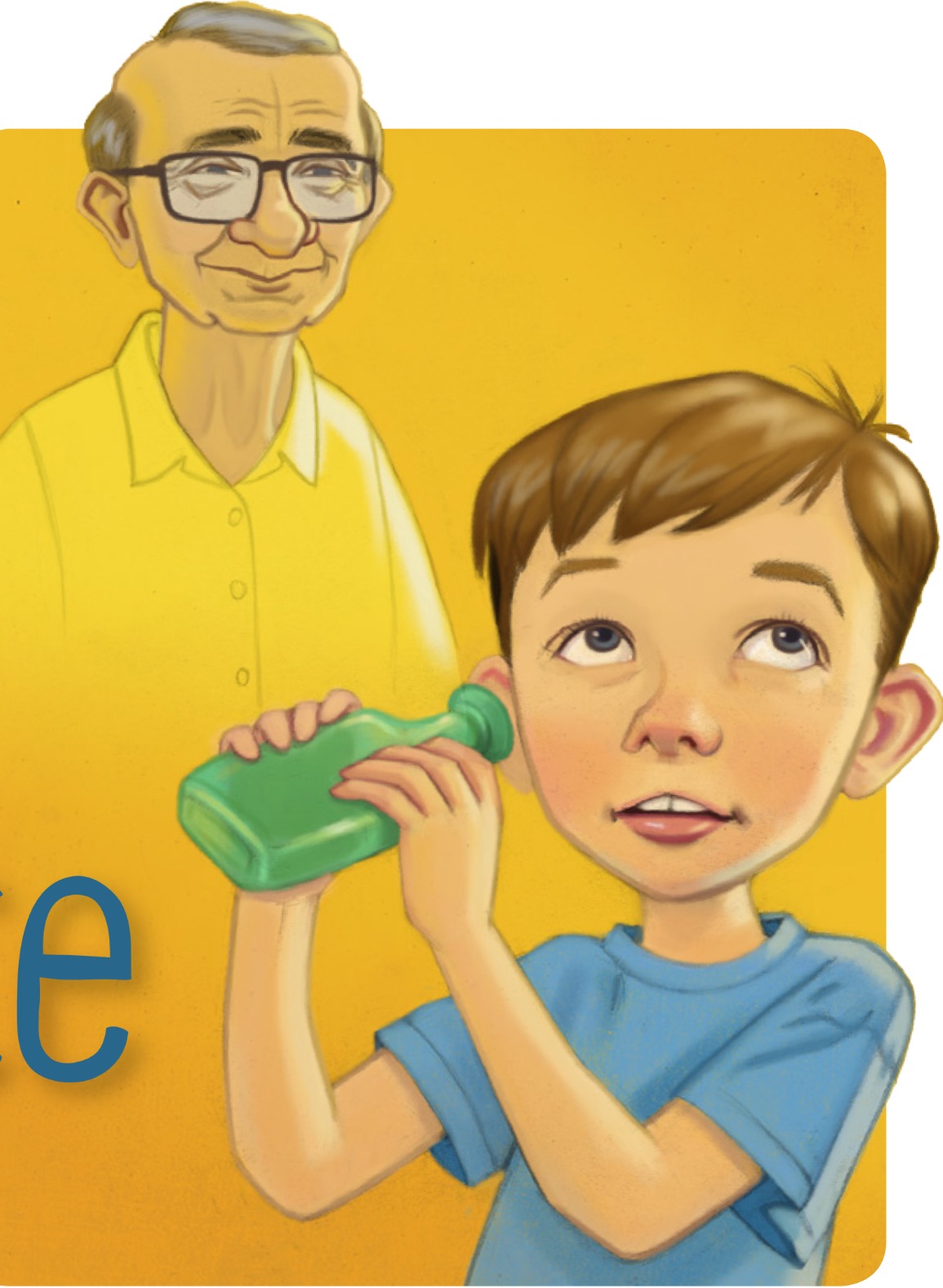
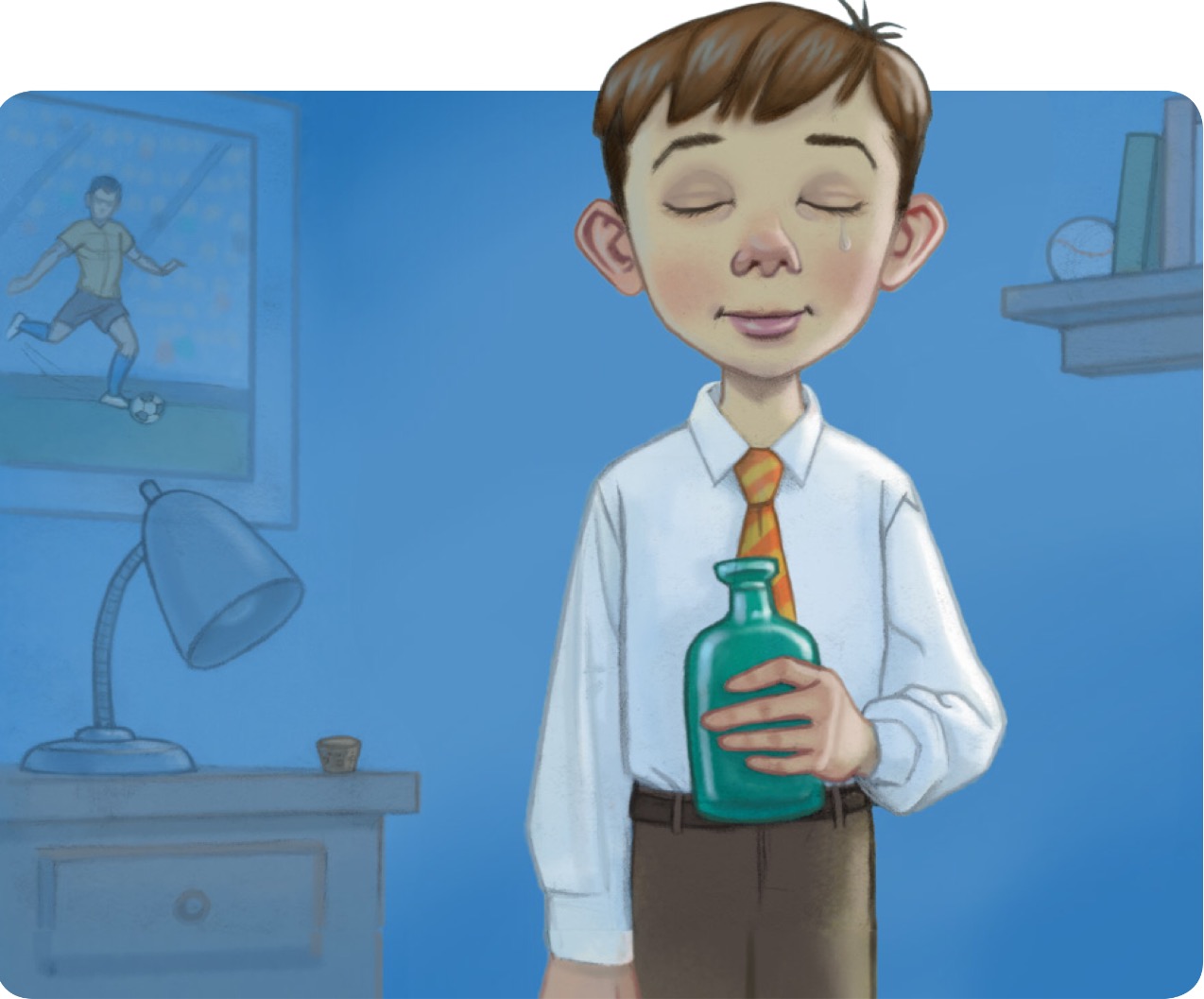
Friend August 2016 “The Little Bottle of Silence” Gage’s grandfather gives him a empty bottle of “silence” at his baptism to remind Gage that quietness helps you hear the Holy Ghost. He feels the Holy Ghost comforting him during a sad time when he seeks quiet time.
Friend September 2015 “Sister Pettigrew’s Lesson” Child learns to listen to the still, small voice
Section 86
Section 86This revelation was received while the Prophet was reviewing and editing the manuscript of the translation of the Bible. His journal entry states that he had “received a Revelation explaining the Parable [of] the wheat and the [tares]”
11 Therefore, blessed are ye if ye continue in my goodness, a light unto the Gentiles, and through this priesthood, a savior unto my people Israel. The Lord hath said it. Amen.
Section 86 describes the important work the Lord wants His servants to do in the latter days. One way children can help with this work is by being a light to people around them.
Read to the children the following phrase from Doctrine and Covenants 86:11: “Blessed are ye if ye continue in my goodness, a light unto the Gentiles [or people who don’t have the gospel].” Here are some questions you can ask your children as you discuss Doctrine and Covenants 86:11: How does light bless us? What is it like when we have no light? How can we be a light to other people? Help your children think of ways we can “continue in [Jesus’s] goodness” and share it with others.
Ask the children to imagine that a friend is trying to walk in the dark (turn off the lights if it helps). Why is it hard to walk in the dark? What can we do to help our friend? Explain that when we follow the Savior, it’s like shining a light to show others the way to go.
Sing “I Am like a Star” (Children’s Songbook, 163).
Jesus said we should be a “light” unto others (Doctrine and Covenants 86:11). That means we should be good examples to everyone.
Draw a candle on a piece of paper and color the flame on the top. Cut it out and attach it to your shirt or hang it around your neck with some string, like a necklace. With your family, talk about what you can do to be a good example.
Friend October 1999 “Let Your Light Shine” Fold in half on the vertical straight line, and glue the backs together. When the glue is dry, cut out the puzzle pieces on the heavy lines and put them into a small container. Have a family member take a puzzle piece from the container and pantomime (act out without using words or noises) what is shown on the small-picture side of it that we can do to share the gospel. Let others guess what it is, then show the picture and post the puzzle piece, candle-side up. Repeat till the puzzle is finished. Remember, each good thing we do helps our light shine.
Friend November 2015 “Be a Shing Light” Ways we can become examples so our lights will shine.
Friend August 2016 Being modest in how we speak, act, and dress is a great way to shine a light for others to follow. Color in the flashlights by the ones you are already doing. Which ones do you want to work on?
Friend April 2017 “Be a Light” Color in the sun as you figure out someone to be an example to by doing certain things for them such as loving, forgiving, encouraging, etc.
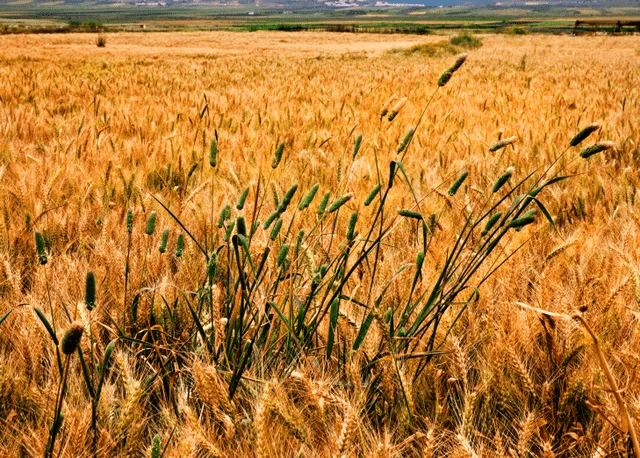
The parable of the wheat and the tares is about “the last days, even now” (Doctrine and Covenants 86:4). Use this parable to help the children feel inspired to take part in “the gathering of the wheat” (verse 7).
Tell the children the parable of the wheat and the tares, or invite a child to tell it (see Matthew 13:24–30). Invite the children to draw a picture of something from the parable. Then read together Doctrine and Covenants 86:1–7, and invite the children to write on their drawings what the thing they drew represents.
Prepare several small pictures or drawings of wheat, and hide them around the room. Invite each child to help gather the wheat and write on it the name of someone they can “gather” to Jesus Christ. What does it mean to gather people to Jesus Christ? What are some ways we can do this? What does it mean to “continue in [the Savior’s] goodness,” and how does that help us gather people to Him? (Doctrine and Covenants 86:11).
Section 87Revelation and prophecy on war, given through Joseph Smith the Prophet, at or near Kirtland, Ohio, December 25, 1832. At this time disputes in the United States over slavery and South Carolina’s nullification of federal tariffs were prevalent. Joseph Smith’s history states that “appearances of troubles among the nations” were becoming “more visible” to the Prophet “than they had previously been since the Church began her journey out of the wilderness.”1–4, War is foretold between the Northern States and the Southern States;
Christmas Day is usually a time to ponder messages like “peace on earth” and “good will toward men” (see Luke 2:14). But on December 25, 1832, Joseph Smith’s mind was occupied with the threat of war. South Carolina had just defied the United States government and was preparing for battle. And the Lord revealed to Joseph that this was only the beginning: “War,” He declared, “will be poured out upon all nations” (Doctrine and Covenants 87:2). It seemed like this prophecy would be fulfilled very soon.
But then it wasn’t. Within just a few weeks, South Carolina and the U.S. government reached a compromise, and war was averted. But revelation is not always fulfilled at the time or in the way we expect. Nearly 30 years later, long after Joseph Smith was martyred and the Saints had moved west, South Carolina did rebel and civil war followed. Since then, war throughout the world has caused “the earth [to] mourn” (Doctrine and Covenants 87:6). While the prophecy was ultimately fulfilled, the value of this revelation is less in predicting when calamity will come and more in teaching what to do when it does. The counsel is the same in 1831, 1861, and 2021: “Stand ye in holy places, and be not moved” (verse 8).
Read together Doctrine and Covenants 87:6 to learn about things the Lord said would happen in the latter days. Then you could talk about some of the challenges you and your children face. In verse 8, what did the Lord say we can do during hard times?
Help your children make a list of holy places, holy thoughts, and holy actions that can help them face spiritual danger. For ideas, see the videos “Standing in Holy Places” and “Stand Ye in Holy Places—Bloom Where You’re Planted” (Gospel Library).
No home is perfect, but there are things we can all do to make our homes into holy places of peace.
Show a picture of a temple, and share why the temple is a holy place. Show a picture of a home, and help the children think of ways they can make their homes holy like the temple (see this week’s activity page). Why do we want to be in holy places?
The Red Crystal Start with the picture of the home (not cut). Then have the children add pieces of the temple (cut), as they share their ideas of how to make their homes like the temple, have them place the pieces on top of the home. Or vise versa.
To introduce a discussion about how to make your home a holier place, you could invite family members to design a home for someone who loves the Savior. This may lead to ideas about how to “redesign” your home to make it a place of peace amid the spiritual danger in the world. Songs like “Love at Home,” “Home Can Be a Heaven on Earth” (Hymns,nos. 294, 298), or “Where Love Is” (Children’s Songbook, 138–39) could give you ideas.
Friend November 2009 “Making Your Home a Holy Place” Our home can be one of the holiest places on earth. We can do things to make it easier to feel the Holy Ghost in our homes. Look at each room in this house and decide if what the children are doing will or will not make the house a holier place. If something is happening that will make it easier to feel the Holy Ghost, choose the blue letter. If not, choose the red letter. To find out what your home can be like, fill in the blanks with the correct letters from each room.
Friend March 2023 “The Sharing Problem” Andrew didn’t share his popcorn when his brother Caleb asked for some. The next day Caleb wouldn’t share his sushi. Andrew’s dad talked to him about sharing. Andrew tried to do better. The more he shared, the more Caleb shared with him.
Friend July 2021 “Meet Eta from American Samoa” Eta’s mom owns a dessert bakery. Eta and her older sister, Talai, love to share the desserts with their teachers and leaders and with people who might be having a hard time. (includes photo)
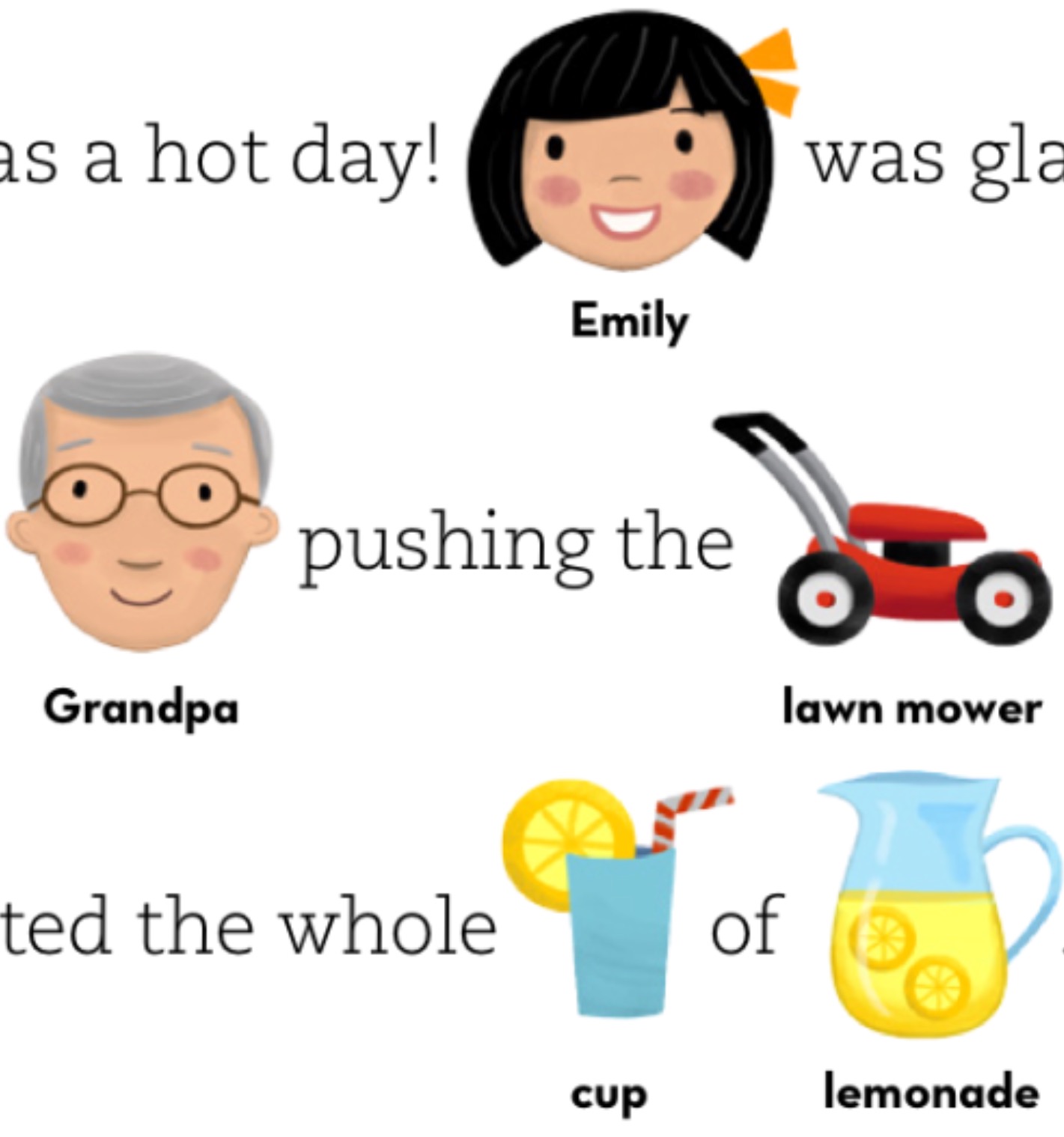
Friend July 2016 “Lemonade for Grandpa” Emily shares her lemonade with her grandpa.
Friend November 1987 “Hand-Me-Down Box” Leigh realizes she’s fortunate to have a caring friend who shares her hand-me-down clothes with her.
Friend October 2015 “The Candy Plan” – Boy, allergic to certain candy, shares his Halloween candy with others.
Friend August 2015 Chris really liked the acorns he found on a family camping trip. He collected a bunch to save as souvenirs from the trip, but instead he shared them with all the neighborhood kids.
Friend March 2020 “Harry Shares” Harry is playing with toys. He is having fun. Harry sees a girl who looks sad. Harry shares toys with her. Now they are both having fun!
Friend November 2025 “The Last Meatball” Alex and his brothers were having a hard time sharing with each other. They decided to split everything equally, such as cookies, blocks, time with games, etc. One night at dinner, it felt kind of silly when they split the last meatball into small pieces. They decided to try to be better at sharing instead of splitting everything equally. Sharing and being kind actually felt better than being perfectly fair.
Friend July 2025 “Articles of Faith” What this means: When the Bible was translated, some ideas were lost, confused, or moved around. We believe in the parts of the Bible that were translated how Heavenly Father wanted. We believe that both the Bible and the Book of Mormon teach us truths from Heavenly Father and Jesus Christ.
Memorization Tip Article of Faith 8 is about the scriptures, which include the Pearl of Great Price. Eight rhymes with great.
Have the children stand in a line. Whisper the two- or three-sentence message into the ear of the first child in line. Have each child in turn whisper the message to the next child. Instruct each child to say the message only once. Continue until the message reaches the last child in line. Ask the last child to repeat the message aloud. Compare the message the last child received with the original message to see how the message changed.
How had the message changed by the time it reached the end of the line? What was left out? What was added?
Why do you think the message changed as it passed from person to person?
Explain to the children that just as their message changed as it was passed from person to person, over many years some of the scriptures in the Bible had been changed as people translated the Bible and made copies of it by hand. Mistakes were made: some incorrect teachings had been added to the Bible, and some important teachings had been left out. The Lord commanded Joseph Smith to prepare a translation of the Bible that would restore the correct teachings (see Articles of Faith 1:8).
Friend September 2023 “Lots of Ways to Say “I Love You” “Trina’s brother had been struggling with anxiety and depression and had to come home early. She prayed about what she could do for him. She decided she would show him she cared for him and loved him. She used chalk to write a message for him on the sidewalk. She hid nice notes around the house. She helped her siblings make a sign. It said, “Welcome home, Elder Dawson! We love you!”
Friend July 2026 “Fifita and His Sisters” Fifita has two little sisters. He loves them so much! He helps them with their toys, and gives them hugs when they are sad. He tries to be kind and gentle like Jesus. Fifita’s sisters have autism. They see the world in their own way. When they feel upset, Fifita does his best to help. Fifita’s sisters make him happy! He is glad to be their brother.
When Esther’s parents died, her cousin Mordecai took care of her. You can use their experience as an opportunity to talk about serving members of our families.
On the board, draw figures that represent Esther, her parents, and her cousin Mordecai. Explain that Esther’s parents died, so Esther needed someone to take care of her. Read Esther 2:7 to the children, and ask the children to listen for what Mordecai did. Help the children think of needs their family members might have that the children can help with.
What can we learn from Mordecai’s example about helping family members in times of trial? Who in our family needs our support? Make a plan to help them.
Invite some of the children to act out something kind they could do to serve someone in their families, and ask the other children to guess what they are doing. Invite them to talk about things they do to bless their families, and tell about some of the things you do.
Sing a song about helping our families, such as “When We’re Helping” (Children’s Songbook, 198). Share your testimony that helping our families makes us happy.
Friend March 2018 “Matt and Mandy” Matt makes a super hero costume and secretly helps his mom.
Friend July 2020 “Helping a Sleepy Sister” Berrett noticed his sister was tired from studying late and he decided to be like Jesus and help her. He made her breakfast and lunch and wrote her a note saying he loved her.
Friend March 2019 “Show and Tell” My sister has cerebral palsy and can’t talk or walk. I serve her each day by feeding her, playing with her, and making her laugh. I know when I serve her, I’m serving Heavenly Father. (Ensign T., age 10, Utah, USA)
Friend May 2019 “Kindness at the Carnival” A boy is looking forward to playing with his friends, but then his sister comes home upset because she doesn’t have any real friends and nobody will go with her to school carnival. The brother wants to help, so he volunteers to go with her, and tells her that she is his friend too.
Friend June 2018 “Showing Her Love” A girl named Love from Nigeria helps her family in many ways. (Link includes photos.)
Friend April 2018 “Prayer in the Checkout Line” Eli helps his mom with his fussy siblings at the store. He also says a prayer for her when he sees how their fussiness is making things hard for her
Friend January 2018 “Adam’s Big Green Cast” Matthew’s little brother broke his leg and has to wear a cast that doesn’t let him move. Matthew helps his brother feel better by playing with him and finding things Adam can do without moving.
Friend October 2017 “Helping Mrs. Brewster” Ryan helps his brother Jackson rake the neighbor’s leaves.
Friend October 2017 “I Like to Help” Poem – A boy helps his family members during the week.
Friend March 2022 Danial is helping his mom in the garden. Find the objects in the picture. How do you help at home?
Friend May 2017 “That’s My Brother” Eric doesn’t have any friends yet and doesn’t like going to recess, but his brother comes and helps him find a friend during recess.
Friend May 2017 “The Gecko Rescue” Andrea sews up a hole in her mom’s gecko beanbag so her mom wouldn’t be sad.
Story Activiy: Children can draw a line to a number on the gecko for every way they mention that they can help and serve family members.
Friend February 2017 “Double Happy” Lily helps her little brother, Sam, feel comfortable in Primary, but her parents want her to let Sam’s teacher do that now so Lily can go to her class. Lily obeys even though she’s worried about Sam, and they both have a great time in Primary.
Friend Novepmber 2016 “Big Sister Madelyn” Madelyn’s mother is sick, so Madelyn helps with the baby. Also an activity to find what toys are okay for the baby.
Friend October 2016 “Brave Enough” Christine asks her brother for help when she gets scared of a noise at her window.
Friend June 2015 “The Funny Face Fix” Ben helps his sister feel happy by making funny faces.
Ever since he was a boy, Joseph Smith faced critics—even enemies—as he tried to do God’s work. But it must have been particularly heartrending in late 1831 when Ezra Booth began publicly berating the Church, because in this case the critic was a former believer. Ezra had seen Joseph use God’s power to heal a woman. He had been invited to accompany Joseph on the first survey of the land of Zion in Missouri. But he had since lost his faith and, in an attempt to discredit the Prophet, published a series of letters in an Ohio newspaper. And his efforts seemed to be working: “unfriendly feelings … had developed against the Church” in the area (Doctrine and Covenants 71, section heading). What should believers do in a case like that? While there is not one right answer for every situation, it seems that quite often—including in this case in 1831—part of the Lord’s answer is to defend the truth and correct falsehoods by “proclaiming [the] gospel” (verse 1). Yes, the Lord’s work will always have critics, but in the end, “no weapon that is formed against [it] shall prosper” (verse 9). (See “Ezra Booth and Isaac Morley,” Revelations in Context, 134.)
You can use the section heading for Doctrine and Covenants 71 or “Chapter 25: Joseph Smith and Sidney Rigdon Go on a Mission” (in Doctrine and Covenants Stories, 96, or the corresponding video in Gospel Library) to teach your children about the circumstances that inspired section 71. Then help them discover in verse 1 what the Lord wanted Joseph and Sidney to do about “unfriendly feelings” toward the Church. How did He say He would help them? How can we be like Joseph and Sidney? What did He say they would be given to help them?
The Lord does not expect children to respond to critics of the Church as He called Joseph Smith and Sidney Rigdon to do. But you can help the children understand that their simple testimony of the truth can have a powerful effect on others.
Friend February 2022 “Jesus Shared the Truth” One day, Jesus visited the town where He grew up. He spoke to the people there. He told them that He was the Savior. The people didn’t believe Him. They were angry. But Jesus knew what He said was true. He wasn’t afraid. He always shared the truth.
Invite the children to practice in pairs how to share with others what they know about the Church. For example, they can share a simple testimony or share one of the Articles of Faith.
Explain that in 1831 the Lord called the bishop of the Church, Edward Partridge, to move from Kirtland, Ohio, to be the bishop in Independence, Missouri. Read Doctrine and Covenants 72:8 with the children, and ask them to listen for who the Lord called to serve as the new bishop in Kirtland. Why does the Lord call bishops? Share with the children an experience when you were blessed by the service of a bishop.
You and your children could find pictures or objects that represent the responsibilities of a bishop. The picture and activity page at the end of this outline provide some ideas. Then you could talk together about bishops you’ve known and how the Lord has blessed your family through their service.
“A Day with the Bishop” (August 1990 Liahona and July 1989 Friend) Explains some of the things a bishop does. Includes an activity.
Take the children on a walk to the bishop’s office (you may want to coordinate with other teachers). Describe for them some situations when they might meet with the bishop in his office (such as a baptismal interview or tithing settlement). Tell the children how you have been blessed by the bishop’s service.
Help the children make cards to give to the bishop, thanking him for what he does to help with the Lord’s work.
Sing “Teach Me to Walk in the Light” (Children’s Songbook,177).
Jesus taught that His Church should have bishops to lead and help the members (see Doctrine and Covenants 72:2).
Say thanks to your bishop or branch president by doing something kind. You could write him nice notes or bring him a treat. You could even do your plan without letting him know who did it!
What can you do to help the children see the bishop as a representative of the Lord Jesus Christ? (Always teach about Jesus Christ. “No matter what you are teaching, remember that you are really teaching about Jesus Christ and how to become like Him” For example, when you teach your children about bishops, emphasize that they are representatives of Jesus Christ, called by Him to do His work (see 1 Peter 2:25).
Invite the children to make a list of some of the things they have seen the bishop do to help people in the ward. Ask the children to draw pictures of the bishop doing something they mentioned. Bear your testimony that your bishop was called by the Lord to be His servant. Why are we grateful that the Lord has called a bishop in our ward?
“Bishop, Help!” (April 2004 Friend) Elder Dallin H. Oaks of the Quorum of the Twelve Apostles teaches us about the special calling of a bishop.
Section 73
The Lord Commanded Joseph Smith to Restore Precious Truths that were Lost from the Bible.
As part of his calling as the prophet, Joseph Smith was commanded by the Lord to make inspired revisions to the Bible. These revisions, which the Lord called a “translation” (Doctrine and Covenants 90:13), restored important truths that had been lost or removed from the Bible over the centuries.
Explain that when Joseph Smith and Sidney Rigdon returned from a short mission near Kirtland, Ohio, the Lord wanted them to resume work on an important project. Invite the children to read Doctrine and Covenants 73:3 to find out what that project was. To help the children understand what the Lord wanted Joseph and Sidney to translate, read with them parts of the Bible Dictionary entry “Joseph Smith Translation (JST).”
Pass around a copy of the Bible, and allow the children to open it and see how many pages are in it. Invite the children to imagine they were asked to translate the Bible into another language. What are the chances they might make some mistakes? Explain that when people translated or copied the Bible before Joseph Smith’s time, they made some mistakes, and sometimes they removed important truths. The Lord commanded the Prophet Joseph Smith to make inspired corrections. Why is Joseph Smith’s work valuable to us? (Come, Follow Me—For Primary: Doctrine and Covenants 2021 “Doctrine and Covenants 71–75”)
To talk about the difference between being “idle” and “labor[ing] with [our] might,” perhaps you could select some acts of service or household chores and invite your children to demonstrate doing them idly and then with all their might. As you read “neither be idle” in Doctrine and Covenants 75:3, your children could show how they would do the chores lazily. When you read “but labor with your might,” they could show how they work hard. Why is it important that we do our best when serving the Lord?
The Red Crystal Cut out the cards and lay them face down. Attach the two faces to a large coin or a large button. Let the child/ren pick a card and flip the coin. They can then act out the chore “lazily” or “hard working” depending on what they flipped.
In his message “Two Principles for Any Economy” (Ensign or Liahona, Nov. 2009, 55–58), President Dieter F. Uchtdorf told two stories about work. Maybe you could share them with your children and talk about how it feels to know we have worked hard and done our best.
What words and phrases do you find in Doctrine and Covenants 75:1–12 that help you understand how to preach the gospel effectively? (See verses 4, 10, 11) What blessings does the Lord promise to faithful missionaries? (See verses 5, 13, 16.)
Section 67 William W. Phelps had recently established the Church printing press in Independence, Missouri. The conference decided to publish the revelations in the Book of Commandments and to print 10,000 copies (which because of unforeseen difficulties was later reduced to 3,000 copies). Many of the brethren bore solemn testimony that the revelations then compiled for publication were verily true, as was witnessed by the Holy Ghost shed forth upon them. Joseph Smith’s history records that after the revelation known as section 1 had been received, some conversation was had concerning the language used in the revelations. The present revelation followed.
The Doctrine and Covenants Contains Revelations from God and it Teaches Me About Jesus.
Collect all the copies of the Doctrine and Covenants in the room and put them in a stack near you on the table or floor. Write on the chalkboard Doctrine and Covenants 43:8. Ask the children to discuss this verse among themselves and prepare to tell you what the verse is about. Do not let them use their scriptures as they do this. After a few moments, ask them if they are ready to tell you about the verse.
Why can’t you tell me what the verse is about?
Return the children’s copies of the Doctrine and Covenants, and give copies to the children who have not brought their own. Have all the children look up the verse listed on the chalkboard and follow along as you read it.
Explain that the early Church members were instructed to teach each other about the revelations the Lord had given them through the Prophet Joseph Smith, but the Church members did not have a book where they could read the revelations. The Lord commanded the Church members to publish the revelations in a book so that they would be able to read and study them. We now call this book the Doctrine and Covenants.
Tell your children about how Joseph Smith’s revelations came to be printed in a book (see “Chapter 23: The Doctrine and Covenants,” in Doctrine and Covenants Stories, 90–92, or the corresponding video in Gospel Library). Help them remember some of the things you’ve learned about Jesus Christ from Doctrine and Covenants so far this year. You might also share with each other some of your favorite verses from Doctrine and Covenants.
From 1828 to 1831, the Prophet Joseph Smith received many revelations from the Lord, including divine counsel for individuals, instructions on governing the Church, and inspiring visions of the latter days. But many of the Saints hadn’t read them. The revelations weren’t yet published, and the few available copies were handwritten on loose sheets that were circulated among members and carried around by missionaries.
Then, in November 1831, Joseph called a council of Church leaders to discuss publishing the revelations. After seeking the Lord’s will, these leaders made plans to publish the Book of Commandments—the precursor to today’s Doctrine and Covenants.
William E. McLellin Tries to Write a Revelation
During one of these conferences, some of the Church leaders at the conference complained about the language of some of the revelations that Joseph Smith had received. They thought they could write better revelations. In response the Lord gave the revelation recorded in Doctrine and Covenants 67, testifying that the revelations Joseph Smith had received were true (see D&C 67:4) and challenging anyone who would like to try to write a revelation to do so (see D&C 67:5–8). William E. McLellin took this challenge and tried to write a revelation. Joseph Smith recorded that Brother McLellin thought he was smart enough to write a revelation, but he could not do it. The Prophet said that it is “an awful [great and important] responsibility to write in the name of the Lord” (History of the Church,1:226). All those present who saw Brother McLellin’s failure were strengthened in their testimony that the revelations Joseph Smith had received were true and had come from the Lord.
Explain to the children that the Church leaders at this time decided to publish their testimony of the revelations Joseph Smith had received. When they did, one of the leaders, Levi Hancock, wrote next to his name, “Never to be erased” (see “Testimony, circa 2 November 1831,” Revelation Book 1, 121, josephsmithpapers.org). Why might Levi Hancock have wanted his name “never to be erased” from the published testimony? Give the children an opportunity to write their testimonies of what they’ve learned so far in the Doctrine and Covenants. (Primary 5: Doctrine and Covenants and Church History “Lesson 22: The Latter-day Revelations Are Published,”)
What Makes the Doctrine and Covenants Similar and Unique to Other Standard Works
You could show your children the Bible, Book of Mormon, Doctrine and Covenants, and Pearl of Great Price and talk with them about how they are different and how they are similar (see the descriptions of these books in Guide to the Scriptures).
Show the children each of the standard works one at a time, and as you hold each one up share a little about how we got it. For example:
The Bible tells us about prophecies of Jesus Christ and about the Savior’s life and teachings when he was on the earth.
The Book of Mormon is another testament of Jesus Christ and tells us about the Savior’s dealings with the people on the American continent.
The Doctrine and Covenants is a collection of revelations from Jesus Christ for the latter days, or our times.
The Pearl of Great Price gives us teachings and testimonies of Jesus Christ from ancient prophets as well as Joseph Smith’s history and testimony of Heavenly Father and Jesus Christ.
Give each child four small pieces of paper, and show the children how to fold each piece in half so it resembles a book. Help the children label their “books” Bible, Book of Mormon, Doctrine and Covenants, and Pearl of Great Price.Ask the following questions and have the children hold up the appropriate paper “book” to answer each question:
Which book tells the most about the dealings of the Lord with his people in the Holy Land, beginning with the creation of the earth? (Bible.)
Which book tells about Jesus Christ’s visit to the American continent? (Book of Mormon.)
Which book tells the most about Jesus Christ’s birth and life on earth? (Bible.)
Which book contains a record of Heavenly Father and Jesus Christ’s appearance to Joseph Smith in the Sacred Grove? (Pearl of Great Price.)
Which book contains revelations on how the Church should be established in the latter days, given by Jesus Christ to Joseph Smith? (Doctrine and Covenants.) Remind the children that each of the standard works is a testament of Jesus Christ and that we should study all of the scriptures.
Hold up the Doctrine and Covenants, share with the children what makes this book of scripture unique (for example, it contains revelations given in our day).
How can we know that the scriptures are true? What do we learn from Doctrine and Covenants 67:4, 9 about the revelations the Lord gave to Joseph Smith?
Section 68
Section 681–5, The words of the elders when moved upon by the Holy Ghost are scripture; 6–12, Elders are to preach and baptize, and signs will follow true believers; 25–28, Parents are commanded to teach the gospel to their children; 29–35, The Saints are to observe the Sabbath, labor diligently, and pray.
When our Church leaders speak by inspiration, they speak “the word of the Lord.”
When the Lord’s servants speak by the power of the Holy Ghost, their words are the will, mind, word, and voice of the Lord (see verse 4). Knowing this truth can help the children want to listen to and follow their teachings.
Invite the children to read Doctrine and Covenants 68:3–4 in small groups and share with each other what they learn from these verses. Invite the children to write something they learned on the board. Why is this an important truth to know?
After reading Doctrine and Covenants 68:3–4 together, give the children copies of several recent messages from general conference. Invite them to find in the messages truths that the Lord taught us through His servants.
In Doctrine and Covenants 68:27, the Lord specified how old a person must be to be baptized. Help your children discover what He said.
27 And their children shall be baptized for the remission of their sins when eight years old, and receive the laying on of the hands.
Why age 8? Old enough to understand the doctrine of repentance and faith in Jesus Christ and prepared and ready to make sacred covenants.
Friend February 2000 ““Wait Till You’re Eight” Mckay didn’t understand why his 3 year old sister didn’t have to sit in timeout too after they had struggled to get along. His mother explained that Josie didn’t understand why it was wrong to fight and argue, but 8 year old Mckay did understand. His mother talked to him about accountability, and he was grateful he had had to wait until he was 8 so he understood he was responsible for his choices before he got baptized. After Mckay spilled some pie on his shirt, Josie pointed at his shirt and said “What a mess.” Mckay took his napkin and wiped his shirt clean, smiled, and simply said, “Yep, but I’m old enough to know when I’ve made a mess, and I take care of it the best I can.”
Why does Jesus want us to be baptized? A song like “Baptism” (Children’s Songbook, 100–101) can help.
Using pictures or verses 25–31 (or both), help your children discover things the Lord wants children to learn.
(The Lord told Joseph Smith that children should learn to have faith in Jesus Christ, repent, and be baptized when they are eight years old. He also said that they should learn to pray, walking uprightly before the Lord and keep God’s commandments.)
Friend June 2021 “Scripture Time Fun” Find items around your home that remind you of baptism. A cup of water could remind you of how we are baptized by immersion. A piece of white cloth could remind you of how we wear white. A blanket could remind you of the warm feeling of the Holy Ghost. What else can you think of?
Read with your children about the assignment the Lord gave Oliver Cowdery in the section heading for Doctrine and Covenants 69.
Oliver Cowdery was assigned to take approximately seventy revelations to Independence, Missouri, where William W. Phelps had a printing press. Oliver also took money to help the Saints in Missouri. Because Oliver would be traveling through unsettled country, the Lord told John Whitmer to go with him for safety (see D&C 69:1–2).
Tell the children that when the Lord sent Oliver Cowdery to Missouri, He said that someone “true and faithful” (verse 1) should go with him, so He also sent John Whitmer. What does it mean to be true and faithful?
How can we make sure we are true and faithful to the Lord?
Sing together a song that encourages the children to be true and faithful like the Savior, such as “I’m Trying to Be like Jesus” (Children’s Songbook, 78–79).
How can He use us to bless others when we are true and faithful?
Friend April 2018 “A High-Five Example”Students in a special needs class we’re trying to give Lily’s classmates high fives as they walked by, but nobody did it until Lily gave them all high fives then everyone behind her did it.
Maybe your children could tell about someone they know who is “true and faithful.” How do they know that person is true and faithful?
Why is it important to be with people “who will be true and faithful”? (verse 1). When have friends influenced us to make good or bad decisions? How can we be a good influence on others?
Friend January 2018 “Forts and Friends” Even though Callie and Marco go to different religions, they both have the same standards. While watching a movie at school that made Callie feel uncomfortable, Marco suggested they both go read instead.
In the scriptures, we learn how important it is to have “true and faithful” friends to help us follow Jesus Christ (see Doctrine and Covenants 69:1–2). Make a gift to give to a friend! You could paint a picture, make a bracelet, or bake a treat. Write a note with your gift to tell your friend that you love them.
For younger children: Give your little ones the coloring page on page 48 to color. Help them give it to a friend or family member as a gift.
It was a long, cold journey, but in January 1832 Oliver Cowdery and John Whitmer arrived safely in Independence. They delivered the revelations to Brother Phelps, who started to set the type to publish them as the Book of Commandments. By July 1833 the first 160 pages of the Book of Commandments had been printed.
Because many Saints were arriving in Missouri, some of the original settlers of the area were uneasy. They began to fear that the Saints would take over the area, elect their own officials, and drive the original settlers off the land. On Saturday, 20 July 1833, four or five hundred people who were against the Saints met in the Independence courthouse. The people formed a mob and demanded that the Saints leave their new homes or be killed. The leaders of the Church in Missouri asked for three months to consult with Joseph Smith, who was in Ohio, but the mob refused this request. The Saints were told they had only fifteen minutes to decide what to do.
Before the fifteen minutes had passed, the mob broke into William W. Phelps’s home, which contained the printing office where the Book of Commandments was being printed. Brother Phelps was not at home. Sister Phelps took her sick baby and her other children and hurried to the woods nearby. Fourteen-year-old Mary Elizabeth Rollins and her twelve-year-old sister, Caroline, watched members of the mob throw the Phelpses’ furniture and other possessions into the street. The mob then threw the press and the type out the window, along with most of the unbound pages of the Book of Commandments. Mary Elizabeth and Caroline courageously decided to save some of the copies, even though Caroline was afraid that the mob would kill them (show the picture of Mary Elizabeth and Caroline saving the Book of Commandments).
The girls ran from their hiding place, gathered up as many pages as they could carry, and ran away. When the mobbers saw them, they shouted for the girls to stop. Mary Elizabeth and Caroline slipped through a hole in a fence and ran into a cornfield. They lay quietly on the ground among the cornstalks, listening to the men searching for them. When the sound of footsteps faded and the girls thought it was safe to leave, they gathered the papers in their arms again and began to find their way out of the field. As they approached an old log stable, they heard sounds. They entered the stable carefully and discovered Sister Phelps and her children making beds from branches so they could hide for the night in the stable. Knowing Brother Phelps would know what to do with the pages, the girls gave them to Sister Phelps. Later some of these original sheets of the Book of Commandments were bound into books, and Mary Elizabeth and Caroline were each given a copy. They treasured these books for the rest of their lives.
Section 701–5, Stewards are appointed to publish the revelations; 6–13, Those who labor in spiritual things are worthy of their hire; 14–18, The Saints should be equal in temporal things.
Friend March 2024 “Margo and Paolo” Paulo’s grandmother tells Paulo she has lived a long time because she eats her vegetables. She also said, “When we take care of our bodies, God blesses us with strength and energy.”
Friend May 1985 – “Decide Now” – Spencer W Kimball decides ahead to follow the word of wisdom.
Friend July 2016 “Clarence vs. the Champion” Clarence is blessed to set an example of the Word of Wisdom during a race.
Friend April 2018 “A Long Shot: part one” When Elder Condie gave up basketball to go on a mission, he didn’t know if he would ever play again, but then he was invited to form a missionary team to help prepare Australia’s basketball team for the Olympics. He and his team mates were able to be public ambassadors for the church, including for the Word of Wisdom. Other teams were amazed at their endurance, especially since they only had time to practice once a week May 2018 “One Shot at a Time: part two”
Friend May 2018Friend May 2018Friend May 2018
Friend June 2017 “Martin’s Choice” Martin feels spiritually stronger after doing family scripture study. He also feels happy when he makes good choices and follows the prophet. These things help him when he has to make a choice about what to do when he is given tea at a school campout.
Friend June 2021 “Tea or Mango Juice?” Chung’s friend, Jiro, ordered the two of them cold tea on a hot day, but Chung asked for mango juice instead. He explained to Jiro why he doesn’t drink tea. He invited Jiro to church hoping someone could explain it better, but Jiro wasn’t interested. Jiro spoke up for him though when their class was going to have tea as a reward for hard work. He explained that Chung didn’t drink tea because it was part of his religion. Chung was glad he had such a good friend.
Friend June 2021
Friend April 2015 “Show and Tell” After I earned my black belt in tae kwan do, I went to a special ceremony for all the new black belts. Before it started, my instructor told us what we would do during the ceremony, which included drinking tea. I knew Heavenly Father said not to drink tea. I explained to my instructor why I could not drink tea. He let me drink water instead. My mother said she was proud of me for honoring my baptismal covenants and sharing my beliefs. I know following Heavenly Father’s commandments will always make me happy.
Joseph R., age 10, Texas, USA
Help Protect Others
Friend August 2021 “The Drug Decision” Alvin sees two classmates with a bag of drugs that they were planning on trying after school. Even though he doesn’t want them mad at him, Alvin tells his teacher because he knows drugs can hurt people.