Temples #1 – Ordinances

Posted on


 Identify the Saving Ordinances 


Preparation 
  •  Print the pictures and labels and cut them out. Write an O on the back of each ordinance picture (baby blessing, father’s blessing, blessing the sick, baptism, confirmation/Holy Ghost, sacrament, Melchizedek Priesthood, temple marriage). Tape together three sheets of card stock  along the middle edges of the back. Do the same on two sheets of card stock.  Glue the Identify the Ordinances label to the three-fold board, and the Ordinances label to the two-fold board, and the Saving Ordinances label to a single sheet of card stock. For more durability, laminate the card stock, or put them in page protectors and cut off the excess plastic before taping them together.

  • Attach all the pictures to the three-fold board with either sticky back Velcro or non-permanent double sided tape. This will make the pictures movable from one board to the another while still being able to display them. If Velcro is used, attach the hook pieces to the pictures and the pad pieces to the three different boards as indicated in the sample picture above.


Why are temples an important and necessary part of the gospel? Because saving ordinances are performed in the temple. 

 Many different ordinances are performed throughout a person’s life, some are for comfort and guidance, but others are essential to salvation. (Do the activity below to identify the ordinances and the saving ordinances.) Hint: Ordinances are sacred ceremonies or acts that are performed by the proper priesthood authority.  

 Activity Directions   

 Have the family members take turns identifying the ordinances and moving them to the two-fold board labeled Ordinances. Have them check to see if they are correct by looking at the back of the pictures for an O.  Next have the family members identify the saving ordinances and move them to the page labeled Saving Ordinances. The saving ordinance answers include: Baptism, Confirmation/Holy Ghost, Melchizedek Priesthood Ordination, and Temple Marriage/Sealing.  

 Inform the family that there is one additional saving ordinance. It is received in the temple before going on a mission or before temple marriage. It is called the Endowment.   

 Look up and read D&C 95:8. “I gave unto you a commandment that you should build a house, in the which house I design to endow those whom I have chosen with power on high.”

 We also receive an endowment of divine power from other sacred ordinances that we receive in our life. For example, “remission of sins is extended through the ordinance of baptism, confirmation brings with it the promise of the constant companionship of the Holy Ghost, and ordination to the Melchizedek Priesthood opens the way for “every man [to] speak in the name of God””. (Quote by Elder Dennis B. Neuenschwander of the Seventy, Ensign August 2001)  

 As part of these saving ordinances we also make sacred covenants with God.  We promise to serve God and keep his commandments. These covenants and endowments of power are meant to help us become more like our Heavenly Father and his son Jesus Christ so that we can become worthy of and prepared for exaltation. 

Note: This activity could be used for Primary sharing time if bigger pictures from the meetinghouse library are used and if bigger labels are made. Attach the pictures and labels to the chalkboard with magnets.

General Handbook, 18.1 and 18.2.

Ordinances of Salvation and Exaltation: The priesthood includes the authority to administer gospel ordinances that are necessary for salvation and exaltation. People make sacred covenants with God as they receive these ordinances. The ordinances of salvation and exaltation are listed below:

  • Baptism
  • Confirmation and gift of the Holy Ghost
  • Conferral of the Melchizedek Priesthood and ordination to an office (for men)
  • Temple endowment
  • Temple sealing

Other Ordinances and Blessings: Other ordinances and blessings make it possible for God’s children to receive His power, healing, comfort, and guidance. These ordinances and blessings are listed below:

  • Naming and blessing children
  • The sacrament
  • Conferral of the Aaronic Priesthood and ordination to an office (for young men and men)
  • Setting apart members to serve in callings
  • Consecrating oil
  • Administering to the sick
  • Blessings of comfort and counsel, including father’s blessings
  • Dedicating homes
  • Dedicating graves
  • Patriarchal blessings by ordained patriarchs

Tithing #1

Posted on

 Pay Tithing with a Grateful Heart – Game and Activity

Preparation

Print one copy of the blessing cards found in the November 2008 Friend.  Glue the cards onto heavier paper so that the images can’t be seen through the cards when playing the game. Cut out each card.   

Print the purse, envelope and the page entitled “Our Blessings from Heavenly Father”.  Cut out the purse and envelope. Cut out the front windows of each, and cut out the handle opening on the purse. Tape a piece of clear plastic (a piece of a Ziploc baggie or page protector) over the window on the inside of the purse and envelope. To form the envelope and purse, fold each on the lines and glue the two side tabs to the inside fold.

Items needed: ten dimes or pennies, Doctrine and Covenant scriptures, a pen or a marker

Game

Place the cards facedown. Have the family take turns flipping over two cards trying to make a match. When someone makes a match, have them tell why they are thankful for that blessing. Have them write that blessing, and an additional blessing they are grateful for (not duplicating any previous ones), on the paper entitled “Our Blessings from Heavenly Father”. When the game is over, point out all the wonderful blessings Heavenly Father has given us.

Discussion

Read D&C 104:14-15    According to this scripture, who created the earth and who does everything belong to? (The Lord)  Everything we have is His, but He has created it and provided it for us to use.

The Lord asks (commands) that we give 10% of the income that He provides to help strengthen and build His church on the earth. This 10% is called tithing. This is a small amount compared to all the many things the Lord has given us.

(Hold out the ten dimes (or pennies) in your hand). Ask the family, “If we are to give 10%, which is one of every ten, how much would we owe the Lord if we had ten dimes.”  Put one dime in the envelope that says “For the Lord”. Put the rest in the container that says “For Us”.  Ten percent is a small amount compared to all he has given us (Indicate the blessing chart and the other 90% of the money).  We should give 10% with gratitude in our hearts.


Tithing #2

Posted on

The Widow’s Mite – Scripture Story

Preparation

Print one copy of  the story cards. Cut the picture pages in half on the dotted lines. To make the picture cards into a flip-chart, punch a hole in the top left corners of the picture pages and attach the cards together with hinged metal rings found in office supplies, or string or ribbon.

Items needed: Scriptures – Old Testament

 Scripture Story

( Show picture #1 to the family. Read #1 of the words below as you hold up the picture. Continue on in numerical order, holding up pictures and reading words.)

 1. The people of Israel had been taught the law of tithing. The people paid tithing by giving one-tenth of their crops or animals.

2.  During the time of the prophet Malachi they had begun to give blind and sick animals, and polluted bread as tithing.

(Have the family look up and read Malachi 3:8)

  •  Why would not paying tithing, or giving our worst, be robbing God? (The Lord created the earth and everything on it. Everything is His, but He has given it to us to use.  When we refuse to pay our tithing, or pay it grudgingly, we are being ungrateful and keeping from him what is rightfully his.)

 3.  The Lord wants us to gladly pay tithing with gratitude in our hearts.

4.   In Jesus Christ’s time, tithes and offerings were collected at the temple in large containers with openings at the top (point out the container in the picture).

5.   One day Jesus watched the people as they came and put their money into the container. When Jesus saw the widow put in her money he called over his disciples.

6.   He told the disciples that the widow had done a great deed. Because of her love for Heavenly Father, she had given all that she had.

7.   We are not required to give all that we have, but we can show our love and appreciation for Heavenly Father by happily paying our tithing with a grateful heart.


Tithing Lesson #3

Posted on

Song: I’m Glad to Pay a Tithing

Song -“I’m Glad to Pay a Tithing”  Children’s Songbook pg 150

Preparation

Print one copy of the song pictures. Be prepared to play the song on a media device. A copy of the song can be obtained from www.lds.net, or CD’s can be checked out from the meetinghouse library.

Put the mountain scene in a page protector. Cut out the small pictures and word strips. Put removeable doubled sided tape on the back of each small picture and word strip.

Verse One

Tell the children to listen to the words in the song as you play or sing it. Have them find three things in the first verse that Heavenly Father has given us. (The sun that shines, the rain that falls, the meadowlark that sings) Put the pictures of those items on the mountain scene.

Ask what two words describe these gifts. (Good and Lovely) Put this word strip up above the mountain scene on the right hand side.

Then ask who gives us these good and lovely things? (Heavenly Father) Put this word strip to the left of “Good and Lovely”.

You are now ready to sing the first verse. Take the pictures off and put them on at the appropriate times as you sing the song, or leave them on and point to them when you come to that part.

Tell the children to look at the pictures to help them remember the words as they sing.

Verse Two:

(Keep verse one pictures on the scene as you sing verse two)

On the second verse put the child on the mountain scene. Ask what the child is holding. (A tithing envelope)

Tell the children to listen to the song, then ask, “What does the song say I am glad to do”? (Pay a tithing) Point out how happy and glad the child looks.

According to the song how much should you pay? (One tenth of all I earn) Put the word strip “1/10th” below the mountain scene on the left hand side.   

Does the song say it is a big or a little thing to pay tithing? (Little)

Put the word strip “Little” on the bottom right of the mountain scene.

Put on the rest of the pictures and indicate the whole picture when you tell them the last sentence – “it’s little when I think of all God gives me in return”.

You are now ready to try and sing the second verse the same way you did the first.

Review song words the children had trouble with and then sing the song again.

Encourage the children to think this week of all that God has given them and to remember how little one-tenth is to give God in return.

Review

The following hand movements can also be used to help the children remember certain words:

“Gives Me” (cusp hand and move it forward as if offering something)

“All” (Spread hands and arms apart to indicate everything)

“Shines” (Ball up hand and then flick fingers out several times)

“Falls” (Put arms above head and move them down as fingers are spread

out and fluttering)

“Sings” (Put fingers tips on the mouth and open hand as you move it away from the face)

“Glad”  (Smile widely and point to your smile)

“One tenth”  ( Hold up ten fingers and put down one finger)

“Little” (Make a fist and extend the pointer finger and the thumb and put the finger tips of those two fingers close together)

“All” (Spread hands and arms apart to indicate everything)


Scripture Power

Posted on


“Scripture Power“ Song Teaching Idea

Preparation:


  • Print the Scripture Power pictures and wordstrips. Put the pictures into page protectors.  Obtain pictures of the following scripture stories from the meetinghouse library:  Joseph and Potiphar’s Wife, Noah Preaching to the People, Two Thousand Stripling Warriors, Enos, Daniel and his friends in the kings court, Alma at the Waters of Mormon, The Ten Lepers, Sermon on the Mount, Good Samaritan, David and Goliath, Prodigal Son. Put each scripture story picture into one of the page protectors that contain the song pictures. Put them facing out on the opposite side.


  • Cut the song word pages on the dotted lines, and cut apart the scripture story matching word strips on the dotted lines.


  •  Match each of the song words to their matching song picture. Turn over the song pictures one at a time and see what scripture story is on the back. Glue the scripture story’s matching word strip to the back of the song words that go with that song picture. The following are the matches for the scripture stories:

Joseph and Potiphar’s wife – Flee from temptation

Noah preaching to the people – Listen to the Prophet

Two Thousand Stripling Warriors – Listen to Your Parents

Enos- Pray Always

Daniel and his friends in the kings court – Word of Wisdom

Alma at the Waters of Mormon – Make Baptismal Covenants

The Ten Lepers – Be Grateful

Sermon on the Mount -Share the Gospel with Others

Good Samaritan – Help and Serve Others

David and Goliath – Have Faith in God

Prodigal Son – Repentance Brings Forgiveness

Presentation Instructions:

Post on the board the word strips of things we learn from the scriptures. Make sure the song words on the opposite side are in the correct order they will be sung when turned over.  Leave the word strips that say “Scripture Power” facing forward. Tell the children that “Scripture Power”  is the name of the song they are going to learn or review. (The words “scripture power” are a visual reminder of what they gain from the scripture stories.)

Also post the pictures of  the scripture stories on the board.

The object of the activity is for the children to match the scripture story picture with the word strip of what they learn from that story. When a child makes a match, that child gets to check that match by turning over the word strip and the picture. If the child thinks the song words match the picture, have the child put the picture by its words. If it doesn’t match, have the child try again. When all the matches had been made, have the children check to see if they think all the song matches are correct. Have them correct any they think are wrong. (You will have to read the word strips to junior Primary, and briefly describe what the scripture story pictures are about.)

Note:  To help prevent overwhelming Junior Primary, only post and do half the verse with them at a time. When they have mastered the first half, then post and do the rest. It may be a good idea to do the same thing with Senior Primary so they do not become restless.

After the activity, go over the words (and pictures) with the children and explain what they mean such as:

Because I want the power His words will give to me. – What is the power the scriptures give to us? Explain that it is the strength and power to do the right things, because the scriptures teach us and remind us what is right.

I’m changing how I live. I’m changing who I’ll be. –  We gain more strength and power as we do the right things.

Scripture Power is the power to win – Win what? Win power over temptation, which helps us win the test of life and gain eternal life.

Scripture power, every day I need.  – We all need the help the Lord provides through the scriptures. We would spiritually starve without the scriptures. As we read the scriptures we are spiritually strengthened.


Song Review for “Follow the Prophet”

Posted on


Bugs and Slime Song Choosing Activity

Primary Music: This week in junior primary we reviewed all the verses we had learned for “Follow the Prophet”.

I started off by talking about how the prophet asked us to plant gardens. I told the children that I try to be obedient and follow the prophet, but this year my garden has been plagued with bugs, and I don’t like bugs. But I try to endure, because I know that the prophet knows what is best for us. (There are many reasons gardens are important, some  include: garden produce is healthy, gardening is an economical way to obtain fruits and vegetables, and gardening knowledge is important for preparedness.)

Then I told the children that I had a choosing activity using bugs for the song “Follow the Prophet”. The bugs would help remind them that they should follow the prophet even when it is hard, because he knows what is best for us. Then I told them that some bugs secrete a slime substance. I showed them the container of slime. I told them that they had to reach into the slime to find the bugs. The bugs each had a verse title attached to its leg.

I looked for children who were singing and being reverent to be the bug retrieving helpers. They sang their hearts out. I had no idea junior Primary knew the verses so well. They all sang so well, I had to get help from the teachers in deciding who I should choose as a helper.

I made sure the child retrieving the bug from the container of slime didn’t block the view of the other children. The children enjoyed watching when the slime attached to the person’s hand and stretched and glopped. After getting the bug out, I had the child read the tag and tell what verse it was, and then I gave them a wet wipe to wash off their hands. I had attached the song titles to the plastic bugs by folding over a clear piece of tape onto one leg of each bug. The tape sealed onto the leg. Then I wrote the verse name on the tape with a sharpie.

Slime Directions: To make the slime, mix 3 teaspoons of Metamucil with 3 cups of water in a microwaveable bowl. Add some drops of green and yellow food coloring to the mix until it is the desired color. Microwave the mixture on high for about 4 minutes. Stir the mixture, then microwave again for about three minutes. Continue these two steps until the mixture is the thickness and texture you desire.  Be very careful, the mixture will be very hot. After it cools down, pour the goo into a tall, clear plastic container, or into a glass jar with a wide mouth. The clear container will allow the children to see the goo and bugs. Do not fill the container to the top. Make sure that when someone reaches into the goo, it doesn’t overflow. Put a paper plate under the container during the activity to catch any drips.


Gift Package Review Game

Posted on


 Gift Package Review Game

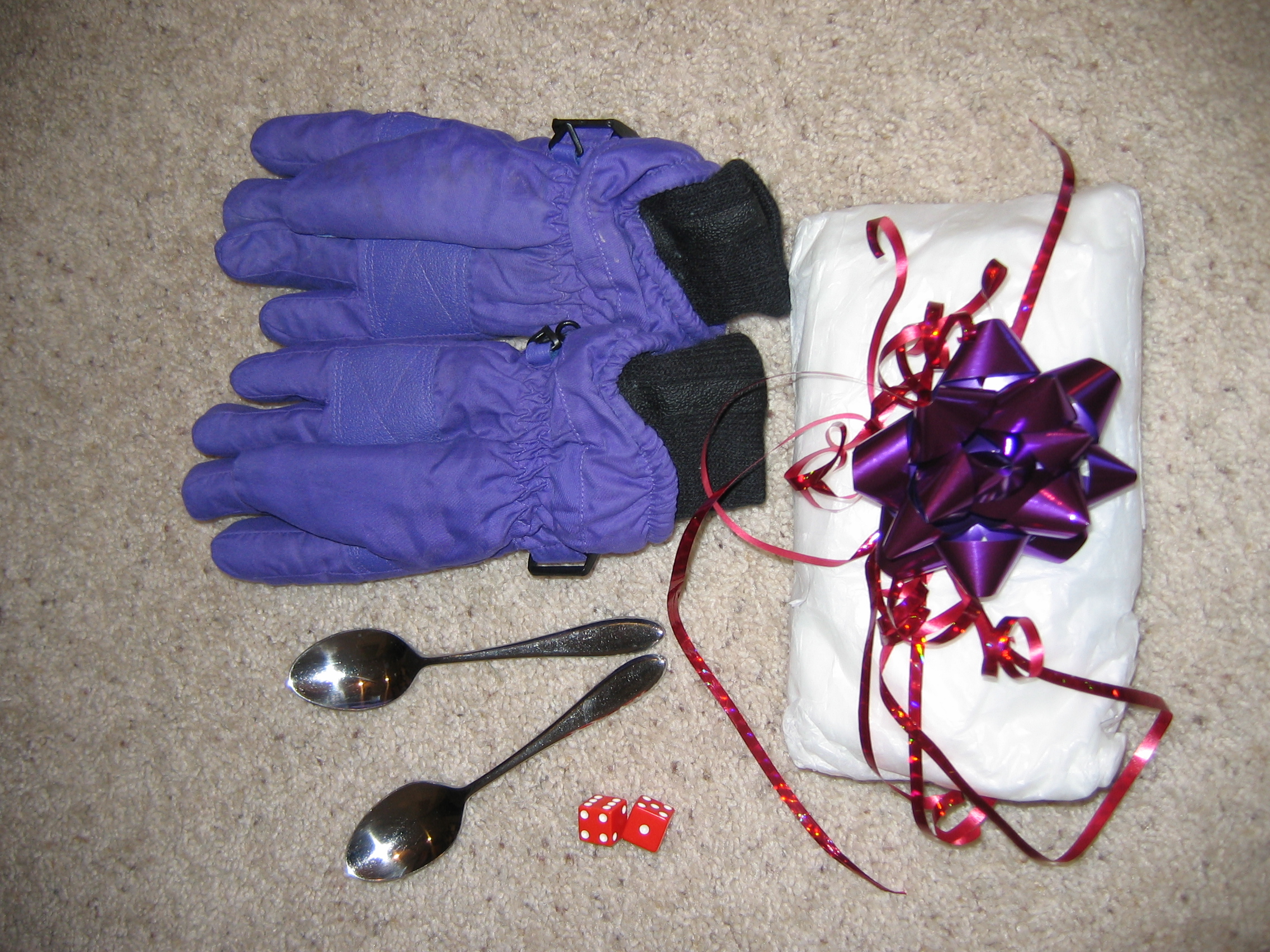
To help review a song for the Primary program, I had the children play a game. I had wrapped a bag of candy with several layers of wrapping paper. The children sang the song we were reviewing as a child tried to open the package. It wasn’t easy to open  because I had the child wear heavy gloves and use only spoons to open the package. They weren’t allowed to stab the package with the spoons. As the child tried to open the package, the other children were singing the song and taking turns rolling some dice in a bowl. When one of the children got a seven on the dice, they got a turn to try and open up the package. This game was fun for the children, and they didn’t realize they were singing the song over and over again. I would review words they were having trouble with in-between changing over to a new child opening the package.  I was surprised at how well they sang during the game, even junior Primary. But I did tell them before we started the game that if they didn’t sing, we would have to stop and sing the whole song all the way through before we could continue the game.


Word of Wisdom #4

Posted on

 What does the Word of Wisdom say is good for our bodies? – Game

Preparation

  • Print one copy of the food pictures  Cut out each food item. Cut out the food titles and paste each title onto the top of a seperate sheet of cardstock. Put these sheets into a page protector. Attach the food pictures to the back of their category page with rolled pieces of tape.
  • Items Needed: A Doctrine and Covenants for each person, a watch with a second hand (or a timer), one dry erase pen.

Game

Have the family look up D&C 89:16.

  • According to this scripture, what does the Lord say is good for our bodies?  Explain that the fruit of the vine would be fruits and vegetables. So, according to this scripure, fruits, vegetables, and grains are good for our bodies. (Show the three category sheets.)

Tell the family they are going to play a game that will show them the abundance of good foods the Lord has given us to eat. Start with the fruit category sheet. Tell the family they will have two minutes to name as many different fruits as they can. Have them take turns naming a fruit, starting with the youngest in the family. Keep going around until the time is up.  They can say “Pass” if they can’t think of a fruit. Take the pictures from the back of the category sheet and stick them onto the front as they are named. If you don’t have a picture to go with an item that is named, write its name on the category sheet with a dry erase marker. Do the same activity with the vegetables and the grains. Afterward point out all the good foods they have to choose from that are healthy for their bodies.

Explain that we should eat a variety of these healthy foods.  Even some good things can be harmful if used too much. (Read D&C 59:20)  This scripture indicates that we are to be wise and use moderation in all things.

  • How might it be bad for our bodies if we eat mostly one kind of food and we don’t eat enough of other kinds of foods? We wouldn’t get all the nutrients we need.

Have the family look up D&C 89:12.

  • What does the Lord say in this scripture concerning eating meat?

Tell the children that during Joseph Smith’s time, a nearby group from another religion followed a very strict diet and did not eat meat at all. What did the Lord say concerning this? Read D&C 49:18–19  Explain that the Lord told us we should not abstain from eating meat. Meat is a good and acceptable food, but it should be used in moderation.


Word of Wisdom #3

Posted on

 What does the Word of Wisdom say is bad for our bodies? – Game

Preparation

  • Print the Word of Wisdom game pictures. Cut apart  the picture of the boy and the picture of the garbage can on the dotted lines. Also cut the smaller pictures apart on the lines.
  • Items needed: D&C Scriptures for each person, blindfold, tape.


Lesson and Game 

Ask the family members to close their eyes and imagine they have a baby sister (or have them think about a baby sister or brother they have). Tell them that they love their baby sister very much and have lots of fun playing with her. One day the baby gets sick and won’t eat or play. You take the baby to the doctor and he says that the baby is sick from something she swallowed.

  •  How would you help your baby sister so she doesn’t get sick again? (By keeping her away from the items that could make her sick.)
  • What could happen if you put something in your body that was bad for it? (Your body could be harmed.)

Heavenly Father and Jesus love us very much. We are Heavenly Father’s sons and daughters, and Jesus’ brothers and sisters. They don’t want us to be sick and unhealthy. They want us to be happy and strong. They know what things will hurt our bodies, so we were given commandments to avoid those things.

  • Ask the family members if they remember what these commandments are called and where they are located in the scriptures. (Word of Wisdom, D&C 89)

Have the family look up and read D&C 89:7.

  • What item does the Lord say is not for the belly? (Strong drink)
  •  What does it mean by strong drink? (Have the family read the top half of D&C 89:5. Strong drinks mean alcoholic beverages.)

Show the picture of the beer and wine to the family.

Tape the picture of the boy onto the wall. Tell the family that according to this scripture, alcoholic beverages are not for the body. Tape the garbage can to the wall about five feet away from the picture of the boy. Put a piece of tape on the back of the alcohol picture and hand it to a volunteer. Place the volunteer several feet away from the pictures on the wall, with no obstructions in the way.

Blindfold the volunteer. Tell them the object of the activity is to keep the alcoholic beverages away from the body (the picture of the boy) and put it into the garbage. Spin them around once and point them in the right direction. Tell them if they would like help they can ask one family member to give them directions. Explain that we can always get help in life from the Lord and from people in our lives that we trust.

After the family member has finished his/her turn have everyone read D&C 89:8.

  • What does this scripture says is not for the body? (Tobacco) Show the family the picture of tobacco products. Tell them that this commandment also includes chewing tobacco.

Do the same blindfold activity with the tobacco picture. Afterwards explain that in Joseph Smith’s time, people did not have the medical knowledge that we now have. They didn’t know about the bad effects of smoking and alcohol use. But the Lord knew about these bad effects and he warned the people.

Next have the family read D&C 89: 9.

  •  What does this scripture says is not for the body? (hot drinks)

Show the family the picture of the tea and coffee. Explain that prophets have told us “hot drinks” refers to tea and coffee. When this revelation was given, tea and coffee were the hot drinks being consumed at the time.

Give the picture of tea and coffee to another family member and do the blindfold activity again.

Afterwards ask if they know what other item is harmful to us that recent prophets have warned us not to use.  (Illegal drugs)  (If the children ask about medicinal drugs, explain that some drugs can help us when we are ill, but they should be used only with a parent’s or doctor’s supervision.)

Show the picture of the drugs and do the blindfold activity again.


Word of Wisdom #2

Posted on

 How the Word of Wisdom Came to Be – Story

Preparation

Print one copy of the pictures from Doctrine and Covenant Stories chp 31. Cut the printed sheets in half  on the dotted lines.

 Story 

(Going in order, read the numbered paragraphs below as you show the corresponding numbered Doctrine and Covenant Stories picture to the family.)

1. How did we get the Word of Wisdom? In Kirtland, Ohio the Lord instructed Joseph Smith to form a school to teach the leaders of the Church about the gospel and prepare them to serve the members of the Church. This school was called the School of the Prophets.

 2. The school was held in the evenings in an upstairs room of Newel K. Whitney’s store.

 3. Many of the men smoked pipes or cigars which filled the room with smoke. Some of the men chewed tobacco and spit it all over the floor making it very dirty. People at this time did not know that tobacco was bad for their bodies. Joseph Smith did not like teaching the school “in a cloud of tobacco smoke,” because the meetings there were sacred.

4. Emma Smith, Joseph’s wife, cleaned the room after each meeting. She and Joseph became concerned about the brethren’s use of tobacco, and Emma did not like cleaning up the mess the men made with their pipes and chewing tobacco.

5. On 27 February 1833 Joseph Smith entered the room where the School of the Prophets was held. The room was filled with tobacco smoke. Joseph had just come from the clean outside air, and the smell of smoke was offensive to him. He left the room and asked the Lord what he should do about the situation. The Lord answered Joseph’s prayer with the revelation we now call the Word of Wisdom (D&C 89). In the Word of Wisdom the Lord tells us what things are good for the body and what things are bad for the body.